JAMAICA | UHWI Scandal Exposes Health Ministry’s Accountability Crisis
JAMAICA | UHWI Scandal Exposes Health Ministry’s Accountability Crisis
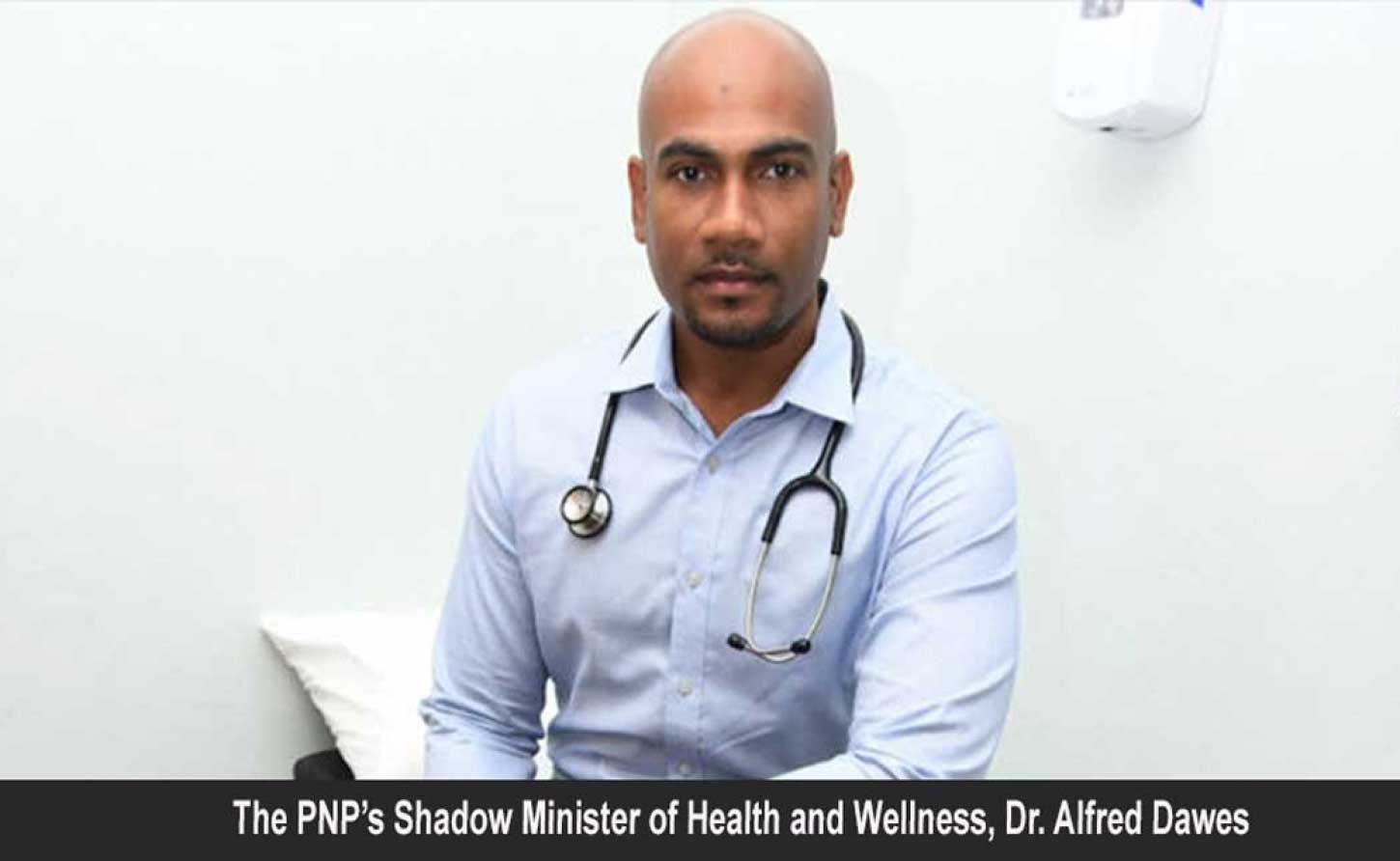
Shadow Minister says ministerial-appointed committee is “like a man on trial choosing his own jury”
The University Hospital of the West Indies awarded fifty-one contracts worth $521 million without a single procurement document to show for it. No requisitions. No tender documents. No bid submissions. No evaluation reports. Nothing.
This is not opposition hyperbole. This is the finding of Auditor General Pamela Monroe Ellis, whose damning performance audit—tabled in Parliament on Tuesday—has laid bare a procurement apparatus so thoroughly compromised that the nation’s premier teaching hospital was effectively operating as a paperwork-free zone for hundreds of millions of dollars in public spending.
For Shadow Minister of Health and Wellness Dr. Alfred Dawes, the audit confirms what he has been warning about for over a year: a systemic pattern of governance failure that has been “sanctioned at the highest levels.”
“Each time, those warnings were dismissed, and the Minister assured the country that systems were sound and functioning properly,” Dr. Dawes said. “The Auditor General has now confirmed that this was simply not true.”
The Corruption of Process
The audit’s findings read like a manual for procurement fraud. Monroe Ellis revealed that UHWI routinely engaged in “retrospective procurement”—inviting suppliers to bid for goods and services that had already been delivered and works already completed.
The bid invitations, she noted, “implied that a legitimate competitive procurement process had taken place” when in fact the outcome was predetermined.
“This action by UHWI served to corrupt the process engaged to procure goods, services and works,” the Auditor General concluded.
But the procurement breaches were merely the headline act. The audit also exposed UHWI’s misuse of its tax-exempt status to import goods for private companies—a scheme that cost Jamaica $23.1 million in revenue losses.
In one particularly brazen arrangement, the hospital used its exemption to import cups and dishes for a private company, then purchased those same items back at inflated prices.
The hospital has since referred “specific matters” to the Fraud Squad and Jamaica Customs. CEO Fitzgerald Mitchell has been placed on three months’ leave. The board insists this is to address “an extensive leave backlog” and facilitate independent review—though critics note the timing speaks for itself.
The Minister’s Response: More of the Same
Health Minister Dr. Christopher Tufton’s response has been to appoint a six-member Institutional Review Committee tasked with identifying “gaps and weaknesses” in UHWI’s governance structures. The committee has four months to deliver recommendations.
For Dr. Dawes, this is precisely the wrong approach.
“A system cannot credibly investigate itself,” he said. “A committee appointed by the Minister to examine wrongdoing within a system he oversees is like a man on trial choosing his own jury.”
The Shadow Minister pointed to a “disturbing and familiar pattern” under Tufton’s watch. After the Integrity Commission exposed an improper $80 million payment to Market Me, the Minister spoke about strengthening procurement practices.
"When a $31 million drill was acquired for Bustamante Hospital for Children, he publicly praised the procurement process. Yet the Auditor General continues to uncover serious breaches occurring under his supervision.
“After three consecutive terms, excuses about inherited weaknesses are no longer credible,” Dr. Dawes said. “Responsibility lies squarely with those currently in charge.”
Patients Pay the Price
Beyond the accounting scandal lies a human cost that the procurement documents—or lack thereof—cannot capture. When systems fail at this scale, hospitals go without essential equipment. Services deteriorate. Healthcare workers operate without adequate support. Patients suffer.
“This is how a health system is driven into crisis,” Dr. Dawes warned. “Not by chance, but by poor governance and failed political oversight.”
The UHWI is Jamaica’s principal teaching hospital and a final referral centre serving not only Jamaicans but Caribbean nationals requiring specialized care.
That an institution of this importance could award over half a billion dollars in contracts with no documentation whatsoever represents not merely an administrative lapse but a fundamental betrayal of public trust.
Dr. Dawes is calling for independent accountability measures—scrutiny that puts patients and public funds first, conducted by entities with no stake in protecting the status quo.
The question now is whether Jamaica will get genuine accountability or another ministerial committee producing recommendations that gather dust while the procurement machinery continues to operate in shadow.
The Auditor General has done her job. The evidence is on the parliamentary record. What happens next will reveal whether Jamaica’s health governance system is capable of reform—or merely capable of producing committees.
For comments or tips, contact WiredJa at
-30-
