Afreximbank's CARICOM Facility Hits US$750M Disbursed — But Tourism Financing Remains Embedded, Not Ringfenced
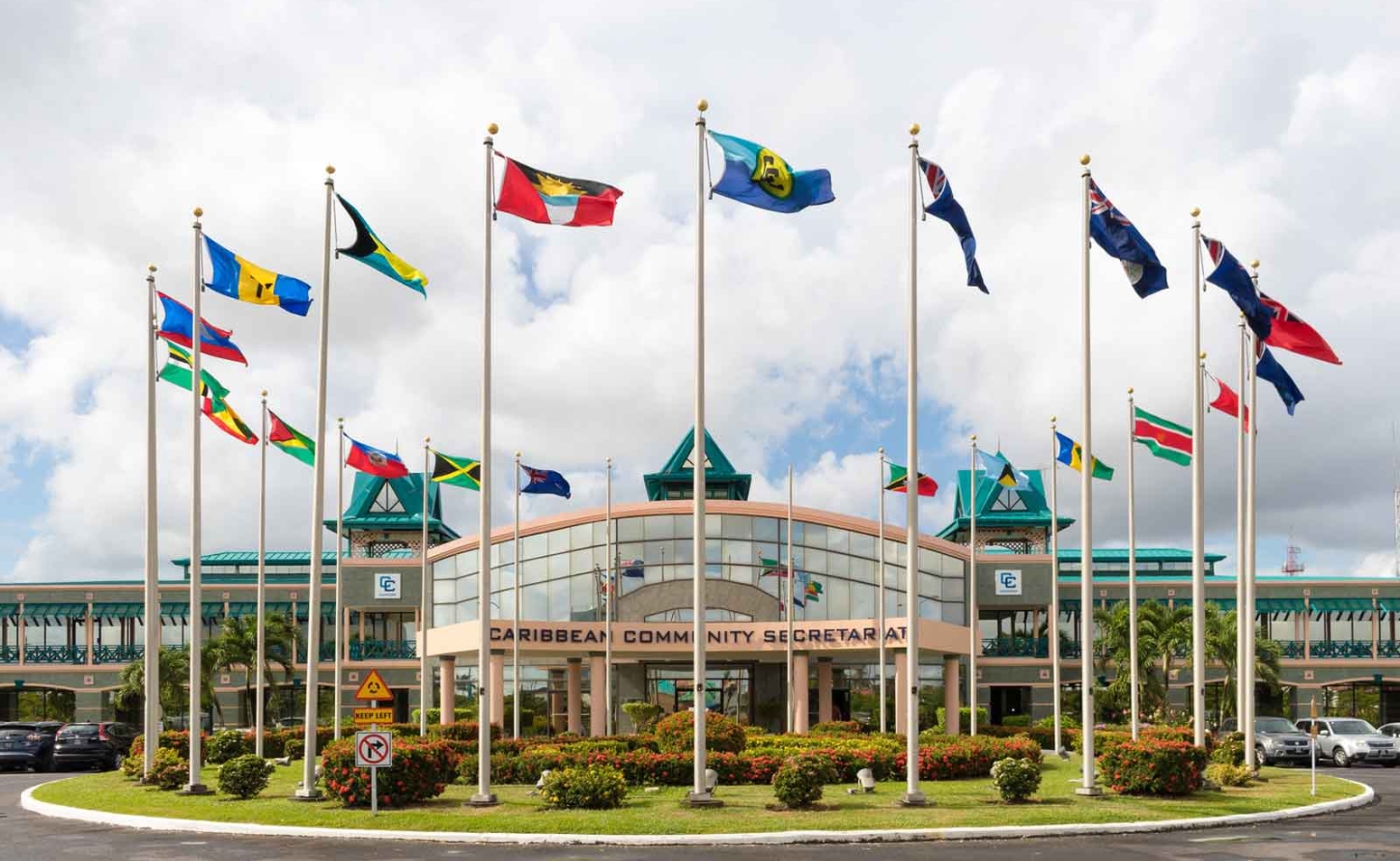
Afreximbank's CARICOM Facility Hits US$750M Disbursed — But Tourism Financing Remains Embedded, Not Ringfenced
More than three-quarters of a billion dollars has already flowed into the Caribbean under Afreximbank's financing framework, with tourism identified as a priority sector — yet no standalone tourism sub-facility figure has been publicly disclosed. WiredJa examines the state of play.
CARICOM | Jamaica, April 9, 2026 - When the African Export-Import Bank (Afreximbank) first extended credit lines to the Caribbean Community (CARICOM), the arrangement was greeted with cautious optimism — another multilateral promise, some said, with the fine print yet to be written.
Four years on, the picture is considerably more substantive, though questions remain about how deeply Caribbean governments, and the tourism sector in particular, are actually drawing on what is now a US$5 billion facility.
The headline numbers are no longer aspirational. As of early 2026, Afreximbank has disbursed more than US$750 million across the CARICOM region and carries a pipeline of active transactions exceeding US$2 billion — figures disclosed by the Bank's President and Chairman, Dr. George Elombi, when he addressed the 50th Regular Meeting of the Conference of Heads of Government of CARICOM in Basseterre, St. Kitts and Nevis, in late February.
The facility itself has just been upgraded. What was a US$3 billion commitment has now been expanded to US$5 billion, to be deployed over the next three to four years. Dr. Elombi framed the increase not merely as a scaling of numbers but as a strategic shift — from exploratory finance toward what he called "embedded economic cooperation."
From Promise to Pipeline
The trajectory of Afreximbank's CARICOM engagement reflects a relationship that has matured steadily since the first Africa-Caribbean Heads of State and Government Summit in September 2021, which catalysed the AfriCaribbean Trade and Investment Forum (ACTIF) series.
By the third edition of ACTIF, held in Nassau, The Bahamas in June 2024, deals and Memoranda of Understanding valued at over US$4 billion had been signed — signalling serious commercial intent behind the diplomatic architecture.
Jamaica's formal accession as the 13th CARICOM member state to sign Afreximbank's Partnership Agreement was among the developments that helped push the facility ceiling to US$3 billion before the latest expansion.
Thirteen countries have now signed on, though remaining CARICOM states have been urged to formalise their participation to fully access the Bank's range of instruments — concessional debt, guarantees, grants, and project preparation support.
The fifth edition of ACTIF — ACTIF2026 — is set to be hosted by St. Kitts and Nevis in July this year, deepening the institutionalisation of the Africa-Caribbean economic partnership under the broader "Global Africa" framework.
Tourism: Identified, But Not Ringfenced
For a region where tourism routinely accounts for between 25 and 60 percent of GDP across member states, the question of how much of Afreximbank's facility is specifically earmarked for the sector is not a trivial one.
The honest answer, based on publicly available disclosures, is this: tourism has been clearly identified as a priority sector, active tourism-linked projects exist in multiple territories, but no discrete tourism sub-facility — with a fixed allocated quantum — has been publicly announced.
Dr. Elombi confirmed at the February summit that specific tourism project interventions are planned or underway in Barbados, Grenada, The Bahamas, and Antigua and Barbuda. These sit alongside healthcare, agro-processing, logistics, infrastructure, power generation, and trade centre development — all woven into country-level framework agreements rather than a single sectoral financing window.
The most concretely quantified tourism-linked transaction to date is the Afreximbank African Trade Centre (AATC) in Barbados — a US$180 million landmark project that broke ground in March 2025.
The facility, the first AATC to be established outside Africa, will include a 100-room hotel alongside a conference centre, technology and SME incubator, Digital Trade Gateway, and office spaces for regional and international financial organisations. The Barbados government granted the Bank 6.4 acres of land at Jemmotts Lane, Bridgetown, for the project.
An earlier, more targeted intervention also speaks to the tourism-infrastructure nexus: in 2024, Afreximbank provided Barbados with US$25 million to refurbish its Cricket World Cup sports complex — the kind of dual-purpose infrastructure that services both domestic development and visitor economy objectives.
Infrastructure as Tourism's Backbone
Beyond what is labelled explicitly as "tourism," much of the broader facility pipeline carries direct tourism implications. A US$100 million facility extended to the Bahamas Striping Group — an indigenous Bahamian-owned company founded in 2010 — is financing extensive road rehabilitation, paving, striping, and safety enhancement works across Nassau, Exuma, and Eleuthera.
While classified as infrastructure, the Bank itself acknowledged that the works are "essential for tourism, trade and community access" and expected to enhance The Bahamas' competitiveness as a trade and tourism hub.
The ACTIF communiqués have likewise called on development finance institutions to design targeted solutions for Caribbean tourism and eco-tourism, citing the sector alongside energy, transport, broadband, and ports as areas of urgent infrastructure need. That the language remains aspirational in parts points to the continuing gap between acknowledged priority and ring-fenced capital.
The Green Resilience Facility — A New Entry Point
One mechanism that could channel dedicated financing toward tourism-adjacent investments is the Green Growth, Resilience and Sustainability Facility (GRSF), developed jointly between Afreximbank and the CARICOM Development Fund (CDF). A €708,000 grant agreement to establish the GRSF was formalised in February 2025 at the 48th CARICOM Heads of Government meeting in Barbados.
The GRSF is designed as a blended finance vehicle — combining concessional and commercial funding — targeting critical infrastructure, climate adaptation, and sustainable development.
Given that much of the Caribbean's tourism plant sits in climate-vulnerable coastal zones, the facility represents a logical entry point for resilience-linked tourism financing. The CDF, which has been a CARICOM shareholder in Afreximbank since June 2023, will channel access to the Bank's full suite of instruments through the facility.
The Strategic Vision and What It Means for CARICOM
Dr. Elombi has been explicit about the longer arc of Afreximbank's engagement: the goal is not simply to lend but to shift CARICOM economies toward value addition, local content retention, and economic diversification.
That vision — which also involves facilitating African companies such as Access Bank, Oando, and Arise Integrated Industrial Platforms to establish operations in the region — potentially reframes tourism financing within a wider economic transformation agenda, rather than treating it as a standalone sectoral support.
The regional payment system modelled on Afreximbank's Pan-African Payment and Settlement System (PAPSS), which CARICOM's Central Bank Governors agreed to advance in February, would if implemented provide the financial infrastructure for intra-regional trade that supports tourism value chains — from procurement to SME participation in the hospitality sector.
The Outstanding Question
What is not yet in the public domain is a project-level disaggregation of how the US$750 million disbursed — and the US$2 billion-plus pipeline — breaks down by sector. Tourism's share, whether 10, 20, or 30 percent of committed or disbursed funds, remains undisclosed in any official communication reviewed by WiredJa.
That is a gap worth closing. For Caribbean governments negotiating framework agreements, for tourism ministries seeking to attract concessional capital for hotel plant expansion, climate resilience upgrades, or airlift infrastructure, knowing the precise quantum available — and the conditions attached — is essential intelligence.
Afreximbank's CARICOM office, being established within the Barbados AATC complex, is the logical interlocutor. CARICOM member states yet to sign the Partnership Agreement have been explicitly urged to do so.
For Jamaica and others still operating at the margins of the full facility architecture, that formalisation may be the prerequisite for unlocking the dedicated sectoral access that tourism operators and ministers alike are waiting for.
Calvin G. Brown is a senior correspondent and political communications consultant with WiredJa. He covers Caribbean economic affairs, regional integration, and geopolitical developments across the Global South.
