BARBADOS | From Bridgetown to Geneva: Comissiong Mounts a Pan-African Offensive Against Resurgent Imperialism
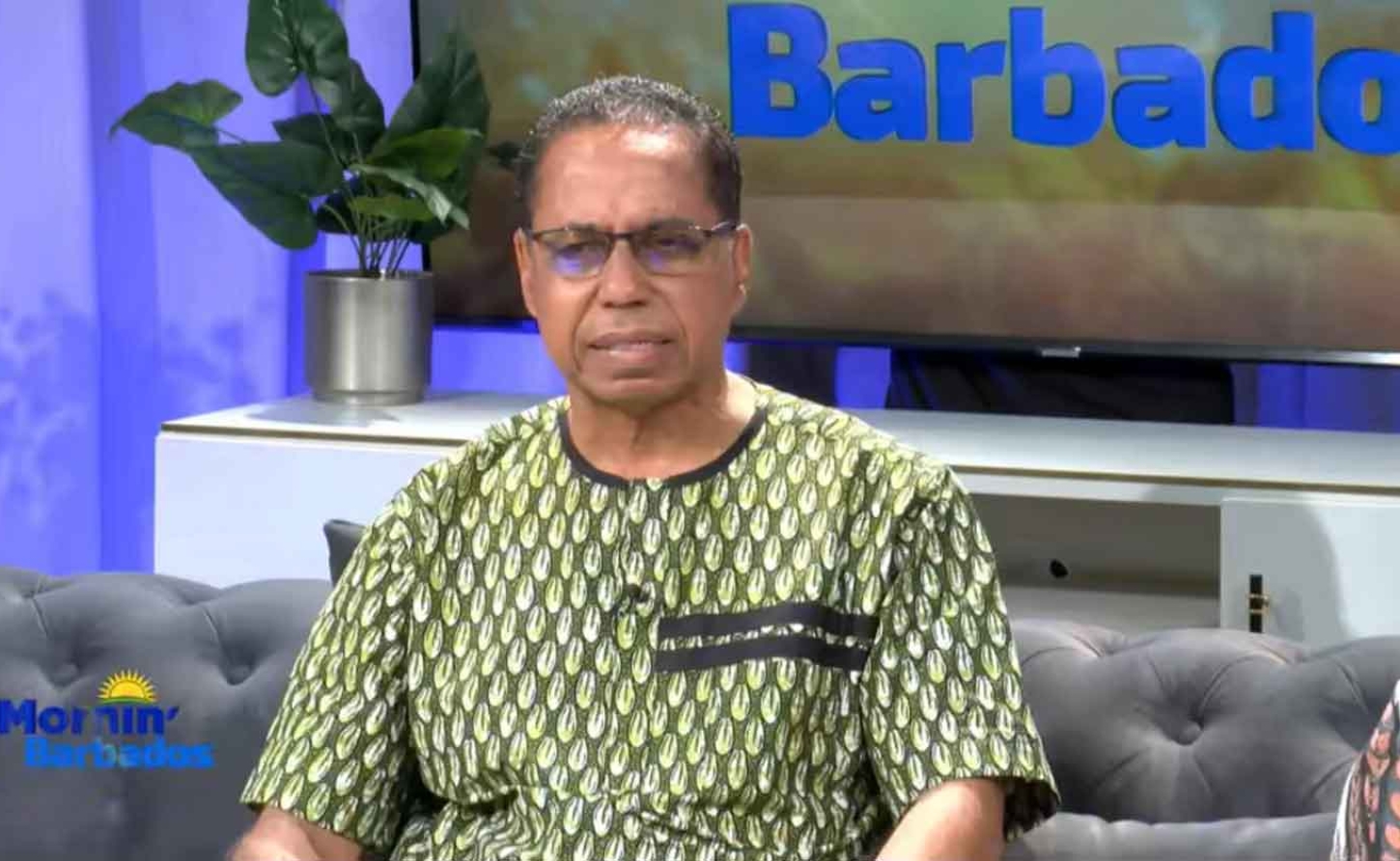
Barbados Ambassador to CARICOM HE David Comissiong
Barbados’ CARICOM Ambassador uses the Fifth Session of the UN Permanent Forum to indict the West’s silence on slavery, defend multilateralism, and call for a unifying agenda for Global Africa.
GENEVA — Fifty-five predominantly white nations either voted against or abstained when the United Nations General Assembly moved to declare the trafficking of enslaved Africans the gravest crime against humanity. On Tuesday, at the Palais des Nations, Barbados’ Ambassador to CARICOM, David Comissiong, refused to let that vote pass in silence. Addressing the Fifth Session of the UN Permanent Forum on People of African Descent, he delivered not a plea, but an indictment — and a programme.
The Charge Sheet
Speaking under this year’s theme, “Expanding the Human Rights of People of African Descent under the Second International Decade,” the veteran Pan-Africanist laid out the backdrop against which the Forum now meets.
The session opens, he told delegates, amid three ominous developments: a determined campaign “to disregard, undermine and destroy the intertwined systems of multilateralism and International Law”; tragic black-on-black conflicts across the African continent and its diaspora; and the startling experience of watching virtually the entire white world refuse to name the Crime that built it.
The trans-Atlantic slave trade, he reminded the hall, is nothing less than “the world’s gravest crime against humanity.” The retreat from that recognition, he warned, is of a piece with a larger retreat — a world being dragged back to an ethos in which “might makes right.”
Defending the Rules of the Game
His first demand was defensive. The international legal order that emerged after 1945, though imperfect and riddled with structural inequalities, has at least provided the newly independent nations of Africa and the Caribbean with a framework for development. To let it collapse, Comissiong argued, is to deliver the small states of the Global South back into the hands of the powerful.
“We must therefore resolve that the world will not revert to the pre-1945/pre-United Nations era of unbridled imperialism and lawlessness.” — Ambassador David Comissiong
The defence he called for is not uncritical. Comissiong pointed to CARICOM’s Bridgetown Initiative — Prime Minister Mia Mottley’s signature proposal for reforming global finance — as evidence that the region is not asking the world to leave the system alone, but to make it work for those it was designed to exclude. The rules-based order is the shield of the small state. Kick it over, and nothing remains but raw power.
The Caribbean as a Model
His second demand inverted the traditional posture. Rather than seek foreign templates for African nations to adopt, Comissiong offered the Caribbean itself as the instruction manual.
The region, he noted, has declared itself a Zone of Peace. It insists on the peaceful settlement of disputes. It refuses foreign military bases on its soil. It pursues a non-aligned foreign policy under the doctrine of “Friends of All, Satellites of None.”
Barbados, he said, has committed itself to a social democratic construct — free education, substantially free public healthcare, consultative governance, trade union organisation “in virtually every sector,” gender equality, and “an unshakeable commitment to electoral democracy.”
“Let us therefore follow these and other relevant examples,” Comissiong urged, “and craft our own Code of National and People development principles for the nations of Global Africa.”
The message was plain: the Caribbean had not come to Geneva to receive instruction. It had arrived with a curriculum.
Deconstructing the Myth
The third demand returned to the 55-nation vote. That so many former colonial powers could not bring themselves to name the crime on which their wealth was built, Comissiong said, proves that “a large segment of the international community has not yet developed a proper understanding” of that history — or worse, remains “wedded to the Myth of White or Western moral and civilizational superiority.”
His response is not rhetorical but educational — aimed squarely at the consciousness of Europe and North America. “There is much educating and consciousness-raising work to be done,” he told the Forum, “if we are to achieve the delivery of Reparatory Justice before the end of this Second International Decade for People of African Descent.”
A Programme, Not a Pulpit
Comissiong closed with an institutional proposal: that Forum Chair Professor Gaynel Curry of the Bahamas attend CARICOM’s July summit in Saint Lucia, and that the practice be extended to the African Union, CELAC and the Commonwealth — so that the Permanent Forum becomes the connective tissue of Global Africa.
Not a pulpit. A programme.
-30-
