CARIBBEAN | Beyond Words — And Beyond Shame: CARICOM Pledged Cuba Relief Three Weeks Ago. The Ships Came from Everywhere Else.
CARIBBEAN | Beyond Words — And Beyond Shame: CARICOM Pledged Cuba Relief Three Weeks Ago. The Ships Came from Everywhere Else.
As 650 activists from 33 nations sailed into Havana on Saturday with 20 tons of aid, the 15-member Caribbean Community — which promised Cuba humanitarian support “in short order, within a month” — had still not dispatched so much as a crate. The summit theme was “Beyond Words.” The irony is unbearable.
HAVANA, CUBA — SATURDAY, MARCH 21, 2026 | Calvin G. Brown | They came from Italy and France, from Brazil and Colombia, from Mexico and the United States. They came by air and by sea, clutching solar panels and cancer medication, sacks of rice and a collective refusal to look away.
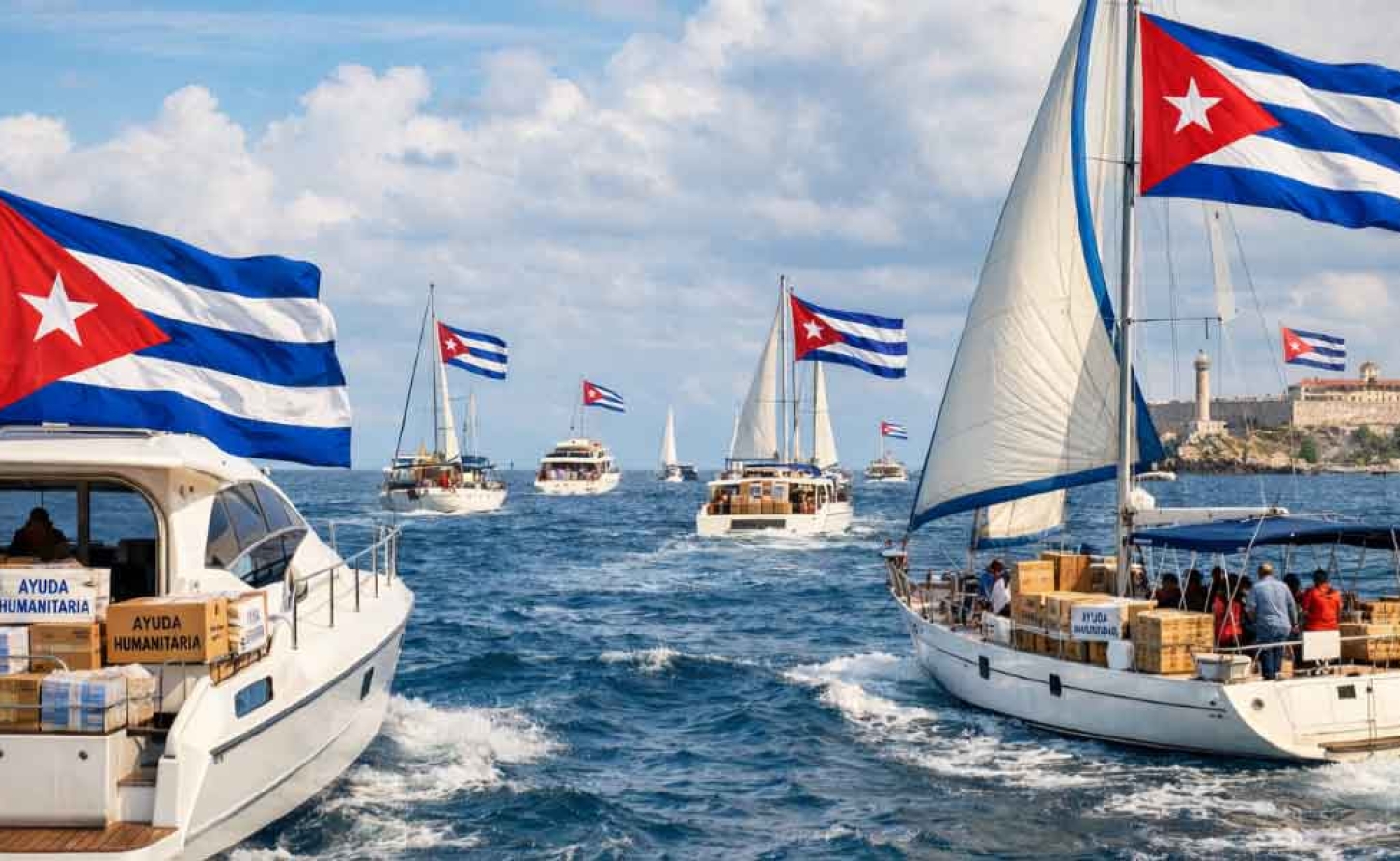
On Saturday, as three vessels from the “Our America Convoy to Cuba” carved through Caribbean waters into Havana harbour carrying 20 tons of humanitarian relief, the 650-strong flotilla of conscience delivered not only supplies to a suffering people — it delivered an indictment of a regional body that chose caution over conviction.
The Caribbean Community has been notably, conspicuously, shamefully absent from that harbour.
‘WITHIN A MONTH’ — THE CLOCK HAS RUN OUT
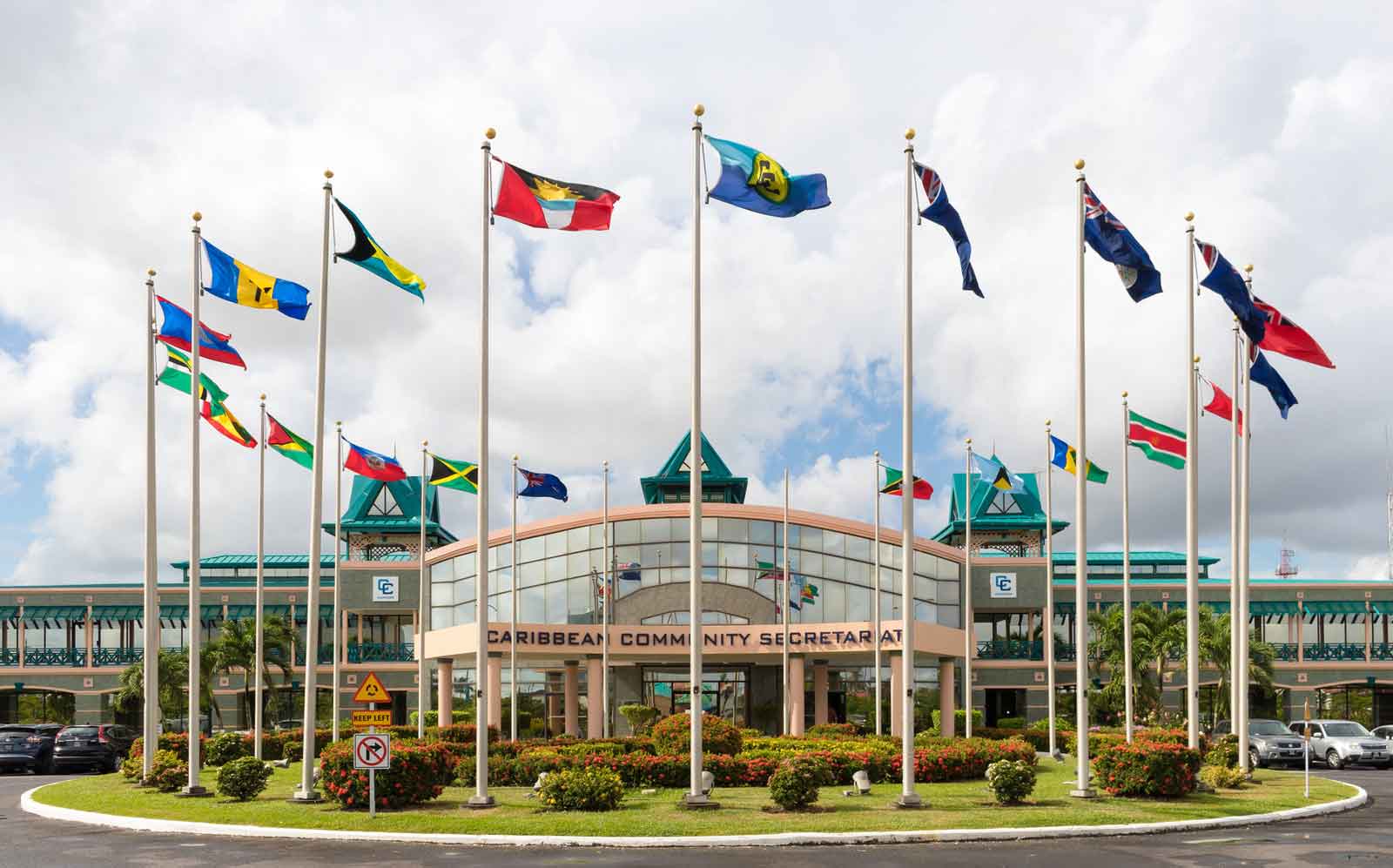
CARICOM Headquarters in Guyana
“With respect to Cuba and the humanitarian efforts,” he declared, “we are going to respond on the humanitarian end in short order, within a month.” Heads of government, he said, had agreed that CARICOM would take steps to support humanitarian efforts. A coordinated response was being prepared. A detailed plan would be finalised “shortly.”
That was twenty-three days ago. Today is day twenty-three of that month. Cuba is still waiting. Not a vessel has sailed. Not a cargo has been assembled. Not a plan has been published. The “team” Drew promised would be formed to determine Cuba’s requirements has not, to any public knowledge, been formed at all.
“Beyond Words: Action Today for a Thriving, Sustainable CARICOM.” — Official theme of the CARICOM 50th Summit, Basseterre, February 2026. Cuba is still waiting for the action.
THE RUBIO FACTOR: SOLIDARITY MADE CONDITIONAL
To understand CARICOM’s paralysis, one must recall who else was in the room in Basseterre. U.S. Secretary of State Marco Rubio flew into St. Kitts for high-level talks with Caribbean leaders on February 25 — the very day solidarity with Cuba was being discussed.
The joint statement that emerged spoke of a “highly constructive” and “frank conversation.” The Community declared itself “mindful of the extent to which the Region can be negatively affected” and carefully couched any Cuba commitment in the language of “maintaining regional stability.”
In plain English: CARICOM pledged to help Cuba while Rubio sat across the table. And since Rubio left, that pledge has quietly evaporated. The January 29 executive order — threatening tariffs on any nation supplying oil to Cuba — had already demonstrated Washington’s willingness to punish solidarity.
CARICOM, it appears, heard that warning clearly, even as it performed concern for the cameras in Basseterre.
MEANWHILE, THE WORLD SHOWED UP
The contrast between CARICOM’s inertia and the international community’s action is a portrait in moral clarity. Brazil — not a Caribbean nation — pledged 20,000 tons of food. China dispatched a vessel with 60,000 tons of rice. Chile sent a parliamentary delegation with supplies.
Mexico has now shipped aid on four separate occasions. And on this Saturday, 33 nations and 120 organisations mobilised 650 delegates to physically sail to Cuba’s side, carrying medicine for cancer patients, solar panels to restore light to blacked-out hospitals, and food for families who have endured five years of tightening hardship.
“We cannot allow this collective punishment. We cannot normalize it,” said David Adler of Progressive International, one of the convoy’s principal organisers. Manolo de los Santos of The People’s Forum offered a starker warning: the world must prevent “another Gaza in the Americas.”
These are not the voices of Caribbean governments. They are the voices of civil society — filling the vacuum that regional leadership has left gaping.
CUBA’S CRISIS IS THE CARIBBEAN’S CRISIS
Jamaica’s Prime Minister Andrew Holness, to his credit, spoke plainly in Basseterre. “A prolonged crisis in Cuba will not remain confined to Cuba,” he warned. “It will affect migration, security, and economic stability across the Caribbean basin.”
Chairman Drew went further, recalling the seven years he spent studying medicine in Havana: “I studied in Cuba. I lived in Cuba for seven years. I have friends there.” Touching words. Warm words. Three weeks later, still only words.
The Cuban government is not confused about who has and has not answered the call. President Miguel Díaz-Canel took to social media as Saturday’s convoy approached: “They bring shipments of aid to combat the attempt to suffocate us. Solidarity always returns to those who practice it.”
The people sailing into his harbour today are not from Georgetown or Kingston or Bridgetown. They are from Rome and São Paulo and Mexico City.
THE THEME THAT BECAME A MOCKERY
There is a cruelty in irony when lives are at stake. CARICOM chose the theme “Beyond Words: Action Today for a Thriving, Sustainable CARICOM” for its landmark 50th summit. It was meant as a declaration of renewed regional purpose — a promise that the body forged in the Treaty of Chaguaramas would, at fifty meetings old, finally match rhetoric with resolve.
Instead, on the single most urgent humanitarian test that has confronted the region since that summit closed, CARICOM has offered Cuba precisely what its theme promised to transcend: words, and nothing more.
The flotilla is in the harbour. The world has shown where it stands. The Caribbean Community’s seat at that moral table remains, as of this writing, empty.
-30-
