CARIBBEAN | Four Years on Ice: Justice Finds Lashauna Bridgen — Too Late to Matter, Too Important to Ignore
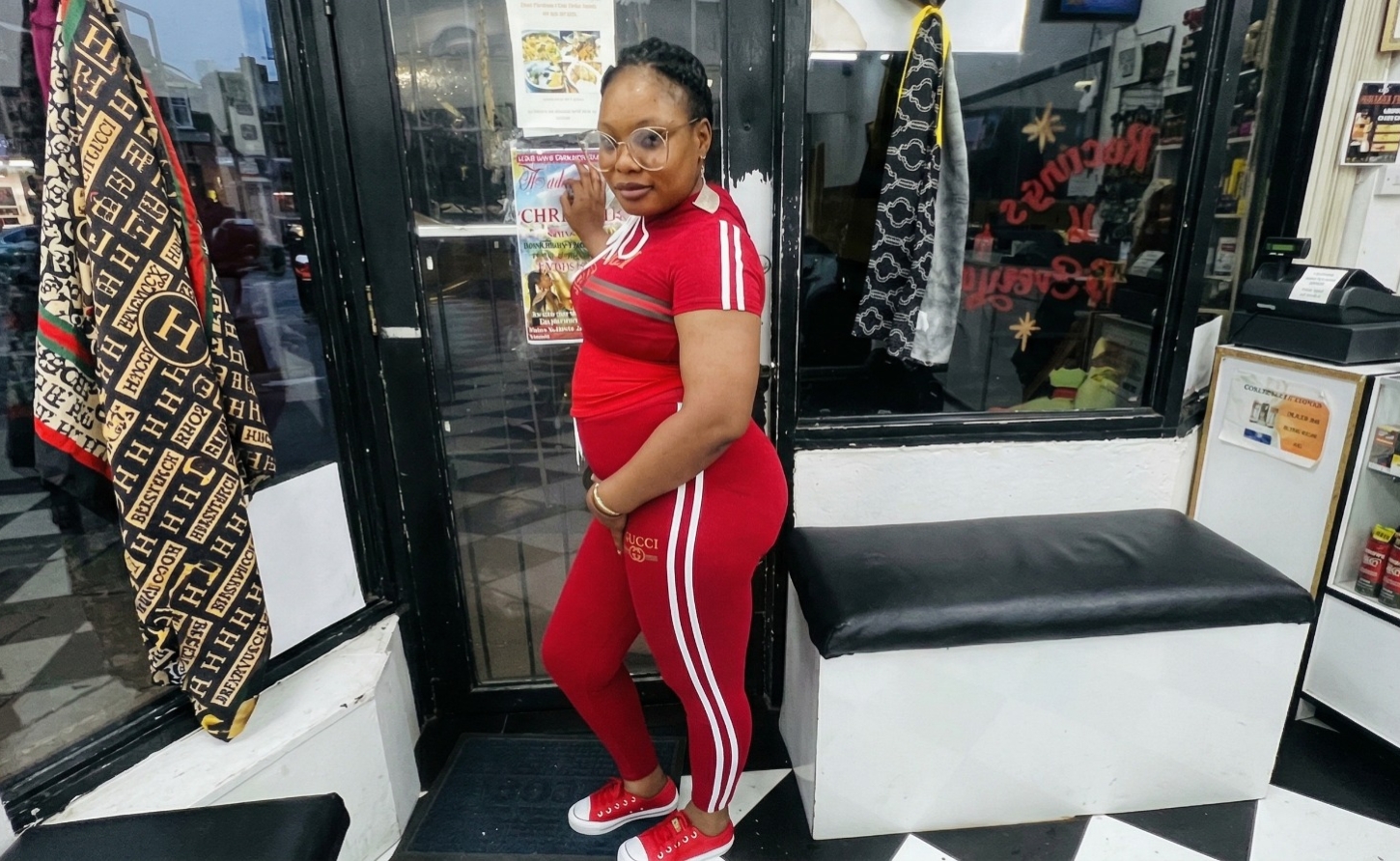
Lashauna Sheleta Bridgen of May Pen, Clarendon who died on January 20, 2022, along Friar’s Hill Road in the vicinity of Jasmine Court
A young Jamaican mother left May Pen chasing a better life for her children. She died on an Antiguan road in 2022. Her body lay in cold storage for four years while the wheels of justice ground slowly forward. Now, finally, she is coming home.
ST. JOHN'S Antigua, April 13, 2026 - On the morning of January 20, 2022, Lashauna Sheleta Bridgen stepped out of a vehicle on Friar’s Hill Road in Antigua. She never made it across.
A collision with a speeding car cut short the life of a 29-year-old woman from Longbridge Avenue, May Pen, Clarendon — a security officer who had crossed the Caribbean Sea in search of something better, leaving behind two small children aged four and seven, with the quiet, iron determination of a Jamaican mother who refused to let circumstance be the final word on her family’s future.
That determination could not save her on Friar’s Hill Road. And for four years after her death, it fell to her family to carry it forward in her name — through courts, through bureaucratic walls, through grief that had no burial to anchor it.
This week, Lashauna comes home. Her body, held in storage in Antigua since her death, is scheduled for repatriation on April 14, 2026. For her family — for those two children who have been growing up without a mother, and without even the finality of a grave to visit — it is the beginning of the end of an anguish that no family should ever have to bear.
But the story of how she got here, and how long it took, is one the Caribbean cannot afford to ignore.
The Crash, the Acquittal, and the Second Chance
Police investigators who attended the scene were unambiguous. Their report, dated May 17, 2022, stated that the driver of vehicle A2982 — identified as Diondre Samuel of All Saints — was traveling at speed when the collision occurred. The impact hurled Bridgen more than 100 feet. She was transported to hospital. She did not survive. The report concluded that Samuel was “at fault and liable to prosecution.”
Yet in June 2025, more than three years after her death, a jury acquitted Samuel of causing death by dangerous driving. The criminal standard — proof beyond reasonable doubt — was not met, the jury determined. The family, left to absorb that verdict, faced the devastating prospect that the man whose vehicle killed their daughter and sister would face no legal consequences whatsoever.
What followed was a lesson in legal tenacity. Attorneys Salomon and Simpson, instructed by Dr. Onika Campbell-Rowe — then Honorary Consul for Jamaica in Antigua and Barbuda — had already initiated parallel civil proceedings in 2022 under the Fatal Accidents Act.
The estate of Bridgen, represented by Avagay Hervelyn Cummings on behalf of her mother Christine Evans and her brother Chafray Chafral Bridgen, pressed forward. The civil courts operate on a different standard: not proof beyond reasonable doubt, but the balance of probabilities. And on that balance, the High Court delivered a different verdict entirely.
In October 2025, Her Ladyship Justice Byer of the Eastern Caribbean Supreme Court ruled in Claim No. ANUHCV2022/0491 that Diondre Samuel had failed to keep a proper lookout, failed to take evasive action, and failed to exercise reasonable care toward a pedestrian crossing the road. The court rejected every attempt to shift blame onto Bridgen herself. Liability, the court found, rested solely with the defendant. The claim was granted in full.
“Even though one arm of the law did not find him liable, a second arm of the law has now spoken clearly. Justice has been achieved in the long run.” — Chafray Chafral Bridgen
Four Years in the Cold
While lawyers filed motions and courts deliberated, Lashauna Bridgen lay in a storage facility in Antigua, her burial impossible, her family’s grief frozen in suspension. Back on Longbridge Avenue in May Pen, a four-year-old and a seven-year-old grew older without their mother — and without even the burial that might have offered some fragment of closure. For four years, Christine Evans could not lay her daughter to rest.
The family’s attempts to expedite matters were met, time and again, by bureaucratic and procedural resistance. An urgent application for interim relief to fund storage, repatriation, and burial expenses was denied in December 2022. An appeal to the Court of Appeal was dismissed in May 2023.
Repeated formal requests for police and coroner’s reports — documents essential to the civil case — went unanswered or were delayed. A formal representation to the then Director of Public Prosecutions, Anthony Armstrong, was necessary simply to ensure that documentation reached the lawyers in time to prevent the case from expiring under the statutory limitation period.
That a family was forced to fight this hard, for this long, simply to secure the basic right to bury their dead is an indictment — not of any single actor, but of a system that too often demands extraordinary resilience from those least equipped to provide it.
Long Run, Short Ketch
Chafray Chafral Bridgen, who carried so much of this weight on behalf of his family, put it plainly when the verdict finally came: “Long run, short ketch.”
“Even though one arm of the law did not find him liable,” he said, “a second arm of the law has now spoken clearly. Justice has been achieved in the long run.”
It has. But the run was unconscionably long.
Lashauna Bridgen was 29 years old. She left Clarendon the way thousands of Caribbean people leave home every year — not out of indifference to the place that shaped her, but out of love for the children she was determined to give a better life.
She worked her security shift on an island far from May Pen, sending what she could back to two small children who needed her, counting the months, the way every Caribbean migrant counts them.
She deserved to come home on her own terms. She deserved to watch a four-year-old and a seven-year-old grow up. She deserved far better than four years in cold storage while her family bled slowly from the inside, navigating courts and consulates and corridors of institutional indifference.
She is coming home now. That matters enormously. And so does the question her story forces every Caribbean government, every regional institution, and every court of justice to answer honestly: Why did it take so long?
The assessment of damages in the civil matter is yet to be determined. The family extended thanks to Salomon and Simpson Attorneys-at-Law and Dr. Onika Campbell-Rowe for their sustained work throughout this process.
-30-
