GUYANA | When Black Leaders Kneel: Lincoln Lewis Issues a Moral Reckoning
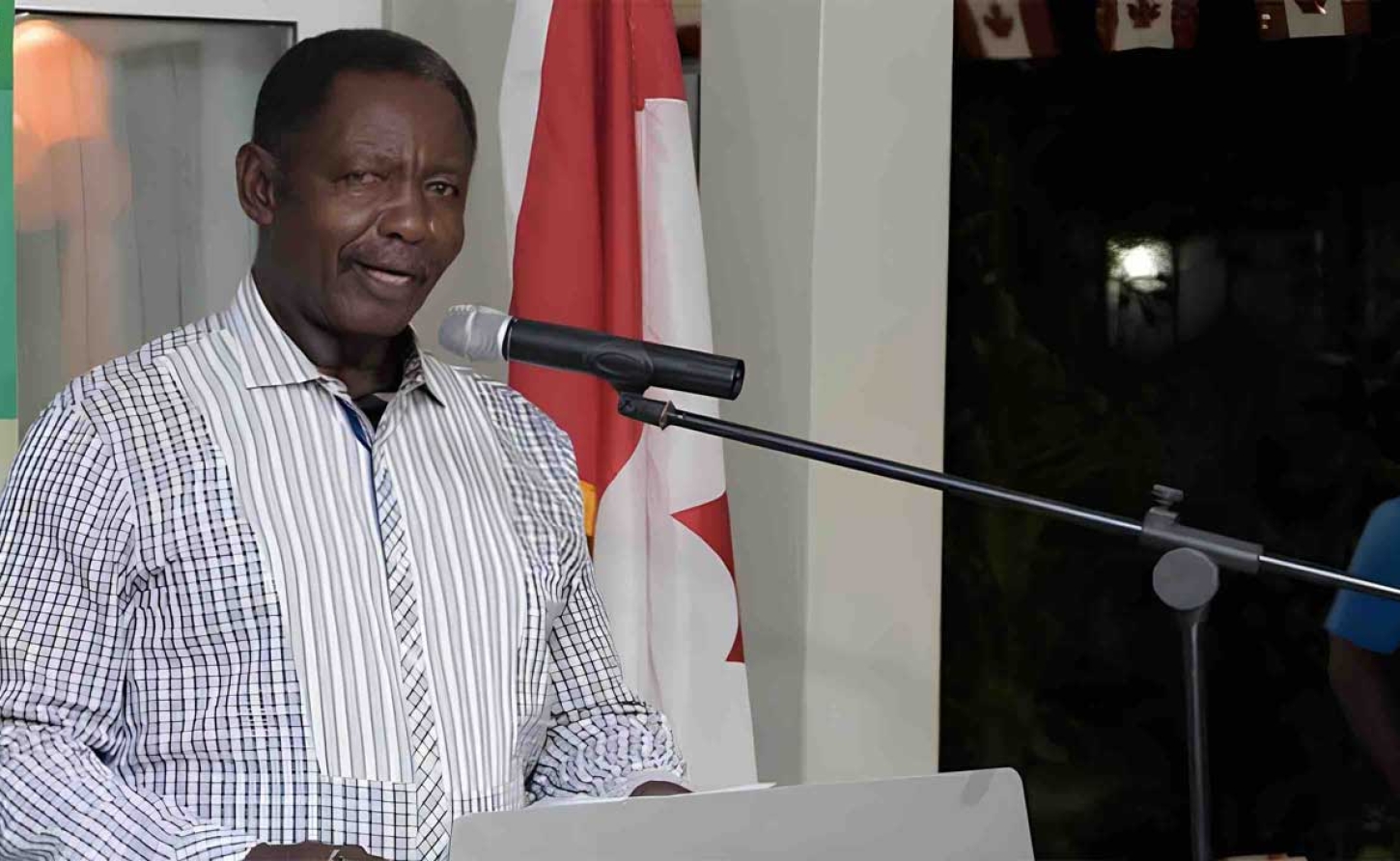
Veteran Trade Unionist Lincoln Lewis of the Guyana Trades Union Congress, GTUC
WiredJa | Caribbean News & Analysis
The veteran trade unionist calls out political betrayal in Guyana's halls of power — and demands that decent people stop looking the other way
There is a particular kind of betrayal that cuts deeper than ordinary political treachery. It is the kind that wears a familiar face, speaks in a familiar tongue, and then turns — in full public view — to serve the interests of those who have historically opposed the very community it claims to represent. Lincoln Lewis, veteran trade unionist and columnist, has seen enough. In a searing intervention that is equal parts lament and ultimatum, he is calling time.
“We must speak fearlessly,” Lewis declares, invoking the foundational principle of collective defence: a threat to one is a threat to all. It is not rhetoric. It is a rallying cry. And the target of his righteous indignation is not foreign interference or faceless institutional rot — it is men who look like him, standing in Guyana’s National Assembly and, in his assessment, dismantling their own dignity for political accommodation.
The Price of Association
Lewis names names. James Bond. Mark Phillips. Minister Keoma Griffith. These are Black men who migrated from the People’s National Congress to the People’s Progressive Party — an exercise of freedom of association that Lewis initially defended without hesitation. What he cannot defend, he makes clear, is the performance that followed.
During the Budget Debates, Lewis watched as these men stood in what he calls “the hallowed halls” of the National Assembly and, by his account, misled the nation. The dishonesty, he argues, was not incidental — it was the price of admission. “It appears to matter little to them,” he writes, with barely concealed contempt, “that their words will be recorded in the Hansard for posterity.”
His most stinging charge is leveled at Bond, a trained lawyer who allegedly denied before the Assembly that students received scholarships under the PNC government to pursue law and professional studies — scholarships that Lewis notes some within the PPP itself benefited from. For Lewis, a lawyer above all others should understand the weight of evidence. That Bond appears to have ignored it is not merely a political failing. It is a moral collapse.
Then there is Prime Minister Phillips, who stretched his hands in parliament to declare that the less said about the Forbes Burnham government the better — while being, Lewis pointedly reminds us, a living product of that government’s educational and professional investment. The irony is not lost. The indictment, Lewis suggests, is self-written.
The Double Standard That Cannot Stand
Lewis’s critique cuts across racial and partisan lines with a precision that makes comfortable deflection difficult. He draws a sharp contrast: Indian leaders, he observes, do not publicly malign their own — past or present. Yet here are Black leaders in the PPP tripping over themselves to degrade Black political legacies for the benefit of an association that Lewis implies does not afford them equal dignity.
“There is still value,” he writes with the bluntness of a man who has spent decades in struggle, “in standing on your feet and fighting with dignity rather than living on your knees.”
It is not an appeal to racial solidarity at the expense of accountability. Lewis is careful to distinguish between factual examination of stewardship — which he demands of every leader, from Burnham to Ali — and the deliberate falsification of history to earn a seat at a table that does not fully respect those now seated at it.
Press, Workers, and the Architecture of Suppression
Lewis does not stop at parliamentary conduct. He widens his lens to expose what he sees as a systematic assault on the institutional pillars that protect ordinary Guyanese. The pending closure of Stabroek News, facilitated by state debt and advertising denial, is in his view nothing short of economic censorship. The denial of union dues deductions — engineered to drain trade unions of their financial lifeblood while politically aligned unions receive full state support — represents, he argues, a targeted war on workers’ representation.
The message embedded in both maneuvers is identical: conform, or be starved into silence.
It is precisely this architecture of suppression — normalized, incremental, deniable — that Lewis is demanding decent people refuse to accept. Because when press freedom dies quietly, and workers’ rights erode gradually, and Black leaders in high office validate the erasure of their own history, no community emerges unscathed.
The threat, Lewis insists, is always to all.
-30-
