JAMAICA | Forty-One Years and Still Standing: LMAJ Renews Its Covenant With Justice
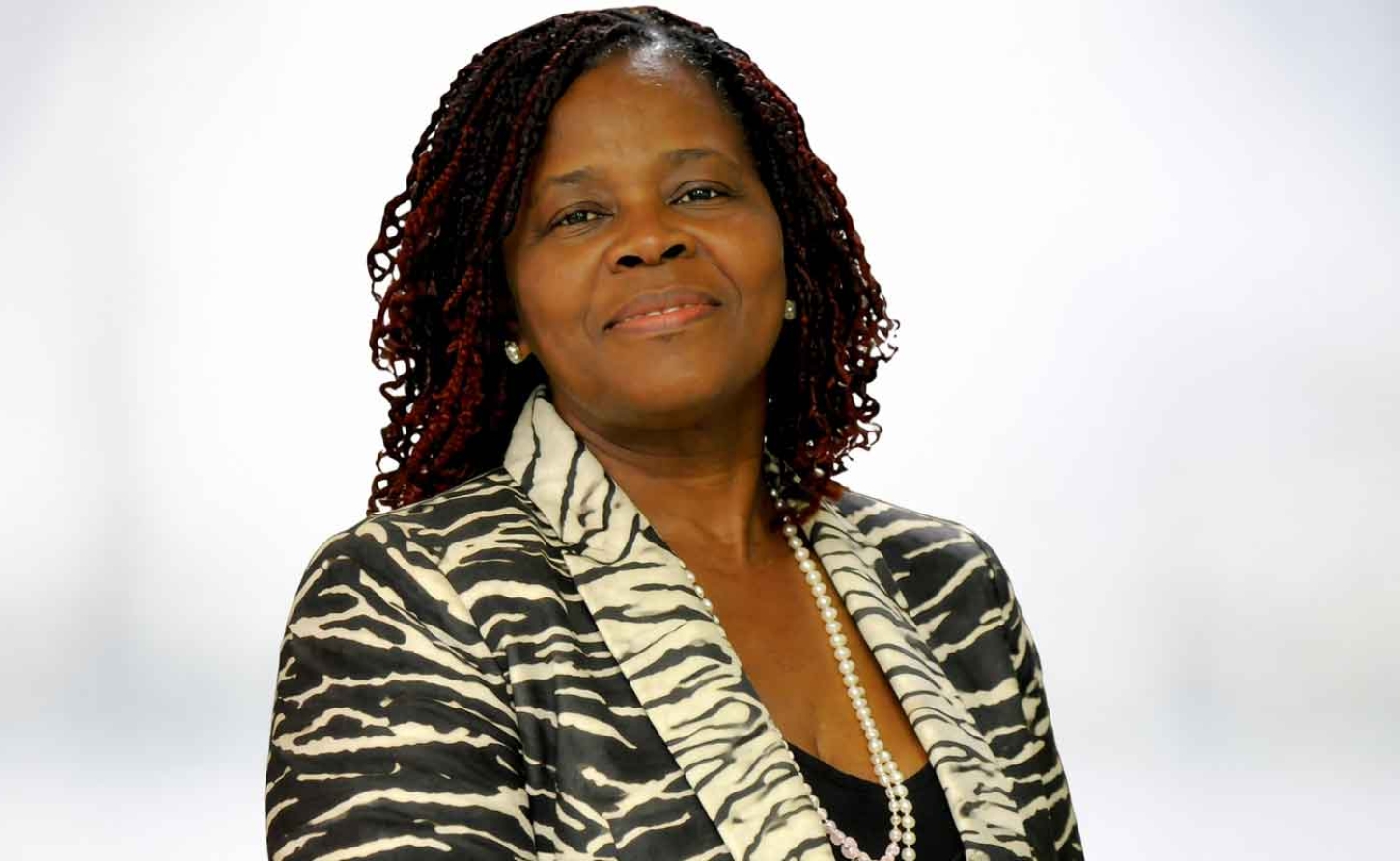
President of the Lay Magistrate's Association of Jamaica Paulette Kirkland at the 41st anniversary churtch service in Lucea, Hanover.
At a church service in Lucea, Hanover, Jamaica’s lay magistrates celebrated four decades of quiet, unpaid service — but the sermon and the speeches carried an unmistakable subtext: this organisation’s independence is under siege, and its members intend to fight for it.
LUCEA, Hanover April 15, 2026, The pews of the Lucea United Church were filled last Sunday with men and women who ask for nothing in return. No salary. No pension. No public recognition beyond the two initials they are permitted to place after their names.
For forty-one years, Jamaica’s Justices of the Peace and Lay Magistrates have staffed the country’s parish courts, resolved community disputes, signed documents, granted bail and counselled families — all without charging a cent.
Their annual national church service, hosted this year by Hanover, is their one collective exhale. And this year, with the Lay Magistrates’ Association of Jamaica (LMAJ) navigating arguably its most turbulent period since its founding, the occasion carried the weight of more than just anniversary reflection.
A Mandate Beyond the Statute Books
LMAJ President Paulette Kirkland, JP, set the tone immediately. Speaking under the theme “LMAJ at 41, Strengthening Justice through Service,” Kirkland drew deliberately on the Easter season to reframe the JP’s role not merely as civic duty, but as divine calling.
She cited Micah 6:8 — “to do justly, to love mercy and to walk humbly” — as a three-point mirror against which every lay magistrate should measure their service: fairness without prejudice, humanity behind every case, and the humility to understand that authority is a trust, not a privilege.
It was a pointed choice of scripture. For an organisation that has been publicly accused by the Minister of Justice of displaying “haughtiness” and arrogance, anchoring the anniversary message in humility was neither accidental nor merely pious. It was a counter-narrative delivered from the pulpit.
“Justice is not merely a legal principle; it is a divine mandate. It is rooted in righteousness, guided by wisdom, and tempered with compassion.”
— Paulette Kirkland, JP, President, LMAJ
Hanover’s New Custos Calls for Unity — But the Divide Runs Deep
Hanover’s newly appointed Custos, Lennox Anderson-Jackson, lauded the JPs in attendance as “mediators, mentors, advocates and guardians of good order” and acknowledged that in an era of eroding public trust, the role of lay magistrates had never been more critical. “Justice must not only be done, but must be seen to be done,” he declared — words that ring with particular resonance in a parish still adjusting to the politics of its own JP landscape.
Anderson-Jackson assumed the Custos post following the passing of Dr. David Stair, whose relationship with the LMAJ had deteriorated sharply — ultimately drawing in both the Office of the Governor General and the Ministry of Justice.
His predecessor’s tenure ended with the government formally recognising the Hanover Justices of the Peace Association (HJPA) as the official parish body, relegating the LMAJ to affiliate status. Anderson-Jackson has publicly called for the two entities to bury the hatchet.
Whether that reconciliation is possible — or whether it simply papers over a structural power struggle engineered from above — remains the defining question for Hanover’s justice community.
The Minister’s Long Shadow
The conflict is not a Hanover problem alone. Since at least 2022, Justice Minister Delroy Chuck has pursued a systematic restructuring of the JP landscape — establishing government-aligned JP associations in each parish, to be headed by the custodes and answerable to the Ministry.
His message to the LMAJ has been unambiguous: you are a sub-group of the JP association, not an independent national body. The LMAJ’s counter-position — that lay magistrates, by virtue of their specialised court training, occupy a distinct and senior role — has been dismissed by the minister as institutional arrogance.
In April 2025, Chuck publicly described the “haughtiness” of certain lay magistrates who “would like to tell you they are judges,” and declared that the LMAJ’s resistance to operating under the custodes “won’t work.”
The Ministry formalised its position by authorising parish JP associations as the primary bodies — a structural move the LMAJ argues duplicates and undermines its four decades of work.
Unity as Resistance
It fell to the host pastor, Reverend Glenroy Clarke — himself a past president of the LMAJ’s Hanover chapter — to address the elephant in the room. He did not name the Ministry. He did not name the HJPA.
But his sermon could not have been clearer. “Uncertainty may remain ahead of us,” Clarke told the congregation, “but we are no longer divided as an association. We are stronger together to stand up to the test of times.” Fragmentation, he argued, is not an option.
Those words were not homily. They were a declaration.
Forty-one years is a long time to serve without pay, without fanfare, and increasingly, without institutional security. The LMAJ’s longevity is itself an argument — one built not on political patronage but on voluntary commitment to communities that need them.
As President Kirkland reminded those gathered, “Anniversaries are not only moments of celebration; they are moments of recommitment.” The LMAJ has recommitted. The question now is whether the Ministry of Justice is listening.
— 30 —
