JAMAICA | From Parliamentary Floor to Construction Plan: How Andrea Purkiss Moved the Woodsville Bridge

Residents changing the wood used to cover the chasm resulting from the broken down Woodsville Bridge in Eastern Hanover.
After two years of broken promises, a $75 million allocation that disappeared, and a collapsed crossing left to rot — the Woodsville Bridge is finally on a national construction programme. Here is how it got there.
The News: Woodsville Gets Its Place on the National Map
In a significant development for Eastern Hanover, the Woodsville Bridge — collapsed since Good Friday 2023 and a festering symbol of rural neglect — has been placed under the Government of Jamaica's Accelerated Rural Bridge Development Project.
Under the programme, the government proposes to construct 55 permanent modular bridges to accelerate the repair and rehabilitation of ageing, damaged, and inadequate infrastructure across Jamaica.

An image of the model compact 200 bridge proposed to replace the collapsed Woodsville Bridge.
SJE Consultants Limited has been engaged by Lagan Aviation and Infrastructure Ltd., with a Feasibility Study currently underway in collaboration with the Ministry of Economic Growth and Job Creation and the National Works Agency.
This is not the result of a quiet administrative review. It is the direct consequence of what happened at the Standing Finance Committee — and one MP who refused to let the government change the subject.
The Parliamentary Confrontation That Forced the Government's Hand
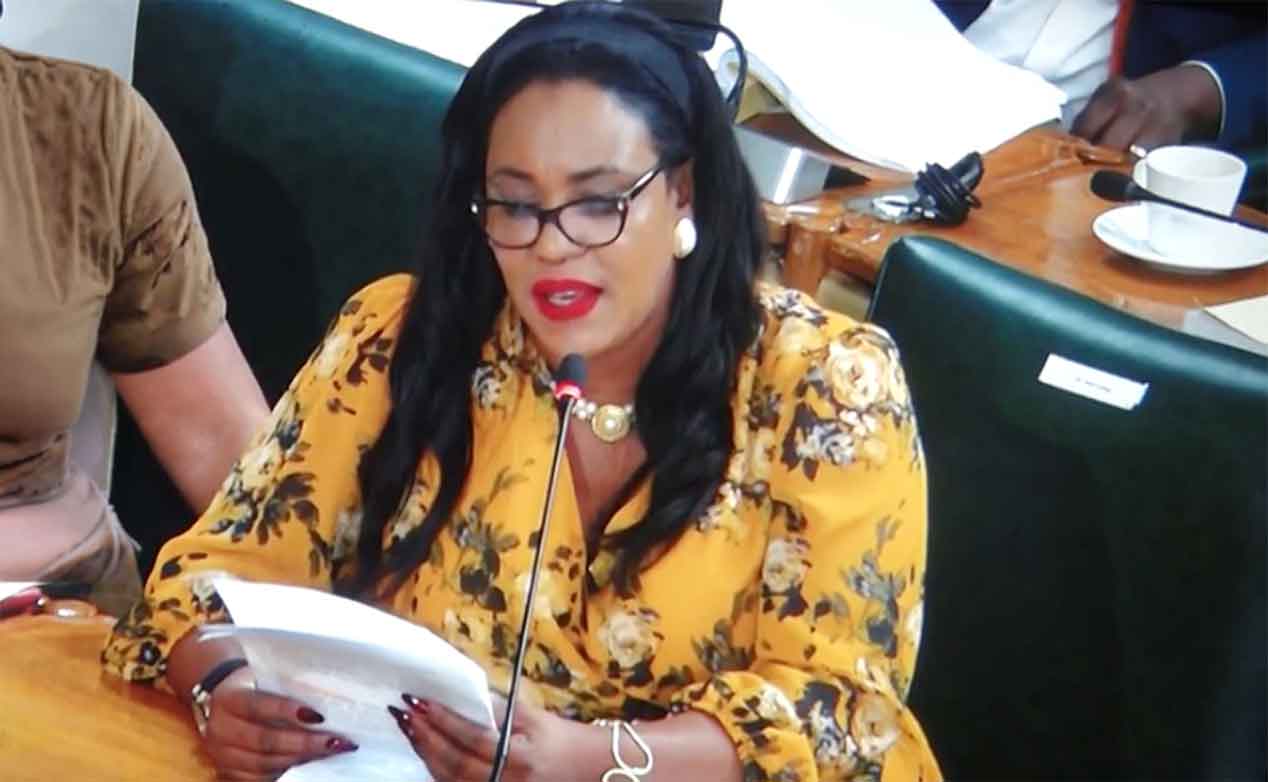
Member of Parliament for Eastern Hanover Ms Andrea Purkiss
"Why was Craig Mills Bridge prioritised over Woodsville Bridge in Eastern Hanover, which has been broken down since 2022 and is a critical link to Mayfield Falls?” Purkiss put to Minister Morgan. It was not a rhetorical question. It was an accounting..
Morgan was placed squarely on the defensive. The exchange exposed not just the failure of a single bridge project, but the systemic inertia that had allowed a vital piece of rural infrastructure to languish through budget cycle after budget cycle while official pronouncements promised movement and delivered none.
All of a sudden, a bridge that could not make a priority list for two years found its place on a national programme. The timing is not coincidental.
The Bridge That Time Forgot

The Woodsville bridge that finally colapsed on Good Friday 2023
WiredJa reported in January 2025 on the full scale of the crisis: more than 1,000 residents cut off from schools, health facilities, and markets; a $75 million allocation announced in 2023 absorbed into bureaucratic fog with nothing to show for it; a first bridge design scrapped because engineers had failed to properly account for the flow of the Cabarita River.
The National Works Agency, meanwhile, was advancing other projects while Woodsville remained in limbo.
The human cost was not abstract. Tour operators rerouting groups. International visitors — including a French couple spotted navigating a community-built makeshift crossing, unaware the original bridge no longer existed — gambling their safety on improvised infrastructure.
Mayfield Falls, one of Jamaica's most authentic eco-tourism attractions, haemorrhaging visitors because the access corridor had been left to rot. The economic bleeding to Hanover's tourism belt was real and ongoing.
This was the reality Purkiss carried to the Standing Finance Committee. Not statistics. Not projections. A community's lived experience, laid before a minister who had to answer for it.
The Wider Lesson
The Woodsville breakthrough is not simply a constituency win — though it is that too, and an important one. It is a demonstration of what the Standing Finance Committee is designed to do: force accountability in real time, on the record, in public.
Too often, infrastructure failures in rural Jamaica survive on the quiet assumption that affected communities lack the political leverage to demand answers.
Woodsville had been waiting because no one had made the cost of waiting high enough for the government to bear. Purkiss changed that calculation.
The bridge will take 24 months to construct — which means Woodsville's long ordeal is not over yet.
Residents will be watching to ensure that an entry on a project list translates into steel, concrete, and a crossing that does not require a prayer to use. But the project is now on record, the minister is on notice, and the feasibility work has begun.
In Eastern Hanover, the bridge moved because someone refused to let it stay still.
-30- WiredJa
