
TRINIDAD | Blood in Caribbean Waters: Families of Slain Trinidadians Take Fight for Justice to U.S. Courts
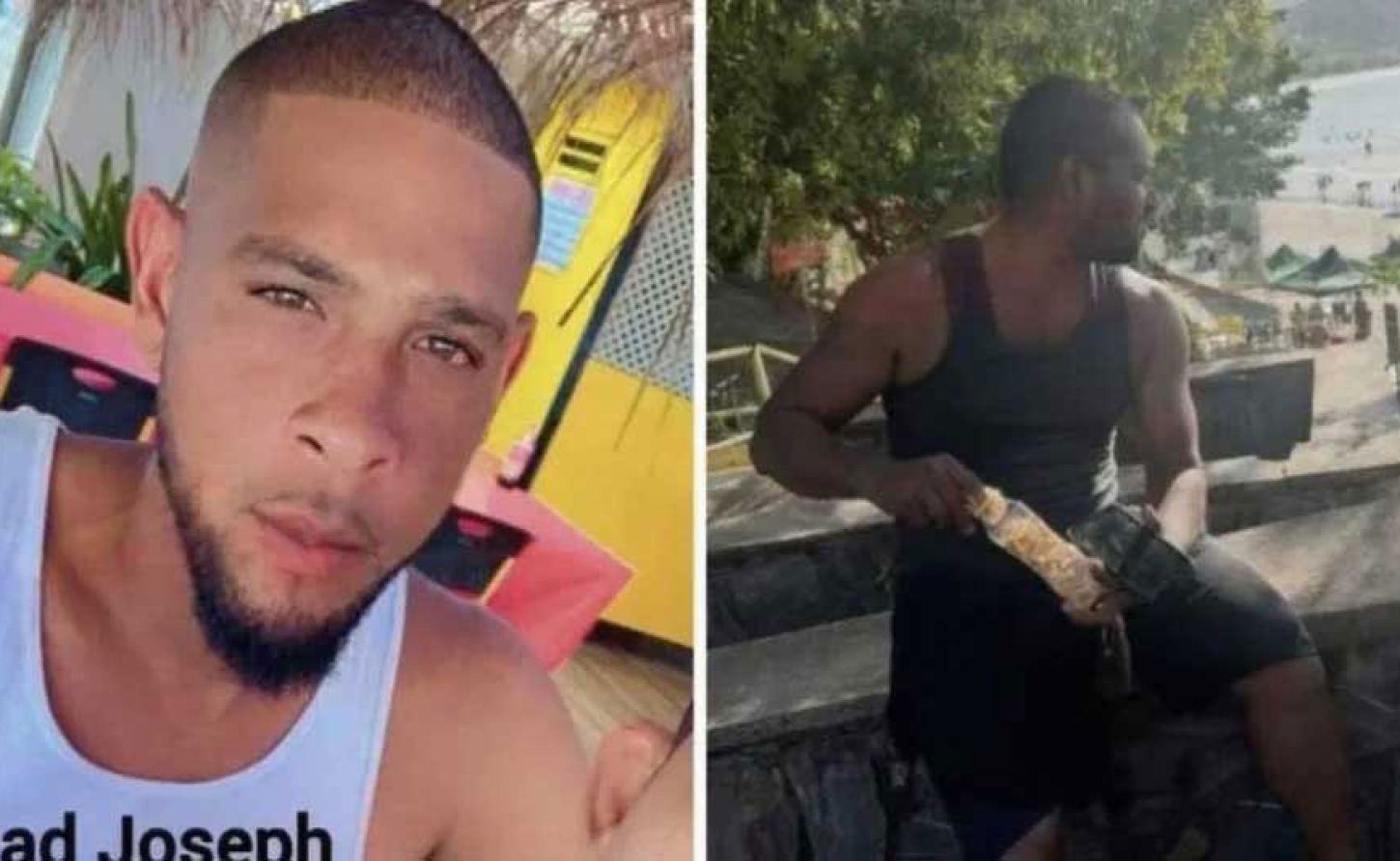
Trinidadian fishermen Chad Josephs and Rishi Samaroo who were killed in a US drone strike in October
Landmark lawsuit challenges Trump administration's deadly missile strikes that have killed at least 125 civilians in Caribbean and Pacific waters
PORT OF SPAIN, Trinidad and Tobago, January 27, 2026 - Chad Joseph wanted to get home to his wife and three children. Rishi Samaroo wanted to see his ailing mother. On October 14, 2025, both men were aboard a boat crossing from Venezuela to their homes in Las Cuevas, Trinidad and Tobago, when an American missile turned their journey into a death sentence.
They never arrived. Their families never got to say goodbye. And the Trump administration released footage of the strike like a trophy.
Now, the mothers and sisters left behind are doing what Caribbean governments have largely failed to do: they are demanding accountability from the world's most powerful nation for the blood it has spilled in regional waters.
A Lawsuit Against Impunity
On January 27, 2026, Lenore Burnley—Chad Joseph's mother—and Sallycar Korasingh—Rishi Samaroo's sister—filed suit in U.S. federal court, charging the American government with wrongful death and extrajudicial killing. The case, brought with support from the American Civil Liberties Union and the Center for Constitutional Rights, invokes the Death on the High Seas Act and the Alien Tort Statute to hold Washington accountable for what lawyers describe as "manifestly unlawful" acts.
The lawsuit names a grim toll: since September 2025, the Trump administration has launched 36 missile strikes against civilian boats in the Caribbean and Pacific Ocean. At least 125 people are dead—fishermen, workers, migrants, human beings reduced to what legal advocates call "specks on a screen" in Pentagon footage.
Joseph and Samaroo were among six people killed in the October 14 strike. Trinidad and Tobago's Foreign Minister Sean Sobers later told local media that "the government has no information linking Joseph or Samaroo to illegal activities."
No evidence. No charges. No trial. Just missiles.
Fathers, Sons, Brothers
The administration may see statistics. The families see something else entirely.
"Chad was a loving and caring son who was always there for me, for his wife and children, and for our whole family," Lenore Burnley said in a statement. "I miss him terribly. We all do."
Joseph, 26, supported his family by fishing and doing farmwork in Venezuela. On October 12, he called his wife to say he had found a boat ride home. Two days later, she saw social media reports of a strike and began calling him frantically. He never answered. He never will.
Rishi Samaroo, 41, had rebuilt his life after serving a prison sentence, finding work on a Venezuelan farm caring for livestock and making cheese. He called his family almost daily. On October 12, he told his sister he was coming home because their mother had fallen ill.
"If the U.S. government believed Rishi had done anything wrong, it should have arrested, charged, and detained him, not murdered him," Korasingh said. "They must be held accountable."
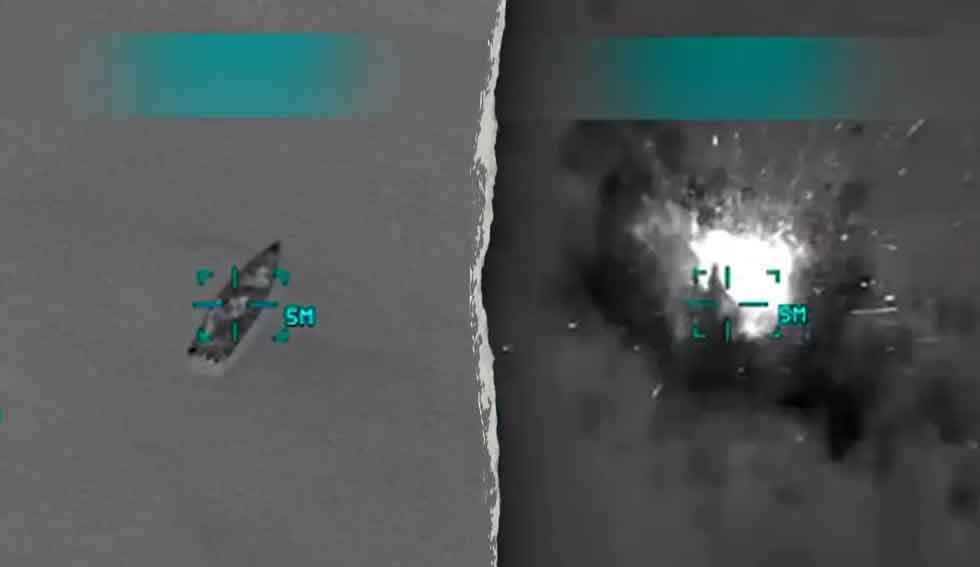 United States Government drone strike on Trinidadian fishing vessellLawlessness Dressed as War
United States Government drone strike on Trinidadian fishing vessell
The legal arguments are damning. The United States is not engaged in an armed conflict in the Caribbean—despite the administration's implausible claims to the contrary. Even if it were, the laws of war prohibit the indiscriminate targeting of civilians and civilian vessels. These strikes violate both domestic and international law.
"It is absurd and dangerous for any state to just unilaterally proclaim that a 'war' exists in order to deploy lethal military force," said Baher Azmy, legal director of the Center for Constitutional Rights. "These are lawless killings in cold blood; killings for sport and killings for theater."
Professor Jonathan Hafetz of Seton Hall Law School was blunter still: "The Trump administration's claims to the contrary risk making America a pariah state."
Caribbean Sovereignty on Trial
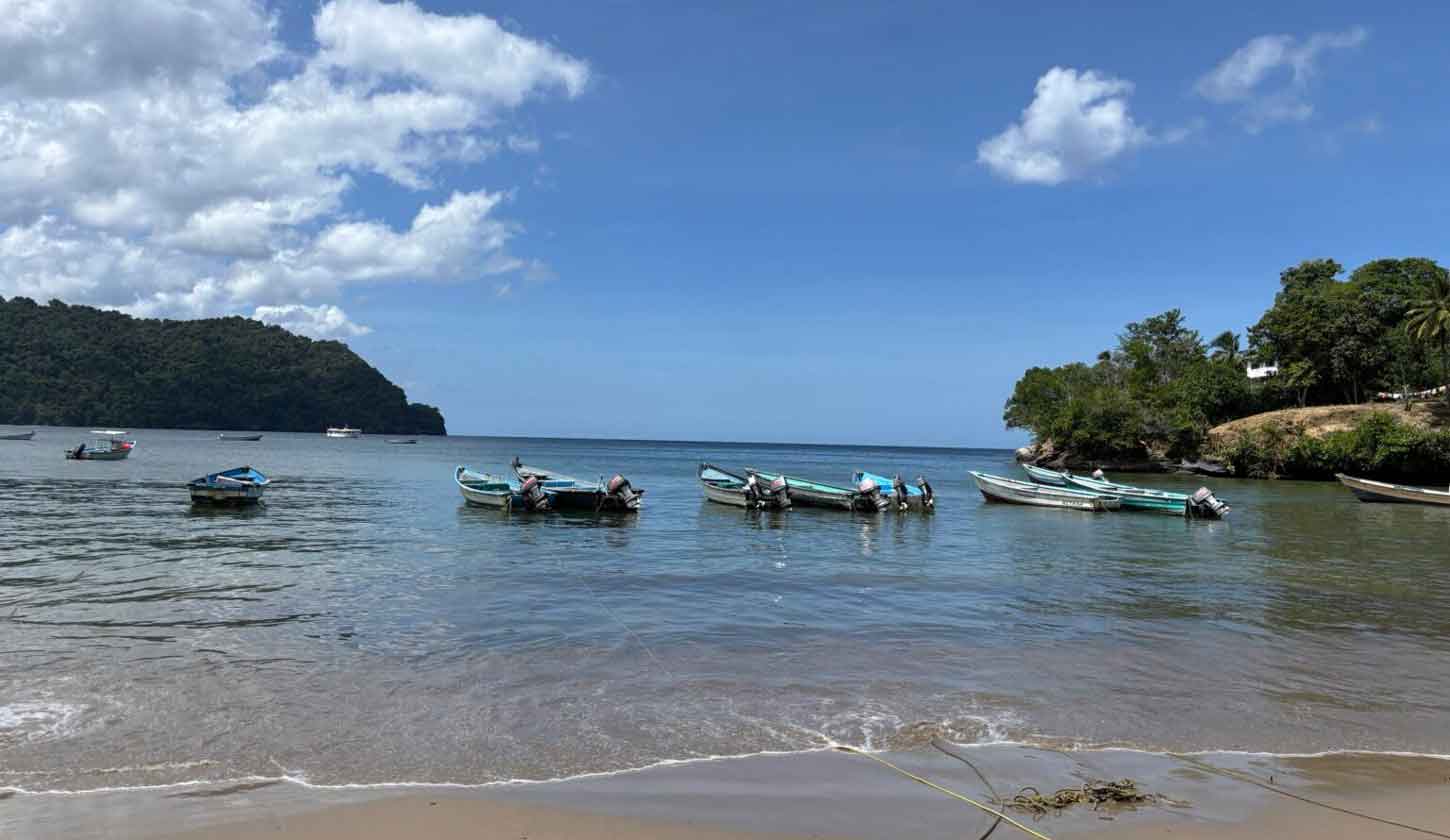
Las Cuevas fishing village in Trinidad and Tobago where the victims live.
Trinidadian fishermen now navigate waters where American drones may determine, without evidence or due process, that they deserve to die. The chilling effect extends far beyond two families in Las Cuevas.
This case is not merely about compensation. It is about whether small island nations and their citizens possess any rights that a superpower is bound to respect. It is about whether the rule of law means anything when the lawbreaker commands the world's largest military.
Chad Joseph and Rishi Samaroo cannot testify. Their families are speaking for them—and for every Caribbean citizen whose life might be deemed expendable by distant men with missiles.
-30-
