
VENEZUELA | Blood and Oil: The U.S. Conspiracy to Plunder Venezuela
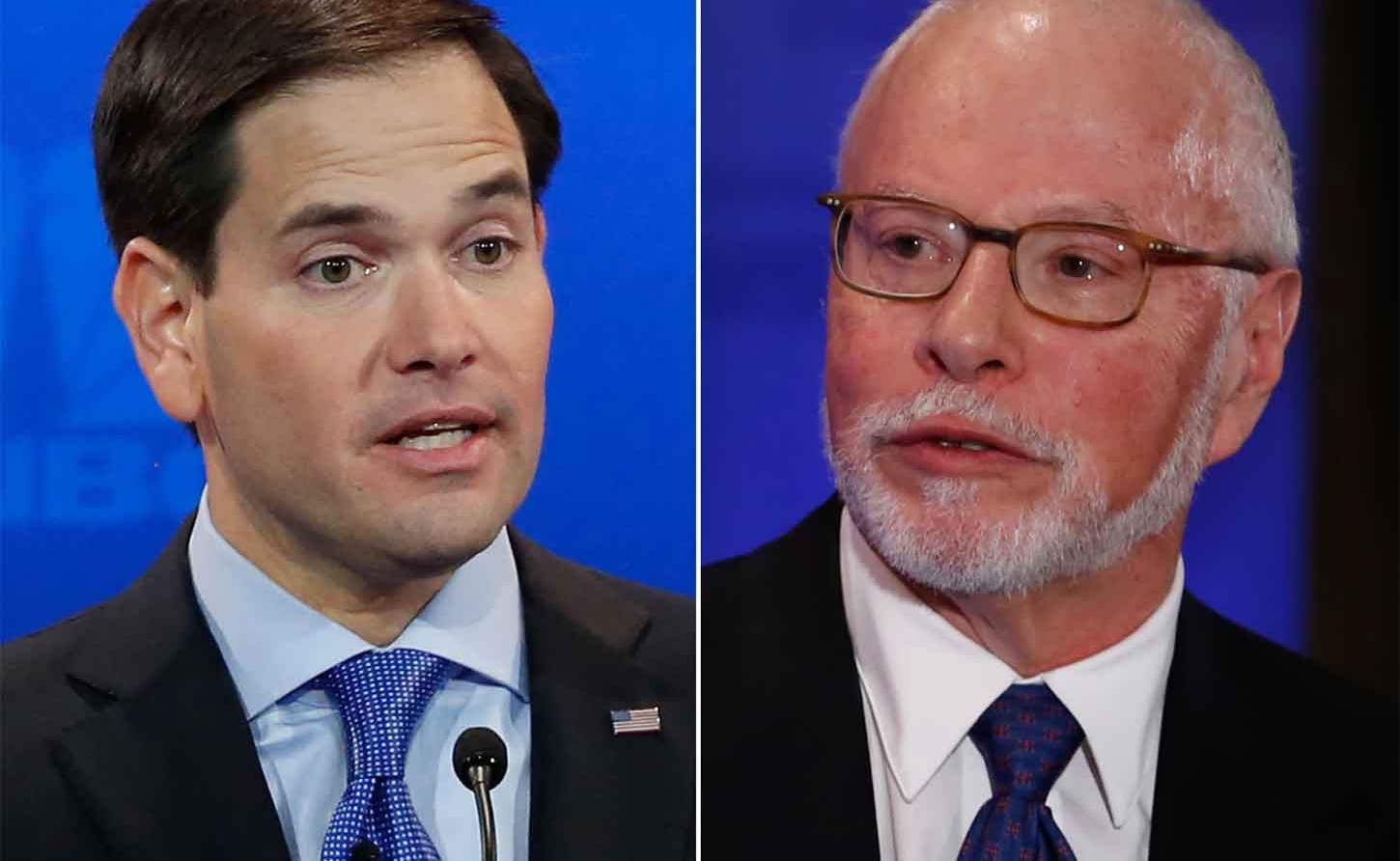
US Secretart of State Marco Rubio and billionaire investor Paul Singer
How Sanctions, Lawfare, and Kidnapping Delivered a Nation's Wealth to Wall Street Vultures
KINGSTON, Jamaica | Calvin G Brown | WiredJa | January 6, 2026 - In November 2025, less than two months before the Trump administration's military operation to kidnap and render Venezuelan President Nicolás Maduro to U.S. custody, hedge fund billionaire Paul Singer's investment firm completed its acquisition of CITGO Petroleum—Venezuela's most valuable international asset—for $5.9 billion.
Court advisors had valued the company at $11-13 billion; Venezuelan officials placed the figure at $18 billion. The purchase, at what amounted to a fire-sale price, caps a years-long legal and political campaign that critics argue was designed from the start to strip Venezuela of its prized refining operations—with Secretary of State Marco Rubio's political machinery serving as the engine of that dispossession.
The Vulture's Method
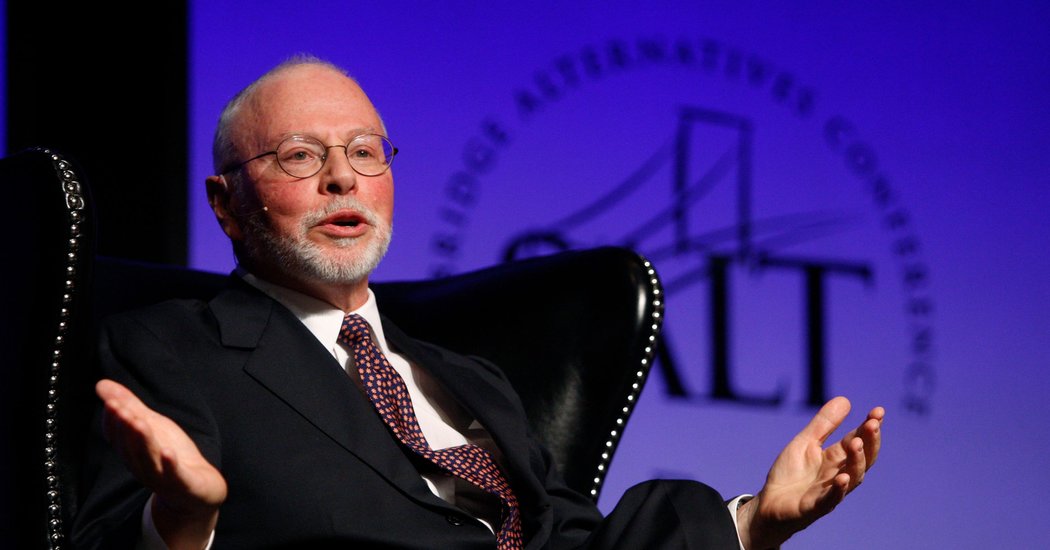
Paul Singer, Influential Billionaire, Supported Marco Rubio for President
Argentina's fifteen-year battle with Singer's fund—which culminated in a $2.4 billion payout in 2016—remains the most notorious example. Singer has pursued similar strategies against the Republic of the Congo during its worst food crisis and Peru, where his firm famously seized former president Alberto Fujimori's jet as he attempted to flee the country.
 CITGO represents Singer's most ambitious acquisition yet. The company owns three massive coastal refineries in Louisiana, Texas, and Illinois, 43 oil terminals, and a network of over 4,000 gas stations across the eastern United States.
These refineries are purpose-built to process heavy-grade Venezuelan "sour" crude—a fact that made CITGO vulnerable to devaluation once U.S. sanctions severed its supply line to Venezuelan oil, forcing it to source more expensive feedstock from Canada and Colombia.
A Decade of Financial Backing
The relationship between Singer and Marco Rubio stretches back more than a decade. In October 2015, Singer's endorsement of Rubio's presidential campaign was considered a watershed moment for the Florida senator's viability as a Republican contender.
Singer served as Rubio's national finance chairman and worked tirelessly to rally his network of wealthy Republican donors. CNN reported that Singer was "one of the GOP's leading bundlers" whose stamp of approval carried enormous weight among wealthy conservatives.
Singer's support for Rubio was never purely ideological. According to a 2016 Democracy Now investigation, Rubio "made direct approaches to the State Department on behalf of his top donor" during the Argentina debt dispute—actions journalist Greg Palast described as "money screaming."
Rubio also criticized Argentina at a Senate confirmation hearing for being a country "that doesn't pay bondholders"—a position that aligned precisely with Singer's financial interests.
In the 2024 election cycle, Singer's financial footprint expanded dramatically. He donated $5 million to Trump's super PAC, tens of millions more to Republican congressional candidates, and an undisclosed sum to Trump's transition team.
Singer has met personally with Trump at least four times since 2016, and despite initially backing Rubio against Trump in 2016, the hedge fund manager was welcomed at the White House in February 2017, with Trump declaring, "Paul just left and he's given us his total support."
The Legal Architecture of Dispossession
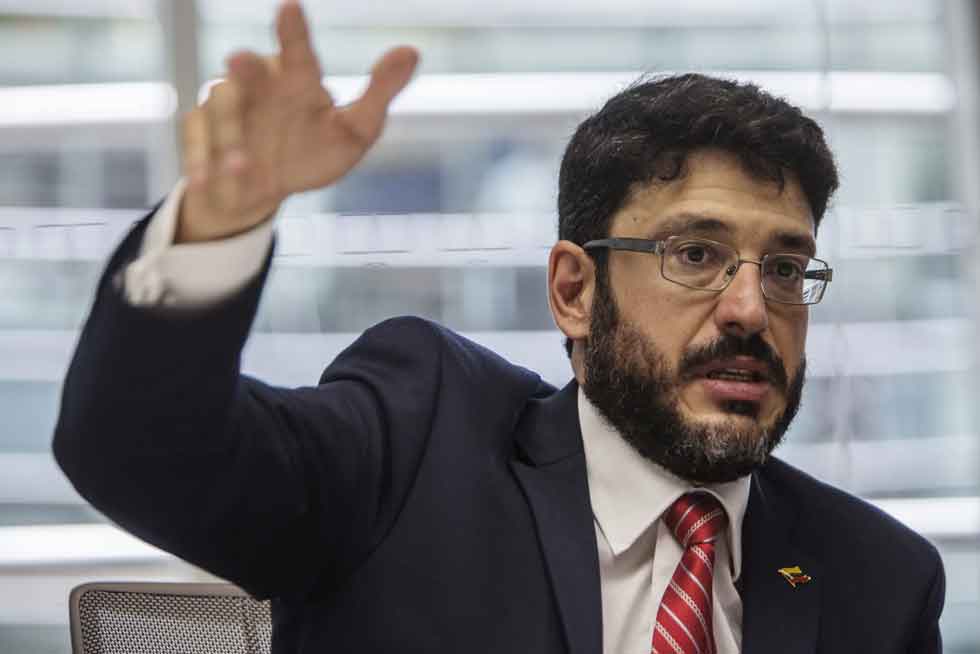
José Ignacio Hernández, the lawyer Guaidó appointed as his "special prosecutor" to represent Venezuela in U.S. courts
Central to these allegations is José Ignacio Hernández, the lawyer Guaidó appointed as his "special prosecutor" to represent Venezuela in U.S. courts. Court records reveal that Hernández had previously provided expert testimony for Crystallex, the Canadian mining firm whose lawsuit triggered the CITGO auction process.
In 2017, Hernández filed a sworn declaration arguing that Venezuela's government had used PDVSA, CITGO's parent company, "as a political tool to achieve its domestic and international objectives"—testimony that strengthened Crystallex's legal argument that CITGO was the "alter ego" of the Venezuelan state and therefore subject to seizure.
Venezuelan economist Francisco Rodríguez called this outcome "inexcusable," noting that "after spending tens of millions of dollars on lawyers, the interim government has made such basic errors."
Venezuelan officials, including National Assembly President Jorge Rodríguez, accused Hernández of "criminal negligence" and alleged that he had failed to disclose his conflicts of interest during his confirmation process.
Venezuela's Attorney General opened a criminal investigation, characterizing Hernández's actions as "a conflict of interest that violates all judicial ethics" and "treason toward his fellow citizens."
The 'Alter Ego' Ruling: How Legal Strategy Became Asset Stripping
In March 2023, Delaware Judge Leonard P. Stark ruled that CITGO was indeed the "alter ego" of Venezuela's government—a determination that opened the door to creditor seizures. Critically, Stark pointed to the Guaidó-led opposition's management of CITGO as evidence supporting the alter ego finding.
When the Trump administration recognized Guaidó's self-proclamation as Venezuela's "interim president" in January 2019 and handed CITGO's management to an opposition-appointed board, it inadvertently strengthened the legal argument that CITGO was inseparable from the Venezuelan state.
The legal proceedings to auction CITGO moved forward under the oversight of court-appointed special master Robert Pincus—who also sits on the board of directors of the American Israel Public Affairs Committee (AIPAC).
Singer himself has donated over $3 million to AIPAC since 2022, making him tied for the organization's third-largest donor. Whether these overlapping relationships constitute a conflict of interest, they illustrate the dense network of political and financial connections surrounding the CITGO sale.
Manufacturing the Discount
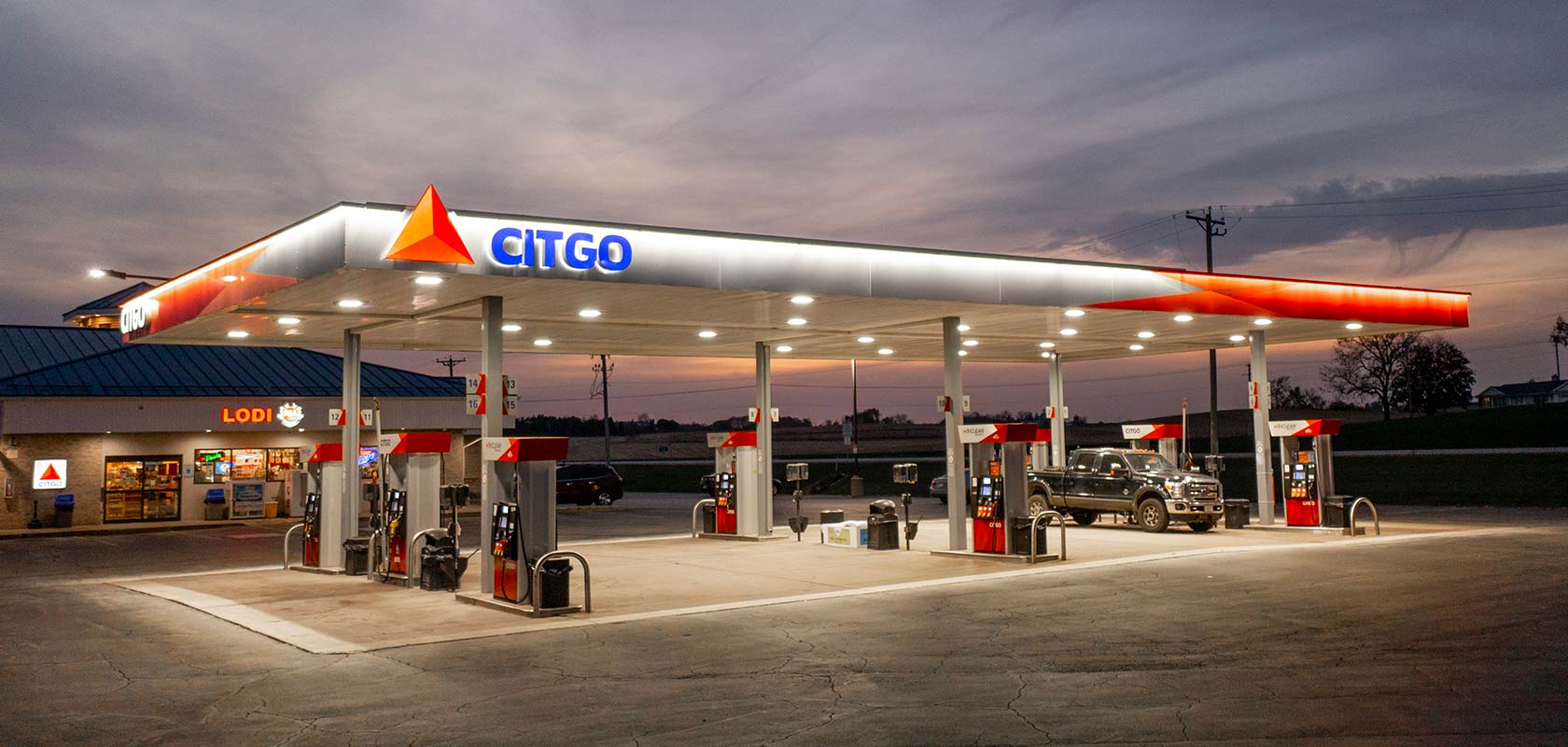 CITGO's dramatic devaluation was not accidental—it was the predictable consequence of U.S. policy.
The Trump administration's sanctions regime, which included an embargo on Venezuelan oil imports, cut CITGO off from the heavy crude its refineries were designed to process. Venezuelan Vice President Delcy Rodríguez called the sale "fraudulent" and "forced," a characterization shared by the Maduro government.
The sanctions created precisely the conditions under which Singer's vulture strategy thrives: a distressed asset, limited competition from risk-averse investors, and a legal framework that allowed seizure despite the property belonging to a sovereign nation.
Most serious buyers refused to touch the asset given Venezuela's uncertain status. Financing dried up. The auction, which should have attracted major oil companies and competitive bids, became what one analyst described as "a clearance event, with one vulture left standing."
The Think Tank Pipeline: Manufacturing Consent
Singer did not leave the political groundwork to chance. He has been a principal funder of the think tanks that have most aggressively promoted regime change in Venezuela. Singer has donated over $10 million to the Manhattan Institute since 2011, serving as chairman of its board from 2008 to 2025.
The Manhattan Institute has produced a steady stream of papers calling for Maduro's ouster and defending aggressive U.S. policies against Venezuela.
Singer is also a major donor to the Foundation for Defense of Democracies (FDD), which published a report in November 2025 explicitly calling for military strikes in Venezuela: "The United States should strike cartel infrastructure, drug production facilities, and regime military assets that enable narcoterrorism."
Additional Singer-backed institutions—including the American Enterprise Institute and the Heritage Foundation—have provided supportive policy frameworks for hawkish Venezuela policies.
Silencing the Critics
“ Singer acquired CITGO for $5.9 billion through a court-forced sale. The company's estimated value ranges from $11 billion to $18 billion. If sanctions are lifted and CITGO can once again process cheap Venezuelan crude ”
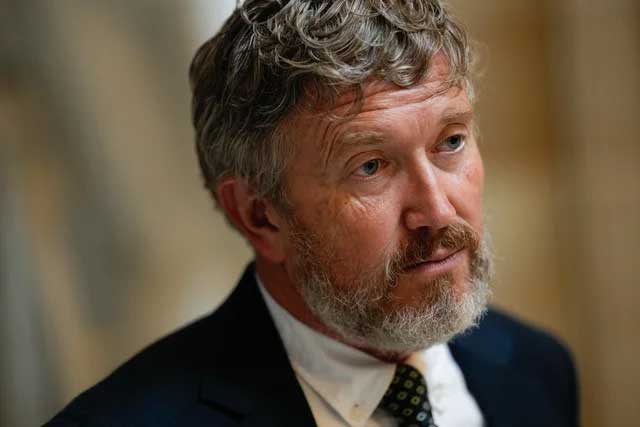
Republican Congressman Thomas Massie of Kentucky angered Trump by demanding the release of the Jefferey Epstein files.
In June 2025, he contributed $1 million—the largest single donation—to a super PAC targeting Republican Congressman Thomas Massie of Kentucky.
Massie had angered Trump by demanding the release of Jeffrey Epstein files and has since become one of the most vocal congressional critics of Trump's Venezuela policy.
Massie has co-sponsored multiple war powers resolutions aimed at restraining the president's ability to launch strikes against Venezuelan targets.
In response to Maduro's forced rendition, Massie wrote: "According to Grok, Paul Singer, globalist Republican mega-donor who's already spent $1,000,000 to defeat me in the next election, stands to make billions of dollars on his distressed CITGO investment, now that this administration has taken over Venezuela."
He added: "It's not American oil. It's Venezuelan oil. Oil companies entered into risky deals to develop oil, and the deals were canceled by a prior Venezuelan government. What's happening: Lives of US soldiers are being risked to make those oil companies (not Americans) more profitable."
The Conflict at the Heart of U.S. Policy
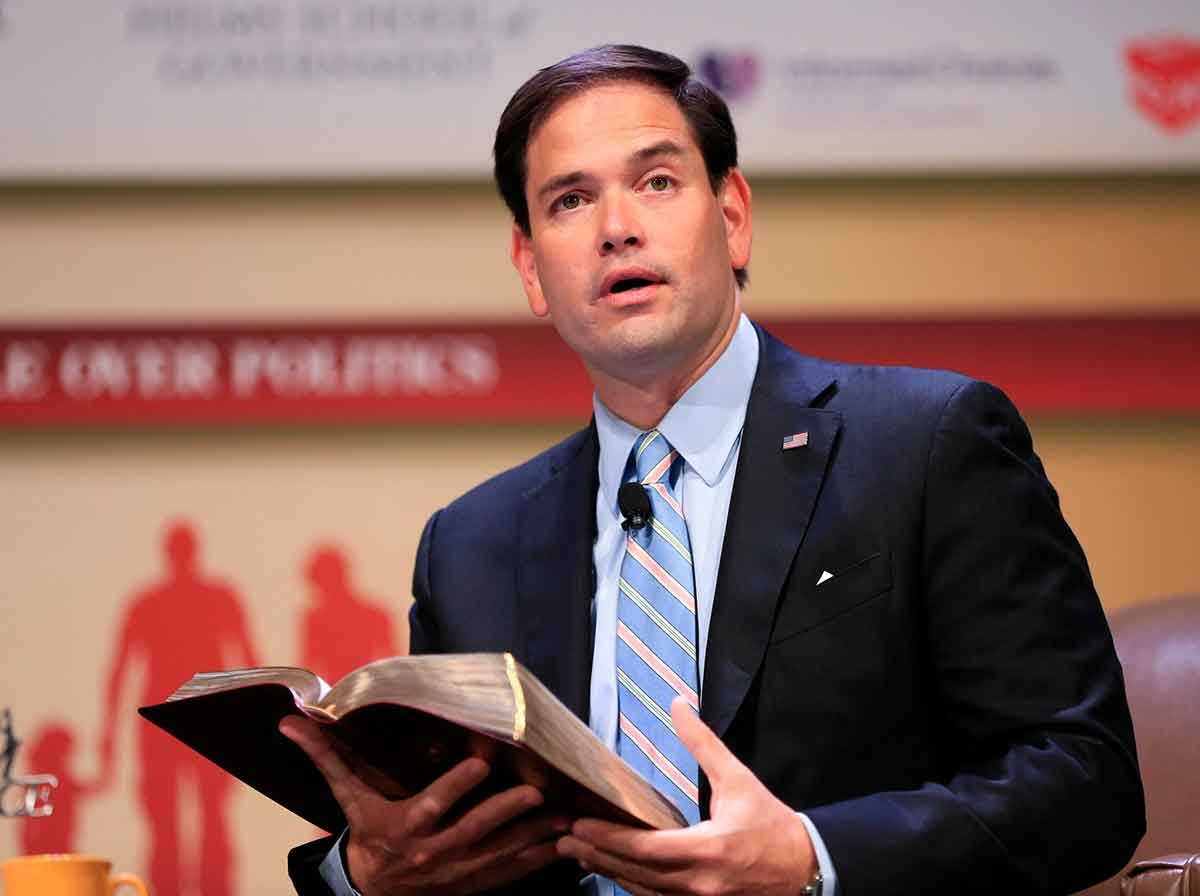
Secretary of State Marco Rubio occupies the central role in mamaging the US Policy towards Venezuela
Rubio has been described as the administration's "foremost expert on Latin America" and is reportedly leading a small working group, with heavy presidential engagement, to determine Venezuela's post-Maduro trajectory.
During Sunday television appearances following Maduro's kidnapping and rendition, Rubio repeatedly emphasized the "leverage" the U.S. holds through its oil quarantine and said he expects "dramatic interest from Western companies" in Venezuela's oil sector.
He noted that Interior Secretary Doug Burgum and Energy Secretary Chris Wright will be "taking an assessment and speaking to some of these companies." The explicit conflation of regime change with oil company access raises unavoidable questions about whose interests are being served.
The mathematics are stark: Singer acquired CITGO for $5.9 billion through a court-forced sale. The company's estimated value ranges from $11 billion to $18 billion. If sanctions are lifted and CITGO can once again process cheap Venezuelan crude—an outcome that appears likely under a U.S.-friendly government—Singer's return on investment could be measured in the billions.
The man who spent $5 million supporting Trump's campaign and tens of millions more supporting his congressional allies now stands to profit enormously from decisions made by an administration in which his longtime political ally serves as the nation's chief diplomat.
Caribbean Implications
For Caribbean nations, the CITGO story carries lessons that extend far beyond Venezuela's borders. It demonstrates how sanctions, lawfare, and political recognition can be weaponized to strip sovereign nations of their assets.
It shows how "shadow governments" recognized by Washington but lacking domestic legitimacy can be used to circumvent legal protections that would otherwise shield national wealth.
And it reveals the intricate web of donor relationships, think tank funding, and political appointments that can align U.S. foreign policy with the financial interests of well-connected billionaires.
Trinidad and Tobago, which shares maritime boundaries and energy infrastructure connections with Venezuela, watches these developments with particular concern.
The precedent that sovereign assets can be seized through U.S. courts and sold to politically connected investors threatens the fundamental security of any nation that might find itself on the wrong side of Washington's favor.
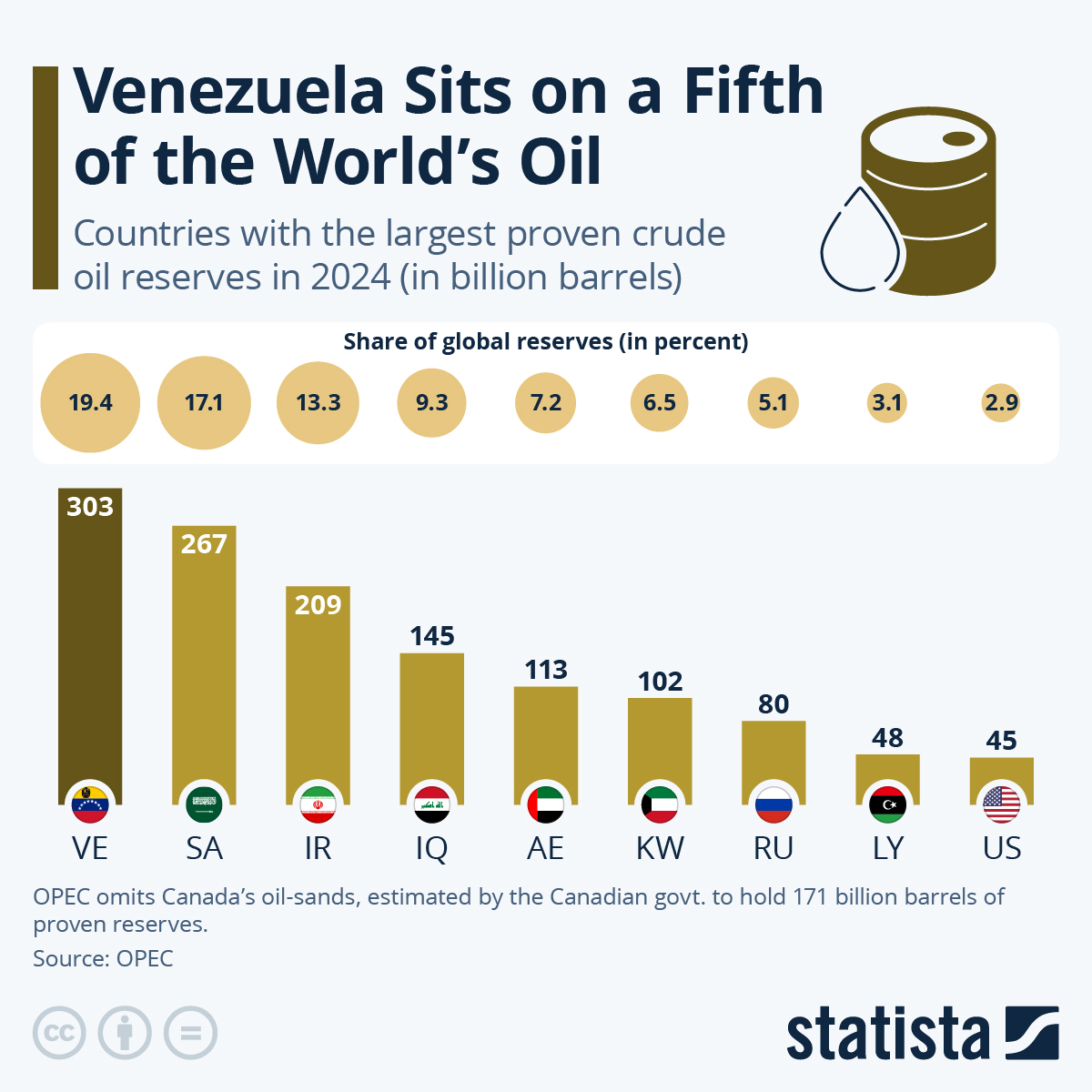 World Oil Reserves by CountryConclusion: The Spoils System Returns
World Oil Reserves by Country
Paul Singer did not invent sanctions, sovereign debt litigation, or regime change. What he has perfected is the ability to profit from all three simultaneously while remaining legally insulated from accountability.
CITGO was not lost because Venezuela failed to manage its assets—it was lost because transnational capital identified it as a target and constructed the legal and political architecture necessary to seize it.
The question now facing the Venezuelan people, and the hemisphere watching their fate, is whether this represents the new normal: a system in which the U.S. Secretary of State can orchestrate regime change in a nation where his top donor has just acquired billions in assets.
A sustem where court-appointed officials share organizational memberships with those whose bids they oversee, and where think tanks funded by interested parties manufacture the intellectual justification for military intervention.
As Congressman Massie observed: "Oil companies entered into risky deals to develop oil, and the deals were canceled by a prior Venezuelan government. What's happening: Lives of US soldiers are being risked to make those oil companies (not Americans) more profitable."
For Paul Singer, the risk has been handsomely rewarded. For Venezuela, and for the principle of sovereign control over national resources, the costs are only beginning to be tallied.
_______________
WiredJa is a Caribbean news publication focused on regional politics and current affairs.
-30-
