AFRICA | Brown Gold, Bitter Reality: Côte d'Ivoire's Cocoa Farmers Drown in Unsold Beans
AFRICA | Brown Gold, Bitter Reality: Côte d'Ivoire's Cocoa Farmers Drown in Unsold Beans
The world’s largest chocolate consumers reap the benefits of crashing prices while West African small farmers face economic devastation
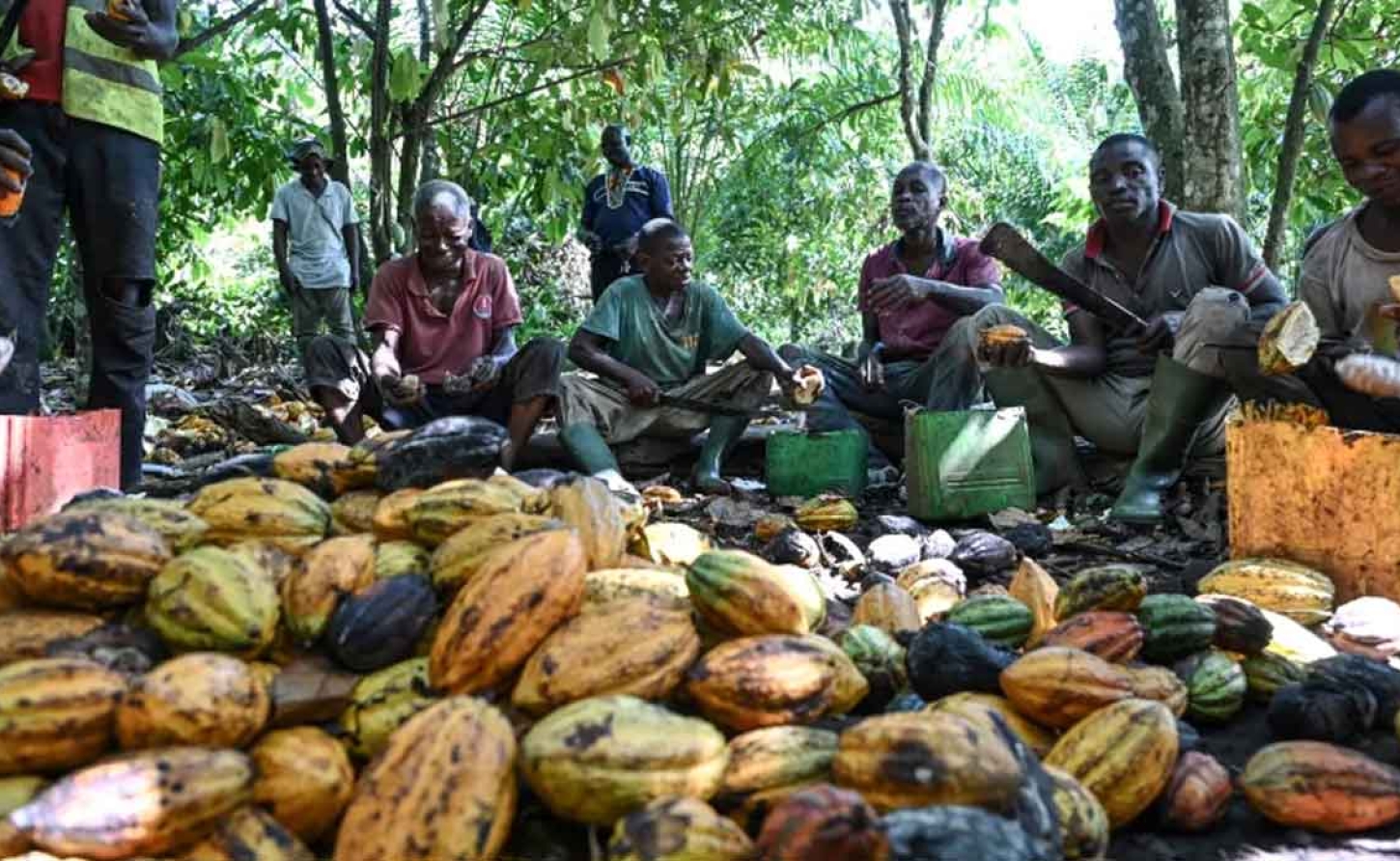
The cruel arithmetic of global commodities has never been more merciless. The République de Côte d'Ivoire produces 42 percent of the world’s cocoa—the essential ingredient fueling chocolate consumption across Europe and America—yet farmers like Laurent Kone still cannot afford a proper roof after three decades of cultivation.
His wattle-and-daub house with its tarpaulin covering stands as a monument to the grotesque imbalance that defines the global cocoa trade. Now, with prices collapsing and buyers nowhere to be found, even that modest dream of permanent shelter slips further from reach.
The Price Collapse: Who Benefits, Who Suffers
After reaching historic highs of over $12,000 per tonne in late 2024—driven by disease, aging plantations, and extreme weather—cocoa prices have crashed by more than 45 percent through 2025, plummeting to around $5,000 per tonne. For chocolate manufacturers in Europe and North America, this represents relief. For Ivorian farmers, it means catastrophe.
The collapse stems from what industry analysts call “demand destruction.” When prices surged, chocolate manufacturers cut back production, reformulated products to use less cocoa, and passed costs to consumers.
Europe’s cocoa grindings—the key measure of industrial demand—fell 7.2 percent year-over-year in the second quarter of 2025. Asia collapsed by 16 percent.
The wealthy nations that consume the vast majority of the world’s chocolate—the United States leads with 387,000 tonnes annually, while Switzerland tops per-capita consumption at nearly 11 kilograms per person—now benefit from cheaper raw materials. The farmers who grow it face economic annihilation.
Life in the Cocoa Belt: The Human Cost
In Betykro, some 20 kilometres from the city of Guiglo, approximately 50 families live without electricity or mobile phone coverage, sharing a single water pump. The nearest medical clinic requires a 10-kilometre journey along a rough track.
According to the World Bank, over half of Côte d'Ivoire’s cocoa producers survive on less than $1.36 per day—a figure that makes mockery of the industry’s billions in annual revenue.
“I started planting in 1996 and I still don’t have a roof because there’s no money,” Kone told reporters at his home. “It’s not dignified.”
The human toll extends beyond mere poverty statistics. Marty Somda, director of the Cabend cooperative, describes farmers dying despite having product to sell. “The day before yesterday, a farmer came to see me.
He had lost his wife. He had sent us his produce, which we estimated to be worth at least 9 million CFA francs, but he didn’t have 5 francs to pay for his wife’s funeral.”
This is the reality behind every chocolate bar consumed in London, New York, and Zurich.
The Structural Betrayal
The Côte d'Ivoiran government, recognising the crisis, raised the guaranteed farmgate price to a record 2,800 CFA francs per kilogram. The gesture proved hollow. With exports stalled and cooperatives facing liquidity crises, farmers find themselves forced to sell at whatever price they can obtain.
“The government set the price of cocoa at 2,800 CFA francs per kilo at the farm gate,” explains farmer Laurent Kone from Duekoue. “And today, they took my cocoa at 2,000 francs because there are needs. But how can we save human lives?”
The deeper injustice lies in the distribution of profits. Côte d'Ivoire receives merely six percent of the global cocoa industry’s revenues. The remaining 94 percent flows to traders, processors, and chocolate manufacturers—predominantly headquartered in Europe and America. The country that grows nearly half the world’s cocoa beans captures almost none of the value they generate.
Government Promises, Structural Failures
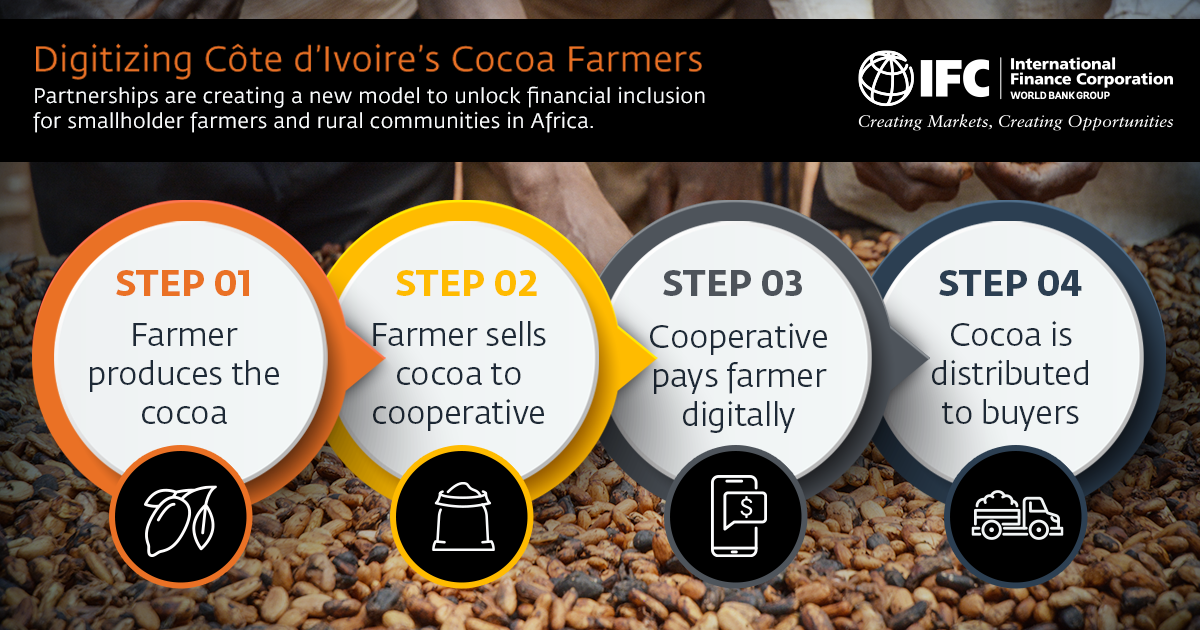 The Coffee and Cocoa Council has moved to reassure producers. “All of Côte d'Ivoire’s production from our plantations will be purchased,” declared Director Yves Brahima Kone. The government has announced plans to buy the entire stockpile accumulated by cooperatives.
Yet structural challenges remain intractable. Ninety percent of Côte d'Ivoire’s forest cover has vanished in six decades, largely to cocoa expansion.
Soil exhaustion has caused productivity to stagnate at 450-550 kilograms per hectare for two decades. Swollen shoot virus disease has devastated plantations. Trees are aging, and farmers cannot afford the 22,000 CFA francs required for a bag of fertiliser.
Some producers are diversifying into rubber and oil palm—crops that produce year-round rather than seasonally. “We manage with the rubber plantations,” says 24-year-old farmer Alidou Traore, who inherited his father’s land. “The current situation with cocoa doesn’t give me any motivation.”
A Generational Verdict
Village chief Boniface Djabia, 64, captures the collective despair. “We’re disappointed,” he says, gesturing at his threadbare clothes. “The farmers are the poorest people in Côte d'Ivoire.”
Laurent Kone delivers the final judgment—one that should echo in every boardroom from Zurich to Hershey, Pennsylvania: “I don’t want my children to be planters like me. It’s a life of suffering.”
The world’s chocolate addiction exacts its price. But that price is paid in West African sweat and hunger, while multinational corporations calculate their margins and European consumers enjoy their confections. One in five Ivorians depends on cocoa for survival. The question now is whether survival remains possible.
-30-
