Marco Rubio Celebrates Western Greatness — But Forgot to Mention the Unpaid $131 Trillion Bill
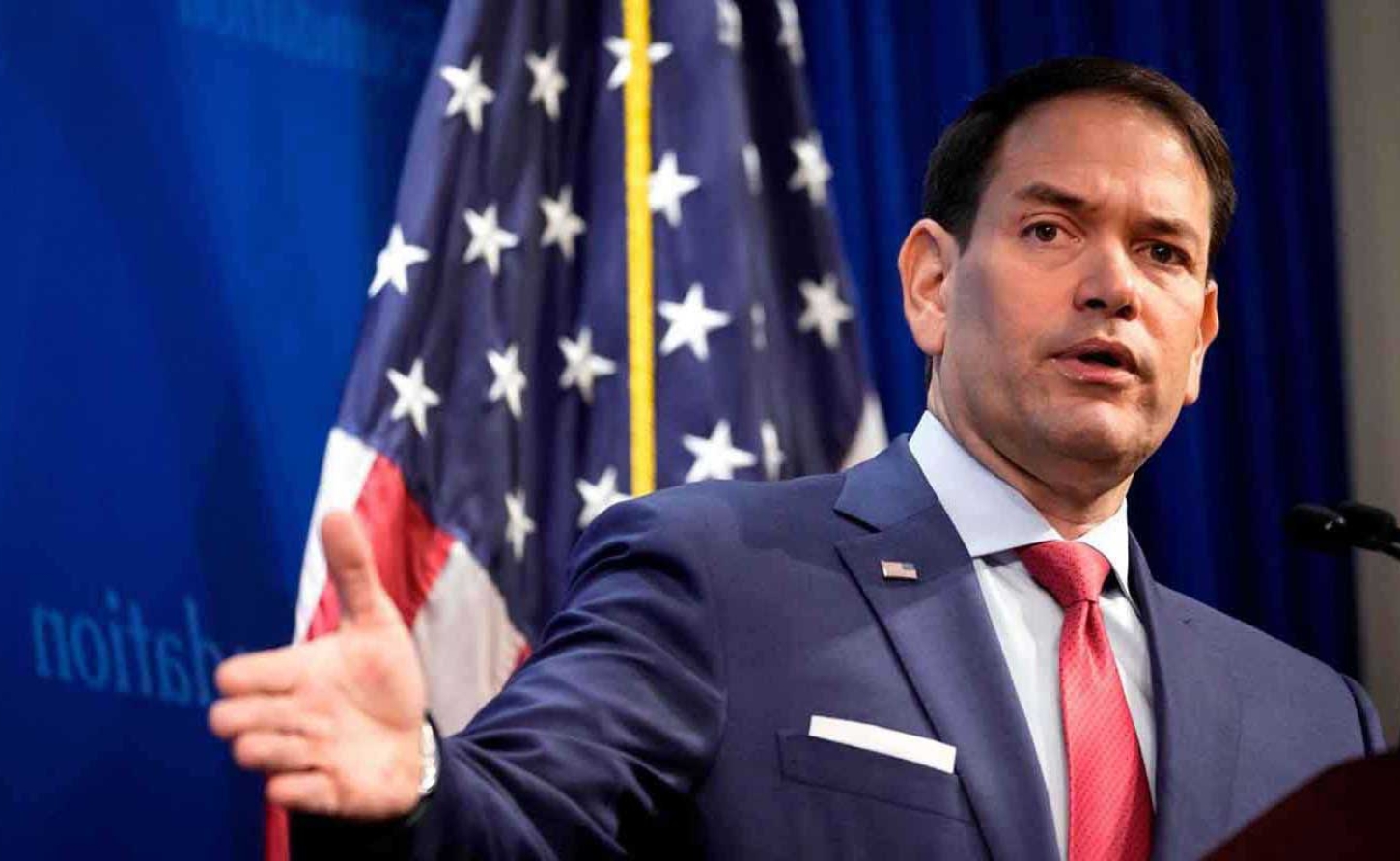
Speaking at the recent Munich Security Conference, US Secretary of State MARCO RUBIO portrayed the USA as a white nation that was exclusively built by white, European people.
At Munich, the US Secretary of State rewrote history — But Africa and the Caribbean didn't make the cut
H/T: Ambassador David Commissiong of Barbados, whose social media post bringing Secretary Rubio's Munich remarks to wider Caribbean attention inspired this commentary.
MONTEGO BAY, Jamaica, February 19, 2026 - Marco Rubio stood before the world's most powerful security gathering in Munich last weekend and told a breathtaking lie. Not the kind fashioned from pure fabrication, but the far more dangerous kind — the lie of strategic omission, dressed in the elegant robes of civilizational pride.
The US Secretary of State, himself the son of Cuban immigrants, delivered what many in the Western media breathlessly called a landmark address. Europeans, still nursing wounds from Vice President J.D. Vance's abrasive Munich appearance a year earlier, were reportedly relieved.
There was applause. There was a standing ovation. There was, as one analyst put it, a collective sigh of relief from the transatlantic establishment.
But from where the Caribbean stands, there was something else entirely — a glaring, unconscionable erasure.
A Mural With Missing People
 Rubio painted America's origin story in exclusively white, European brushstrokes. He invoked an Italian explorer who "brought Christianity to the Americas," English settlers who gave America its language and legal system, and the Scot and Irish frontiersmen, German farmers, French fur-traders, and Spanish ranchers who supposedly built the nation. It was a sweeping historical mural — and it was missing entire civilizations.
Gone were the indigenous peoples of the Americas, who did not merely inhabit the land before Columbus arrived — they were the land. They built societies, cultivated crops, developed languages and governance structures that predated European contact by millennia.
Rubio's America apparently began when white men arrived on their shores.
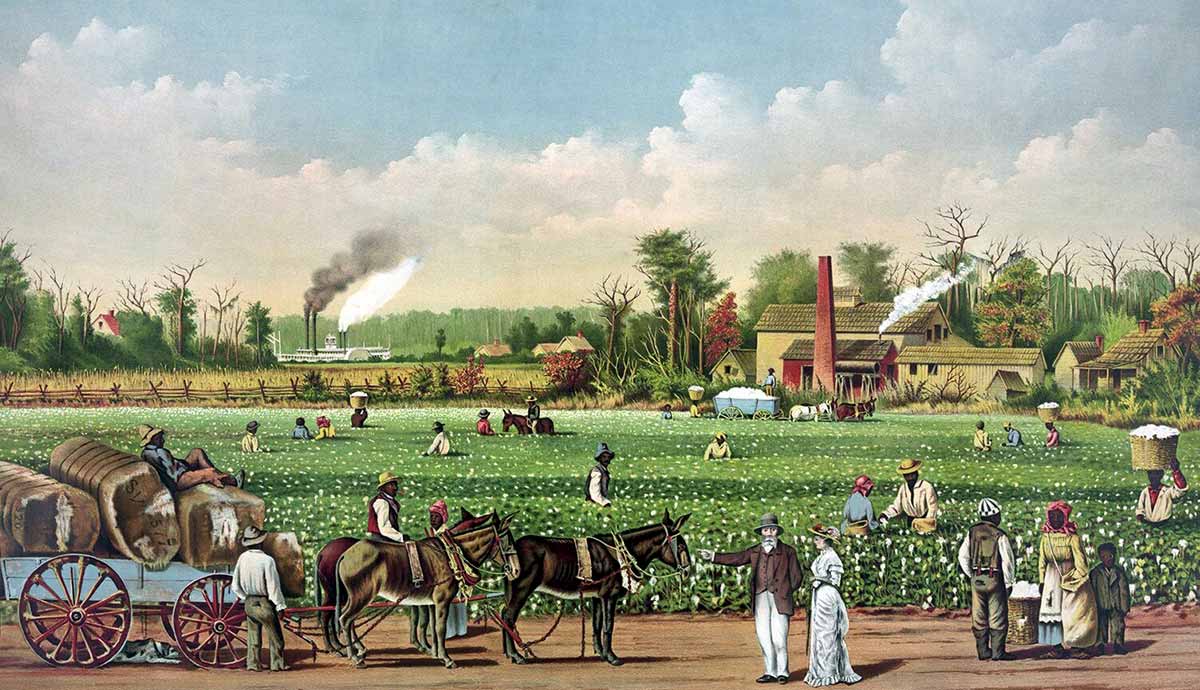
Gone, too, were the enslaved Africans — the men, women and children whose forced labour laid the literal foundations of American economic power. The cotton fields of the South, the tobacco plantations of Virginia, the sugar operations that fed the transatlantic economy — none of this entered Rubio's soaring rhetoric about Western greatness. The people who built America with their hands and their suffering were simply ... not there.
And gone — conspicuously, insultingly gone — were the Caribbean, Mexican, Latino, Mestizo and Asian contributors whose labour, culture and genius have woven themselves irreversibly into the fabric of the American nation.
This Was Not an Oversight. It Was Architecture.
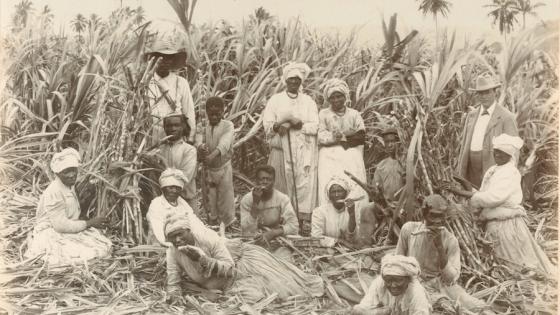
Enslaved Africans working under duress, for free, in Caribbean Sugar Plantations building wealth for Europeans and Americans.
Consider what Rubio's narrative demands we forget: that the Caribbean was not a passive backdrop to Western progress, but an engine of it. The sugar wealth extracted from Barbados, Jamaica, Trinidad and Haiti financed European industrial revolutions.
Caribbean enslaved people were the profit margin upon which Western civilization's supposed greatness was built. To speak of Western heritage without acknowledging this is not pride — it is propaganda.
Rubio told his Munich audience that "the men who settled and built the nation of my birth arrived on our shores carrying the memories and the traditions and the Christian faith of their ancestors."
And what of the ancestors who were brought in chains? What faith sustained them? What memories did they carry across the Middle Passage to a nation that refused to acknowledge their humanity, let alone their contribution?
The Caribbean Cannot Afford Polite Applause
The Caribbean cannot afford to receive this speech with the same relieved applause that echoed through Munich's Bayerischer Hof Hotel. For us, this is not a diplomatic nuance to be parsed and set aside.
It is a statement of ideology — one that has direct implications for how Washington views our region, our people, and our place in the global order.
When the most powerful nation on earth frames its identity as exclusively white and European, it sends a message about who matters and who does not. About whose history deserves protection and whose can be quietly written out of the script. About which civilizations are worth defending and which are merely footnotes.
Barbadian diplomat and scholar David Commissiong has correctly identified Rubio's Munich speech as a wake-up call. He is right. But a wake-up call is only useful if someone answers it.
The Caribbean must answer — loudly, collectively, and without apology. Our ancestors built too much of this world to be written out of its story now.
The Bill Is Overdue
And if Rubio truly believes in civilizational pride, perhaps he should reckon with civilizational debt. The Brattle Group — commissioned by the American Society of International Law in partnership with the University of the West Indies, and convened by a sitting judge of the International Court of Justice — has done the mathematics that Western leaders refuse to do.
Their calculations place the total reparations owed for transatlantic chattel slavery at between $100 and $131 trillion. The United States' specific share of that debt? An estimated $26.79 trillion — for its practice of enslaved labour alone.
That is not a protest slogan. That is not political posturing. That is the finding of one of the world's most respected economic consulting firms, arrived at through rigorous financial modelling.
So when Marco Rubio stands before the world celebrating the greatness of Western civilization, the Caribbean has a simple, arithmetically precise response: we know exactly who built it, we know exactly what it cost, we know exactly who paid for it — and we have not forgotten.
WiredJa | Caribbean News & Analysis
Editor's Note: WiredJa acknowledges Ambassador David Commissiong of Barbados, whose social media post highlighting Secretary Rubio's Munich remarks first brought this issue to the attention of the wider Caribbean public. His vigilance in centering Caribbean perspectives on global affairs is both noted and appreciated.
-30-
