
JAMAICA | THE ABOMINABLE BETRAYAL WHICH HISTORY WILL NEVER FORGET
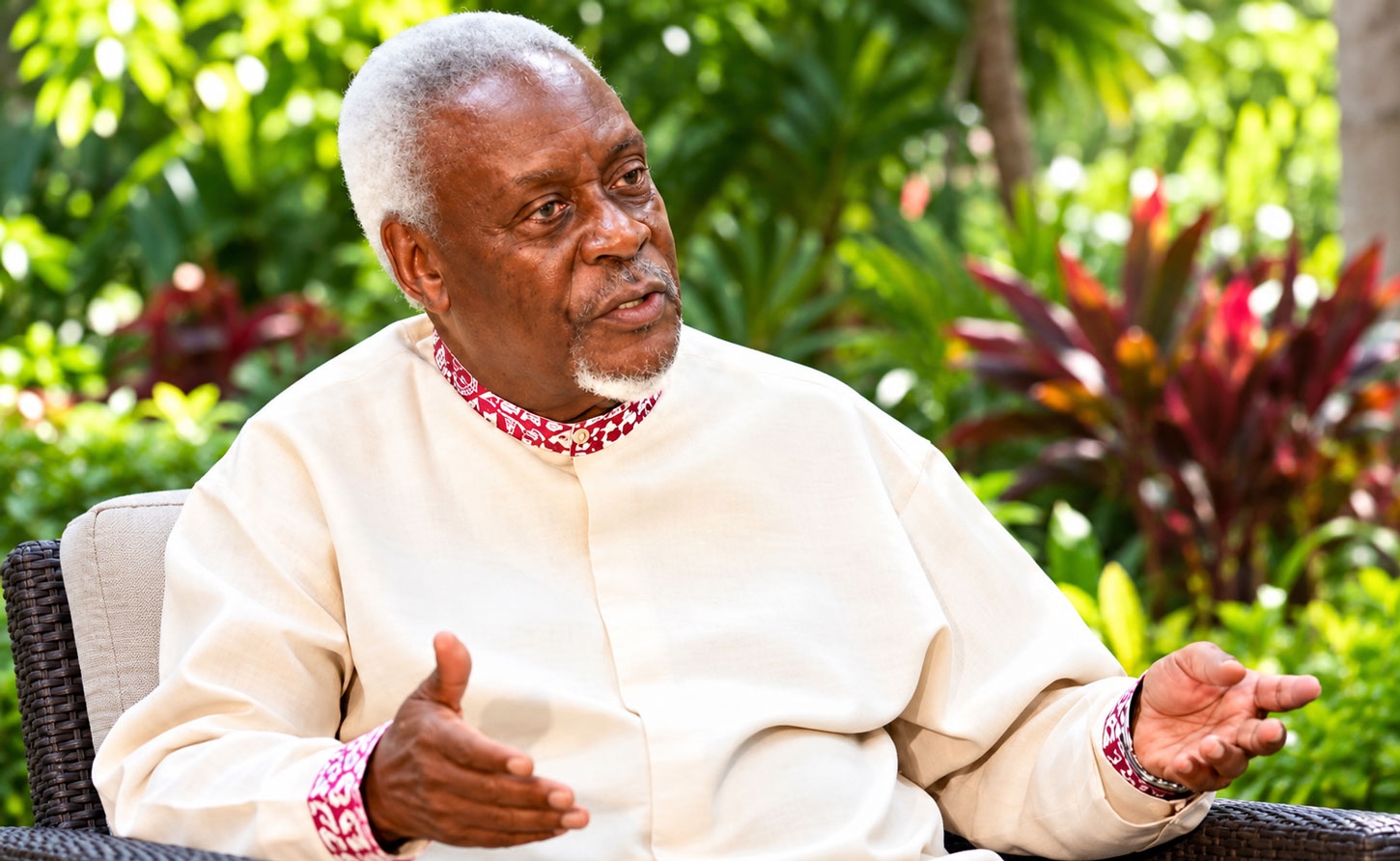
The Most Hon. P.J. Patterson, ON, OCC, OE, KC Former Prime Minister of Jamaica 29 October 2026
KINGSTON, Jamaica Oct 29, 2026, By P. J Patterson | - On Wednesday, 28 October 2026, Jamaica abstained when the United Nations General Assembly voted on the resolution calling for an end to the economic, commercial and financial embargo imposed by the United States against Cuba.
For more than three decades, under every Administration since the resolution was first tabled in 1992, Jamaica voted yes. We did so under governments of both parties, because the yes vote was never partisan. It was a matter of principle.
It was a day of shame for the land of Marcus Garvey, and a stain on the record of a nation which, before we had even raised our own flag, closed its ports to trade with apartheid South Africa.
That was an unequivocal declaration that the Jamaican people, though a small nation, would not support the oppression of others. On Wednesday, Jamaica's Government trampled that tradition. It was an abominable betrayal which history will never forget.
In December 1972, I accompanied Prime Minister Michael Manley to the meeting at which four newly independent Caribbean states resolved to establish diplomatic relations with Cuba, defying the isolation others sought to impose.
We took that decision not because it was easy, but because it was right, and because we understood that the sovereignty we had so recently won would mean little if we allowed others to choose our friends, least of all a friend that is our closest neighbour.
I am the last surviving participant in that decision, and I write with a sense of agony and seething outrage that Jamaica could so suddenly abandon the fundamental tenets on which it rested: the sovereign equality of states, non-interference in their domestic jurisdiction, and the right of every people to self-determination free from external threat or coercion.
Four days before the UN vote, eleven of my fellow former Heads of Government of the Caribbean Community and I wrote to all the nations of the world urging support for the resolution.
We said then, and I repeat now, that the embargo is contrary to international law, that it violates Cuba's sovereignty and the most elemental rights of its people, and that the pressures being deployed to defeat the resolution must be resisted.
Former Prime Minister Bruce Golding signed that letter alongside me. On this crucial matter, Jamaica's former leaders spoke with one voice. The present Government has chosen silence.
The Minister of Foreign Affairs tells us that the Government had been reflecting on this matter for some time, that the abstention represents a shift in policy, and that the resolution left no scope to reflect the broader context the Government wished to see. That explanation does not withstand scrutiny.
If there was no external pressure, as the Government insists, then it must explain how a fundamental reversal of a policy pursued by every Administration since 1992 serves Jamaica's best interest. It must also explain why it was never brought to parliament if this reflection had been under way for some time.
On Tuesday, 27 October, the House of Representatives passed, without dissent, a resolution on the economic and humanitarian situation in Cuba. It was the Government's own resolution, brought to the House by the Minister of State in the Ministry of Foreign Affairs.
In moving it, he declared that Jamaica could not support a unilaterally imposed blockade against Cuba. The resolution called for efforts to reduce the economic restrictions on Cuba and to facilitate its progressive integration into the international economic system, rather than its isolation under a blockade.
Within twenty-four hours, Jamaica abstained. Our abstention violated the unanimous decision of the Legislature. It was a deplorable flouting of Parliament's constitutional authority, the highest expression of the will of the people in our democracy.
Members on both sides of the House were led to believe one thing on Tuesday and confronted with its opposite on Wednesday. This is no mere discourtesy. It was an act of deception and a grave parliamentary offence.
In any Parliament modelled on Westminster, what took place between Tuesday and Wednesday would have resulted in censure and ministerial resignations. The Parliament of Jamaica is entitled to no less. It was an abominable betrayal which history will never forget.
The Minister of State's own words explain precisely why we should have voted yes. Small states have no mighty army to defend us, and insufficient economic weight to shield us against the exercise of military might and power.
Our security rests on the international rule of law and on a credible multilateral system with the Charter of the United Nations at its centre. When a powerful nation imposes its will unilaterally on a small neighbour, and we do not object, we weaken the very shield on which our own sovereignty depends.
Foreign policy must rest on each nation's enlightened determination of its own sovereign interests. It is a considered judgment, drawn from a nation's history, its values and the commitments it has freely made to others. It must be guided by principle, not expediency.
If ever Cuba needed our support, it is now. Our Caribbean neighbour faces the threat of extinction from a hegemon that denies energy, food, medicine, water and sanitation to human beings whose only sin is to be Cuban.
International law cannot be selectively applied. Inhumane measures of this kind are not imposed upon great powers whose political systems differ from that of the United States. They are imposed upon Cuba because Cuba is small and adjacent. Jamaica cannot afford to look away.
The Government speaks of encouraging dialogue between Washington and Havana and reform within Cuba, and the Minister reminds us that the Prime Minister raised these matters with his CARICOM colleagues in St Kitts and Nevis.
If dialogue between Washington and Havana is indeed the Government's objective, the Jamaican people are entitled to know what initiatives have been taken since the St Kitts and Nevis meeting, and what role CARICOM has been invited to play. Absent such an account, the language of dialogue cannot justify a drastic change of policy.
The people of Cuba stood with us whenever we needed support, and asked nothing in return. Their doctors and nurses served in our rural clinics and hospitals. Through Operation Miracle, nearly 25,000 Jamaicans have had their sight restored or improved, free of charge.
Cuba's scholarships trained our young people. Cuba donated and built schools that have benefited generations of teachers and students. That solidarity was freely given.
And how have we repaid it? By sending the Cuban doctors and nurses home, terminating a medical cooperation programme that had served our people for half a century. By concluding an arrangement to receive from the United States deportees who have no connection to Jamaica, the so-called third-country nationals (TCN) deal, entered into without consultation with Parliament or the people, and still kept secret. And now, by this abstention.
Nor is Cuba the only cause on which this Government has lost its voice. Last year, on a crucial vote pertaining to Palestine and its people, Jamaica chose to be absent from the chamber. That was not neutrality. It was cowardice. One hundred and forty-five countries voted in favour.
Taken together, these egregious errors form a pattern: absence from the vote in support of the Palestinian people; the sending home of the Cubans; the secret TCN deal; and now the UN vote on Cuba. Each step has been taken quietly; each has been explained away; and each carries Jamaica further from the principled ground on which we have always stood.
Jamaica has a long and honourable record in the councils of the world. That record was not built by abstaining when principle was on the line. It was built by a small nation that proved, time and again, what it means to say: we likkle but we tallawah.
On apartheid, and in the struggles of the developing world for a just international order, our voice carried a weight far beyond our size, because the world knew we could not be bought or bent. We are now in mortal danger of losing the universal respect we once enjoyed, and respect squandered is not easily regained.
The harm is not confined to our internal reputation and standing abroad. It is felt in every Jamaican household, at home and across the Diaspora. Jamaicans in Toronto and London, in New York and Miami, who have carried our name with pride and defended our nation wherever they have gone, are offended, hurt, angry and ashamed that their Government has chosen to shatter our nation's reputation in this way. They did not help to build that reputation so that it could be traded away in a single vote.
The entire nation and the Diaspora are entitled to a full and truthful account of how this decision was taken, by whom, and on whose advice. They are entitled to know whether pressure was applied, from what quarter, and what, if anything, was promised or threatened.
They are entitled to a Parliament whose unanimous resolutions are honoured, not set aside overnight in New York. And they are entitled to see Jamaica restored to the position which successive Administrations of both parties have proudly held.
We are a people who came through the holds of slave ships, the brutality of the plantation and the long humiliation of colonial rule. We did not win our freedom in order to bend the knee. Our good name was earned after centuries of profound oppression, and a proud people is rightly jealous of it.
Those who lead such a people act in its name. They must never mortgage its good name for favour, nor trade its principles for the promise of reward or the avoidance of displeasure.
They must never mistake silence for prudence, or submission for statecraft. What they must do is speak, as Jamaica has always spoken, for the right of the small to stand unafraid before the strong.
The time has come to repudiate, once and for all, the habits of genuflection. We live in no one's backyard. Jamaica must never accept the doctrine that might makes right.
When the annals of this era are written,they will record that on 28 October 2026 a Government of Jamaica resiled from our finest traditions of standing for law, justice, and sovereign equality but that the people of Jamaica did not.
— 30 —
