
JAMAICA | The Privy Council must go Skeffrey tells Chuck, Jamaica Still Chained to London
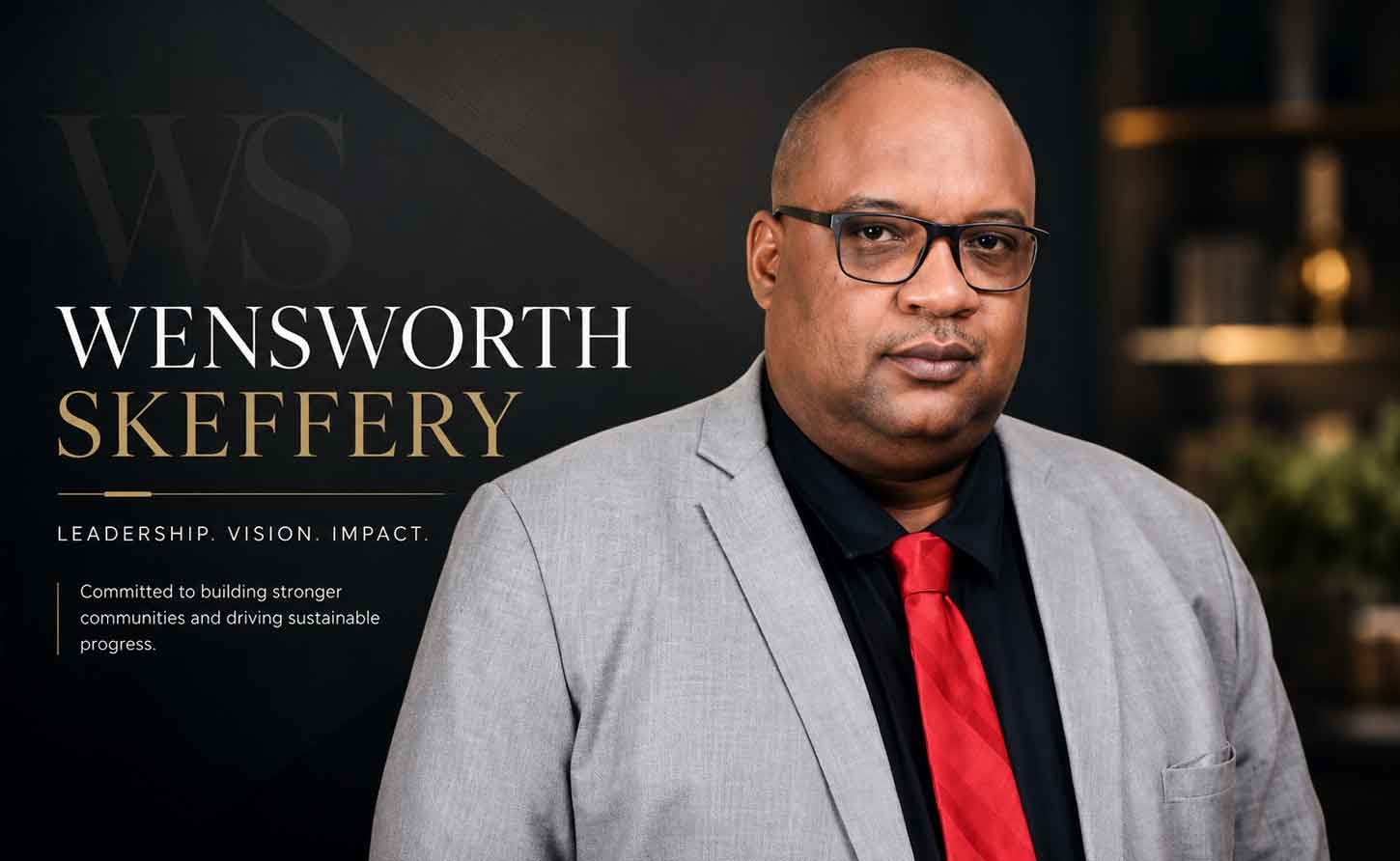
JAMAICA | The Privy Council must go Skeffrey tells Chuck, Jamaica Still Chained to London
Minister Delroy Chuck's insistence on a phased constitutional reform has exposed a government more invested in its own authority than the sovereign rights of the Jamaican people. Former Senator Wensworth Skeffrey names it plainly: it is an authoritarian posture dressed in the language of process.
MONTEGO BAY, May 19, 2026 - Calvin G. Brown - There is a particular kind of political dishonesty that wraps itself in the language of procedure, of sequencing, of 'national consensus,' while doing the very thing it claims to oppose — denying the people what is rightfully theirs.
That is precisely what Jamaica's governing Jamaica Labour Party administration is doing on the critical question of the Caribbean Court of Justice, and former Senator Wensworth Skeffrey has called it out with the clarity that many in the political class lack the spine to provide.
In a scorching public letter, Skeffrey has taken direct aim at Minister of Justice and Constitutional Affairs Delroy Chuck, whose strident declaration in the Sunday Gleaner that the Opposition leader wants the Government to 'bow to his demands' has exposed something far more troubling than a policy disagreement. It has exposed an administration that has confused the authority of office with ownership of the people's business.
The Servant Who Forgot His Role
Let us be plain about what is at stake. The Caribbean Court of Justice already exists. Jamaica helped build it. Jamaican taxpayers helped pay for it. Jamaican jurists sit on its bench. The CCJ operates with global esteem across the appellate jurisdictions of Barbados, Guyana, Belize, St. Lucia and Dominica — nations that had the courage to complete what Jamaica has perpetually deferred.
And yet here we stand, 63 years after Independence, still trooping our most consequential legal disputes to a court in London presided over by judges appointed under a system that answers, ultimately, to the British Crown.
Chuck frames the Opposition leader's insistence that this must change — simultaneously with the transition to republic status — as a 'demand' to which a self-respecting government could never 'bow.' But Skeffrey correctly inverts the formulation. In a functioning democracy, it is not the Opposition making demands of the government.
It is the people, through their elected representatives and civic voices, asserting what the national interest requires. And the national interest here is unambiguous: a republic that retains the King's court as its final judicial authority is no republic at all.
"A demand that Jamaica's people be freed from the Privy Council is not a challenge to government authority — it is government's fundamental obligation."
The 'My Way or the Highway' Doctrine
What Skeffrey identifies as a 'my way or the highway' disposition is not merely an attitude problem. It is a governing philosophy that places administrative preference above constitutional duty. The JLP's position — that the CCJ question should be resolved separately, perhaps by referendum, after the republic question is settled — is not a principled stand on process.
It is a mechanism for indefinite delay. Jamaica's constitution does not even require a referendum to replace the Privy Council. What it requires is the political will that this administration has consistently failed to muster.
Meanwhile, the people whom Chuck and his colleagues are sworn to serve remain tethered to a court whose geographical and cultural distance has always placed it beyond practical reach for the average Jamaican. The Privy Council has never been a court for the masses.
It has always been a court for those with the resources to navigate London's legal geography — an exclusive appellate chamber sustained, in the Caribbean context, by the residual psychology of colonial deference.
The Price of Inaction
Skeffrey's warning deserves amplification: this pompous posture leads to a painfully rough ride away from the creation of a just society. Every year that Jamaica remains outside the CCJ's appellate jurisdiction is a year in which regional jurisprudence develops without Jamaica's full participation.
It is a year in which Caribbean legal identity is shaped by courts that have no experiential stake in our social realities, our cultural context, or our developmental challenges.
The tragedy is compounded by the knowledge that the instrument of correction sits ready and waiting. The CCJ is not a future aspiration — it is a present reality, tested, respected, and available. To refuse it in favor of bureaucratic sequencing is not caution. It is, as Skeffrey puts it, nothing short of baffling.
And the people of Jamaica — those who cannot afford KCs in London, those whose justice delayed has consistently become justice denied — deserve far better than baffling from those they elected to serve them.
The Holness administration must understand: a government that mistakes its authority for ownership of the national agenda does not just frustrate an opposition. It betrays a people. Minister Chuck's posture reveals precisely that betrayal. Jamaica deserves a republic with a Caribbean court — whole, sovereign, and unambiguous. Anything less is theater.
— 30 —
