
UNITED STATES | Mississippi Goddam, Indeed: From Nina Simone’s Fury to Scott Colom’s Victory
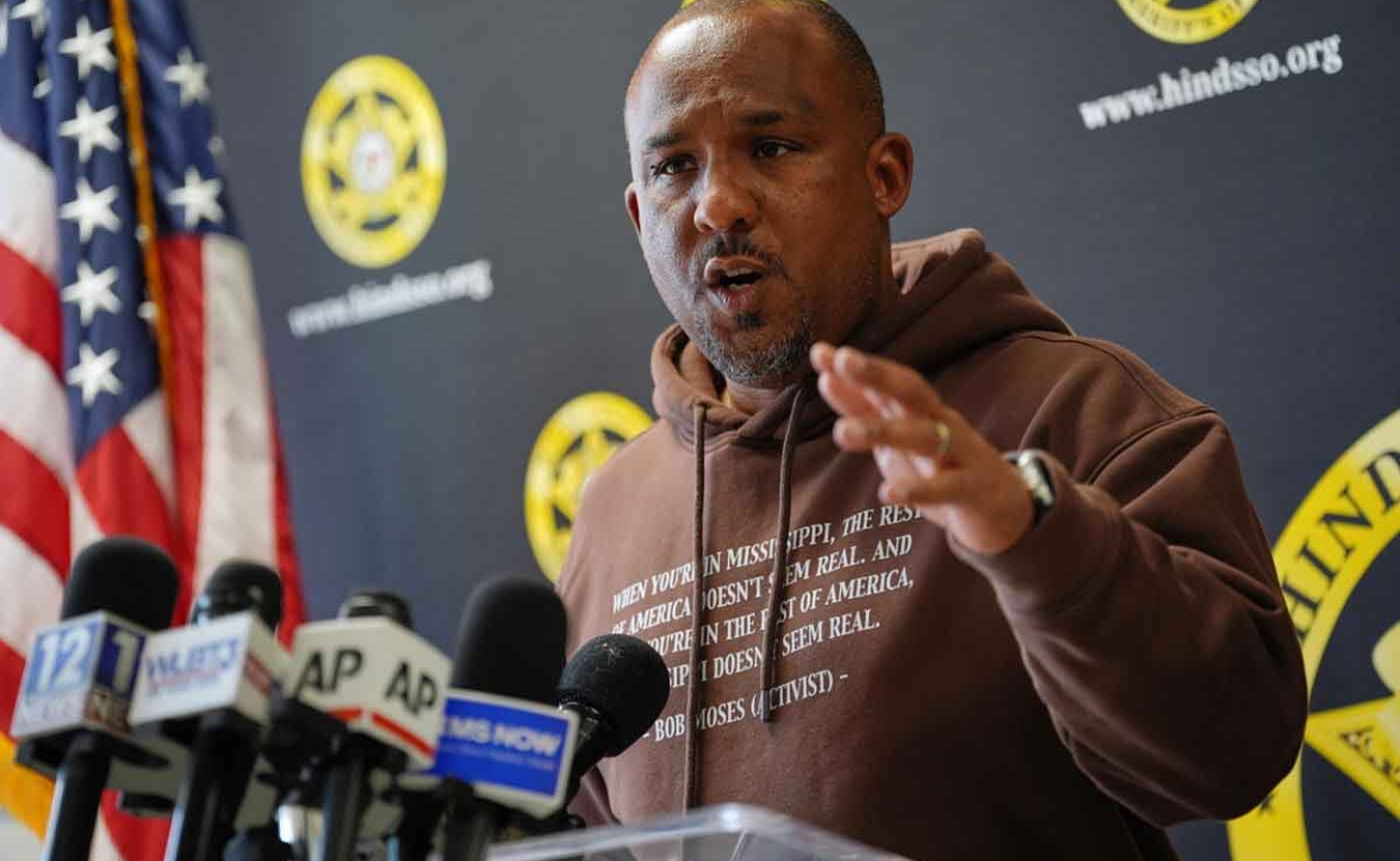
Newly minted Mississippi State Senator Scott Colom
It was never in the cards. When Mississippians went to the polls on Tuesday, November 3, the pundits had already filed their verdict: one of the reddest states in the union, a state Donald Trump carried by more than 20 points two years ago, was not about to send a Black man to the United States Senate. Not this year. Not in this lifetime.
They were wrong. After eight days of counting, District Attorney Scott Colom was declared the winner on Wednesday over the Republican incumbent, Cindy Hyde-Smith, by about half a percentage point. He becomes Mississippi’s first Black senator since Blanche K. Bruce left office in 1881, almost a century and a half ago, and the first the state’s voters have ever chosen for themselves. Bruce, and Hiram Revels before him, were sent to Washington by the legislature.
Across America and well beyond it, a wide cross-section of people reached for the same two words: the title of the song Nina Simone wrote in 1963, in fury and in grief, and performed for the rest of her life. “Mississippi Goddam” was a curse then. This week it is being sung in astonishment.
For those of us in the Caribbean, raised on the same plantation arithmetic, none of this history is foreign. What follows is a tribute from Sonya Sinclair, someone who needed to speak about this historic achievement and about the long, bloody road that led to it.
LUCEA, Hanover, November 12, 2026 | By Sonya Sinclair |When Andrew Stroud told his wife, Nina Simone, to use her art as a weapon, he was not speaking in metaphor. He was speaking as a man watching a country burn.
Simone did not write. She detonated. Within an hour at her piano, she forged “Mississippi Goddam”: less a song than a siren, less a melody than an indictment. It is jaunty, almost show-tune bright, which is precisely what makes it so haunting. She makes you tap your foot to a funeral.
The timing was not coincidental; it was causal. On June 12, 1963, civil rights activist Medgar Evers was assassinated in his own driveway in Jackson, Mississippi, shot in the back by a white supremacist. Three months later, on September 15, four little girls dressed for Sunday school — Addie Mae Collins, Cynthia Wesley, Carole Robertson and Denise McNair — were blown apart when the Ku Klux Klan bombed the 16th Street Baptist Church in Birmingham, Alabama. Twenty others were injured.

Contributer Sonya Sinclair
Radio stations across Mississippi banned the single, smashing promotional copies and returning them to Philips Records with “Goddam” circled in offended red ink.
White America wanted its protest singers to weep prettily. Simone refused. And precisely because they tried to silence it, the song became scripture.
But to understand “Mississippi Goddam”, you have to understand why Mississippi, and not Alabama, got the title.
A Syllabus of Systemic Racism
Mississippi’s sin is not incidental. It is curricular. It is a complete system.
It begins with erasure: the systematic removal of the Choctaw and Chickasaw from their ancestral lands. Mississippi perfected the art of making people disappear from land they had cultivated for millennia. It was a rehearsal for what was to come: the introduction of white gold. Cotton.
Mississippi’s 1832 constitution actually prohibited bringing enslaved people into the state for sale, a faint moral fig leaf. But that fig leaf could not survive profit.
The affluent plantocracy, drunk on the global price of cotton, ignored the ban and then had it struck out, while a comprehensive slave code codified humans as chattel.
As Daniel Walker Howe documents in What Hath God Wrought, American overseas cotton sales in 1836 exceeded $71 million, roughly $2.2 billion in today’s dollars. By 1840, cotton was 59 per cent of all U.S. exports. America was a cotton republic, and Mississippi was its Wall Street, built on whips. The state did not merely participate in slavery; it industrialised it.
When that economy collapsed with emancipation, Mississippi did not reform. It rebranded.
The Long Ratification
When President Abraham Lincoln signed the Emancipation Proclamation, and when Congress passed the 13th Amendment on January 31, 1865, Mississippi did not experience this as liberation. It experienced it as bankruptcy. On December 5, 1865, the Mississippi legislature, furious at the prospect of losing its entire labour force without a cent of federal compensation, voted to reject the Amendment.
It did not matter. By the very next day, three-quarters of the states had ratified it. The Constitution superseded the state’s tantrum. Slavery was legally dead.
Bureaucratically, however, Mississippi would continue to play dead.
For 130 years, the state simply never ratified. It was an omission so absurd, so perfectly antebellum Mississippian, that it would be comical if it were not so obscene. Only in 1995 did Mississippi lawmakers, suitably embarrassed, vote to ratify the amendment symbolically.
And then, in a final act of administrative contempt, nobody notified the U.S. Archivist. On paper, the ratification was still not official.
The oversight was discovered not by a historian or a governor, but by happenstance. In 2012, after watching Steven Spielberg’s film Lincoln, Dr Ranjan Batra, a professor at the University of Mississippi Medical Center, noticed that Mississippi was still listed as not having ratified the amendment. He alerted his colleague Ken Sullivan, who took the matter to the Secretary of State’s office.
On February 7, 2013, 148 years after slavery was abolished everywhere else, the State of Mississippi’s paperwork was finally on file. Only then did it, on paper, free its slaves.
That is a worldview that believes paperwork can wait when Black freedom is at stake.
Yet this is why Mississippi remains America’s most maddening and magnificent contradiction: against this architecture of oppression, Black Mississippians built a universe.
During Reconstruction, more than 50 Black men served in the Mississippi legislature, writing some of the most progressive laws the state has ever known. In 1887, two formerly enslaved men, Isaiah Montgomery and Benjamin Green, looked at the Delta and did something radical: they purchased 840 acres and founded Mound Bayou, an all-Black town.
Not a ghetto. A town. With its own banks, its own businesses, its own schools, its own newspaper and its own hospital, the Taborian, which would become a jewel of Black medicine. Booker T. Washington called it a model. Theodore Roosevelt called it a wonder. It was, in the language of today, a proof of concept for Black economic sovereignty.
The white response to such autonomy was predictable. If you cannot compete with it, criminalise it. Jim Crow. Sundown towns where the sign at the city limits read, bluntly, “Nigger, Don’t Let The Sun Set On You Here.” Poll taxes, literacy tests and white primaries: an entire legal apparatus designed to answer one question. How do you make a citizen feel like a trespasser in his own country?
These are the reasons Black people are usually told not to venture to Mississippi. And that is precisely why some refused to leave.
When law was not enough, the state turned to ritual terror. Mississippi led the nation in lynchings between 1882 and 1968. Lynching was not clandestine violence; it was public theatre, with postcards printed and crowds gathered.
And when terror was not enough, it took the children.
The Ghost of Emmett Till
On August 28, 1955, in Money, Mississippi, a 14-year-old boy from Chicago named Emmett Till was kidnapped, beaten beyond recognition, shot, and dumped in the Tallahatchie River with a cotton gin fan tied around his neck with barbed wire. His alleged crime: whistling at a white woman, Carolyn Bryant.
His murderers, Roy Bryant and J.W. Milam, were acquitted by an all-white jury in 67 minutes. Months later, protected by double jeopardy, they sold their confession to Look magazine for $4,000.
Emmett’s mother, Mamie Till-Mobley, made a decision that changed the world: she opened the casket. She let Jet magazine photograph her son’s mutilated body. That image — not a speech, not a statute — launched a thousand students to Mississippi.
Mississippi taught America that racism was not a feeling. It was a system that could process a child through a cotton gin and call it justice.
The Children Who Stayed
This same blood-soaked soil produced an astonishing lineage of freedom fighters. Mississippi did not just oppress Black genius; it inadvertently manufactured it.
Ida B. Wells, born into slavery in Holly Springs in 1862, who helped invent investigative journalism when she documented lynching as an economic tool, not a moral panic.
Medgar Evers, born in Decatur, who came home from fighting Nazis in World War II only to be told he could not vote, and decided to become the NAACP’s first field secretary in Mississippi, knowing it was a death sentence.
Fannie Lou Hamer, born in Montgomery County, the youngest of 20 children of sharecroppers, who was sterilised without her consent and beaten nearly to death in the Winona jail for trying to register to vote, and who then stood before the credentials committee at the 1964 Democratic National Convention and asked, “Is this America?”
James Meredith, born in Kosciusko, who forced the desegregation of Ole Miss in 1962 under federal bayonets.
Myrlie Evers-Williams, Aaron Henry, James Bevel, Anne Moody, and Bob Moses, the New Yorker who made Mississippi his battlefield: a whole canon of courage, nearly all of it Mississippi-born. The state tried to make them small. Instead, it made them undeniable.
In 1964, when SNCC and its allies brought a thousand mostly white college students to Mississippi for Freedom Summer to register voters, the state responded with what became known as Mississippi Burning: the murder of James Chaney, Andrew Goodman and Michael Schwerner by Klansmen, a deputy sheriff among them. The state that loved to preach states’ rights needed the FBI to find the bodies, buried in an earthen dam.
This is systemic racism: not one bad sheriff, but a system where the sheriff, the judge, the jury, the bank, the school board and the newspaper all agree that your death is administrative.
History in a Blue Sunami
Sixty-three years after Nina Simone hammered out her anthem in a fury, Mississippi, the same Mississippi that had once refused to ratify freedom, elected a Black man to the United States Senate.
Scott Colom’s victory was not just electoral. It was archaeological. He flipped Forrest County, a county named for Nathan Bedford Forrest, Confederate general and first Grand Wizard of the Ku Klux Klan. Let the irony of that linger.
And in the footnotes, a poetic detail: Senator Cindy Hyde-Smith, whom he defeated, had once blocked Colom’s nomination to a federal judgeship. She had deemed him unfit for the bench. The voters of Mississippi decided he was fit to represent them in the United States Senate.
A week and a day after the U.S. midterms, Senator-elect Colom delivered his victory speech at Tougaloo College. Not in a hotel ballroom in Jackson. Not on the steps of the State Capitol.
It was not about scenery. It was a statement. Tougaloo, the small, historically Black college north of Jackson, was the nerve centre, the safe house, the sanctuary and the war room of the Mississippi movement. Medgar Evers organised there. Freedom Riders recovered there. SNCC planned there. It was where the movement went when Mississippi tried to kill it.
On March 27, 1961, nine Tougaloo students — Joseph Jackson Jr., Albert Lassiter, Geraldine Edwards, Evelyn Pierce, Ethel Sawyer, Meredith Anding Jr., James Bradford, Alfred Cook and Janice Jackson — walked into the Jackson Municipal Library, then whites-only, and asked for books. They were college students sitting down in a library to read, which Mississippi treated as insurrection.
They were arrested for breach of the peace. They became the Tougaloo Nine, and their read-in helped desegregate public libraries and launch the wider Jackson movement.
By choosing Tougaloo for his victory speech, Senator-elect Colom declared the real, underlying victory: we remember who did the reading. We remember who did the sitting. We remember who went to jail, and we remember those who died so that someone else could one day run.
Nina Simone understood something the archivists in Washington did not: abolition is not an event. It is a process. It is not completed when a document is signed. It is completed when a mother like Mamie Till forces you to look, when a sharecropper like Fannie Lou Hamer forces you to listen, when nine college kids force a library to admit that Black children also read, and when a child of Columbus, Mississippi decides that Mississippi will not be his grave but his birthplace, and delivers his speech right back where the lesson began.
Mississippi Goddam, indeed.
— 30 —
