
JAMAICA | Jamaica's Hope Markes Redefining Global Service Leadership In Kiwanis International
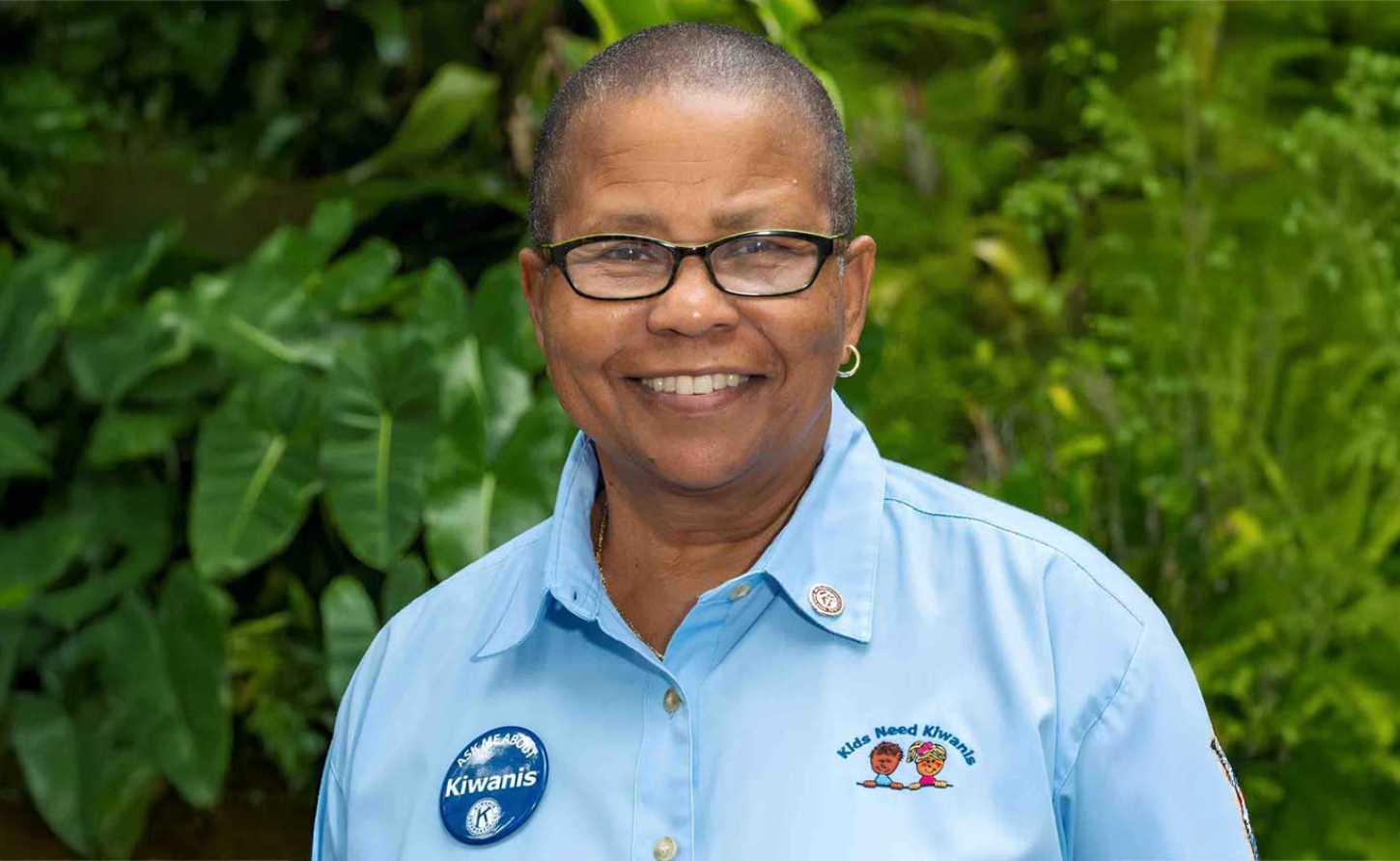
President Elect of Kiwanis International Hope Markes
Jamaica's Hope Markes will make history in October 2026 as the first woman of color and first Caribbean national to lead Kiwanis International
MONTEGO BAY, DECEMBER 19, 2025 - The children's faces light up as Hope Markes walks through the door of the community center. It's a scene that has played out countless times during her months crisscrossing the globe as Vice President of Kiwanis International—from small-town America to bustling Asian cities, from European capitals to remote Pacific islands.
But the warmth in her greeting, the genuine interest in each young person's story, the way she kneels to meet a child at eye level—these are not rehearsed diplomatic gestures. They are the muscle memory of a woman shaped by Kingston's Vineyard Town and refined in Hanover's hospitality sector—a leader who has spent decades putting children first.
"Whatever I've accomplished," Markes often says, "I attribute it mainly to being nurtured and loved by my parents and my family. They believed in putting children first." It's a philosophy that carried her from the streets of Vineyard Town to Western Jamaica's tourism corridor, and ultimately from the Kiwanis Club of Hopewell to the precipice of history.
On October 1, 2026, Hope Markes will become President of Kiwanis International, leading a 110-year-old global service organization with clubs in more than 80 countries.
She will be the first woman of color and the first Caribbean national to hold the position—a breakthrough that reverberates far beyond the organization's impressive membership rolls.
In a world where global leadership has traditionally been the province of North America and Europe, Markes represents something profound: the ascendance of Caribbean values, Caribbean vision, and Caribbean solutions to the international stage.
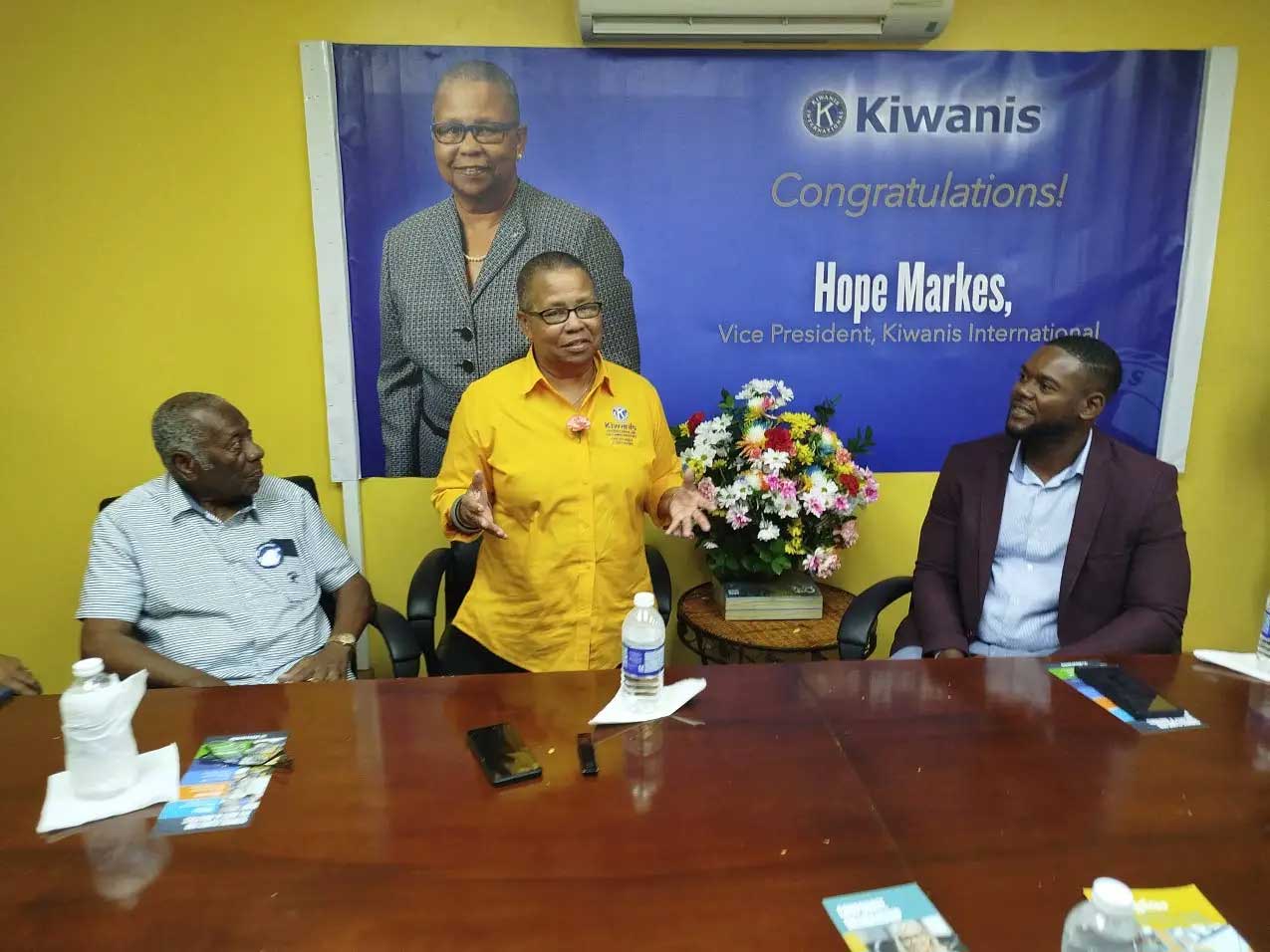
Vice-President of Kiwanis International Hope Markes as she addressed a local club. Looking on are Kiwanians Godfrey Dyer the first Caribbean man to have been elected president of the Kiwanis International Foundation(left) and Richard Vernon, mayor of Montego Bay.
The journey from Vineyard Town to the world stage has been long. The journey ahead promises to be transformative.
The Caribbean Leadership Paradigm
There is a particular kind of leadership that emerges from small island communities—intimate, relational, grounded in the understanding that your decisions affect people you will see at the market, at church, at the community center.
Hope Markes embodies this distinctly Caribbean approach to service leadership, forged first in Kingston's working-class Vineyard Town and later tested in Hanover's tourism industry, and it's precisely what Kiwanis International needs as it navigates an increasingly interconnected yet fragmented world.
Having just returned from Europe and Asia, "Hopie"—as friends call her—sat down at Patches restaurant in Sandy Bay with close friends during a precious one-month break before getting back on the plane in early January.
Over a meal of exotic fish in the relaxed setting that characterizes Hanover's hospitality culture, she reflected on what has carried her through the demanding schedule of global leadership.
She extolled the virtues of a loving family which gave her the tools to become the best that she could be: a woman who worked smart and hard and enjoyed her life. It was vintage Hope Markes—grounded, grateful, and genuine even as she operates on the world stage.
"In the Caribbean, we don't lead from a distance," explains a colleague who has watched Markes rise through Kiwanis ranks. "We lead from within the community. Hope has never forgotten that."
This philosophy manifests in her approach to every club visit during her Vice Presidential travels. Where others might deliver polished speeches and move on, Markes says. She asks questions. She listens to local concerns.
She understands that effective global service organizations are not built on one-size-fits-all directives from headquarters, but on the collective wisdom of communities solving problems in context.
It's a leadership model forged in the crucible of Caribbean reality—small nations with limited resources that have nonetheless produced outsized global impact through creativity, collaboration, and an unshakeable belief in human dignity.
From Marcus Garvey to Bob Marley, from C.L.R. James to Derek Walcott, the Caribbean has always punched above its weight by centering humanity over hierarchy, relationship over transaction.
Markes brings this same ethos to Kiwanis. Her background in early childhood education reinforces her child-centered approach—not as abstract policy, but as lived practice. As a club advisor for K-Kids and Circle K International, she worked directly with elementary students and university students, understanding that service leadership must be nurtured across generations.
Her professional life as owner of Hope Markes Villas has taught her the delicate balance of hospitality—creating spaces where people feel genuinely welcomed while maintaining excellence in service delivery.
These experiences, combined with her roles as Justice of the Peace, Hanover Charities Committee Chair, and director of Caribbean Health Outreach, have created a leader who understands service not as charity dispensed from above, but as solidarity enacted from within.
The Climb Through Kiwanis
The path to the Kiwanis International presidency is not accidental. It requires decades of dedication, strategic vision, and the kind of grassroots credibility that comes only from doing the unglamorous work that few notice but everyone needs.
Markes' journey with Kiwanis began after she relocated from Kingston to Western Jamaica, drawn by opportunities in the burgeoning hospitality sector.
The move from Vineyard Town to Hopewell, Hanover wasn't just a change of address; it was a transformation that would expand her understanding of service from the urban activism of her Kingston roots to the community-building imperatives of Jamaica's tourism heartland.
In Hopewell, she found a community ready for her leadership. As a charter member of the Kiwanis Club of Hopewell, she didn't just join; she built. She served as club president twice, taking on the foundational work of fundraising, membership growth, and public relations.
These weren't ceremonial positions; they were the engine room of local service, where abstract ideals about helping children translated into concrete programs, actual dollars raised, real lives changed.
The Eastern Canada and Caribbean District noticed. In 2013-14, she became District Governor, overseeing clubs across a vast and diverse region that stretched from Canadian winters to Caribbean sunshine.
The role demanded cultural dexterity—the ability to speak to a Kiwanis club in Toronto with the same authenticity she brought to clubs in Kingston or Port of Spain. She excelled.
Her leadership caught the attention of Kiwanis International. She served on the Strategic Planning Committee, became regional vice chair for The Formula (a membership growth initiative), and joined the Membership and Education committees.
Each role built on the last, expanding her understanding of how global service organizations function—and where they sometimes fail.
Then came the breakthrough. In 2024, she was elected Vice President of Kiwanis International, making history as the first woman of color in that role. It was a preview of what was to come. A year later, at the June 2025 convention in Pittsburgh, Pennsylvania, delegates elected her President-Elect by decisive margins.
The message was clear: Kiwanis International was ready for a new kind of leadership. Not just diverse in appearance, but different in approach. Not just globally minded, but genuinely global in perspective.
Not just committed to serving children, but shaped by a culture that has always understood—as Michael Manley once championed for workers—that dignity begins with putting people first.
The Vice President in Motion
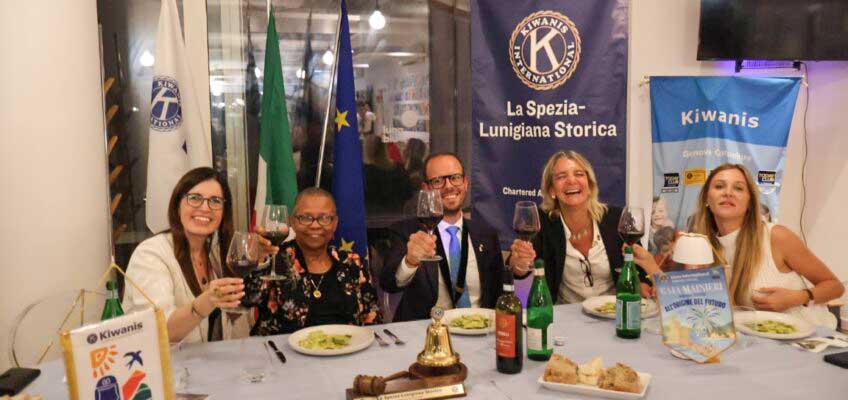
On a visit to Italy, Vice President of Kiwanis International, Hope Markes, accompanied by Maura Magni, Trustee of Kiwanis International and Past Governor of the District Italy San Marino, visited Liguria and Kiwanis Club La Spezia Lunigiana Storica chaired by its President Federico Maffei,
The itinerary is relentless: Kiwanis clubs in Asia examining their literacy programs, European chapters pioneering environmental initiatives, North American clubs wrestling with membership decline, and always—everywhere—children at the center of it all. In each location, Markes asks the same fundamental questions: What is working? What needs to change? How can we better serve?
But there's an unofficial mission running parallel to her Kiwanis duties. Wherever she travels, Markes carries Jamaica with her—not just in her accent or her warmth, but in deliberate acts of cultural ambassadorship. She speaks about Jamaica's tourism industry, shares stories of Caribbean resilience, and embodies the island's spirit in every interaction.
When someone jokingly observed that she seemed to be rivaling Tourism Minister Edmund Bartlett as one of Jamaica's tourism promoters, Markes responded with characteristic humor: she had not yet been offered a Jamaican official passport despite "criss-crossing" the globe in the name of Kiwanis while highlighting Jamaican culture.
The quip reveals both her self-awareness and a deeper truth: sometimes the most effective ambassadors are those who represent their nations not through official appointments, but through authentic living.
Every Kiwanis meeting becomes an opportunity to showcase what Jamaica offers the world—not just beaches and resorts, but values, leadership, and a model of service rooted in community.
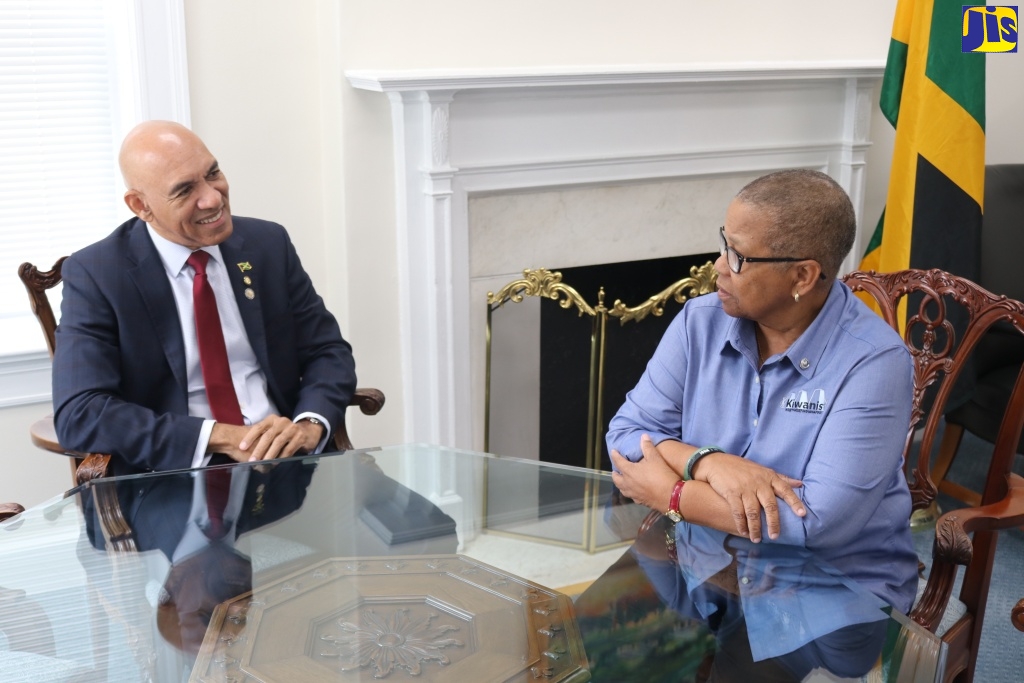
Jamaica’s Ambassador to the United States, His Excellency Major General (Ret’d) Antony Anderson, speaks with Jamaica’s newly elected Kiwanis International President and member of the Kiwanis Club of Hopewell, Hanover, Hope Markes, who recently stopped at the Embassy in Washington DC, during a break in her travel on official Kiwanis duties. Ms. Markes has made history as the first woman of colour and Caribbean national to be President-elect of Kiwanis International. She will assume official duties on October 1, 2026.
The encounter was symbolic—a reminder that her presidency will represent not just personal achievement, but Caribbean elevation on the global stage. Anderson understands what Markes represents: proof that small island nations produce leaders capable of steering international organizations through complex challenges.
What emerges from these travels is a leader taking the temperature of a changing world. She's observing how clubs adapt to post-pandemic realities, how younger generations engage with service differently than their parents, how technology enables new forms of collaboration while sometimes undermining the face-to-face relationships that make service meaningful.
She's also noticing gaps. In some regions, Kiwanis remains overwhelmingly homogeneous—aging, culturally insular, disconnected from the diverse communities they claim to serve.
In others, innovative clubs are thriving precisely because they've embraced diversity and adapted their programs to local needs rather than importing templates from headquarters.
These observations aren't idle tourism. They're strategic reconnaissance. Every conversation, every club visit, every project inspection is feeding into her vision for what Kiwanis International can become under her leadership—not just diverse in membership, but transformed in mindset.
Not just global in reach, but genuinely inclusive in practice.
A Vision Rooted in Home, Reaching Toward the World
October 1, 2026, is circled on calendars across the Kiwanis world. When Hope Markes assumes the presidency, she will carry with her a vision shaped by Vineyard Town grit and Hanover hospitality—a leadership philosophy that refuses to separate local commitment from international impact.
Her priorities are already taking shape: strengthening clubs by making them more reflective of the communities they serve, empowering young leaders through expanded youth programs, and ensuring that Kiwanis' considerable resources flow not just downward as charity, but circularly as partnership.
It's the Caribbean model—collaboration over hierarchy, relationship over transaction, dignity over dependence.
For the Eastern Canada and Caribbean District that nurtured her rise, her presidency represents validation. The region has always understood what the broader organization is now learning: that effective service leadership emerges not from wealth or institutional legacy, but from genuine connection to community needs.
Yet Markes' impact extends far beyond Kiwanis. In a moment when Caribbean nations continue fighting for recognition on the global stage—whether in climate negotiations, economic forums, or international organizations—her presidency offers tangible proof that Caribbean leadership isn't aspirational; it's essential.
The children who will benefit from Kiwanis programs during her tenure won't know they're part of history. They'll simply know that someone cared enough to show up, to listen, to invest in their futures. That's exactly how Hope Markes would want it.
After all, she learned long ago in Vineyard Town and has practiced throughout her journey: putting children first isn't a slogan. It's a calling. And come October 2026, that calling will echo around the world.
-30-
