
ANTIGUA | IMF Sounds Alarm on Antigua's Fiscal Path as Growth Projections Fall Short of Government Targets
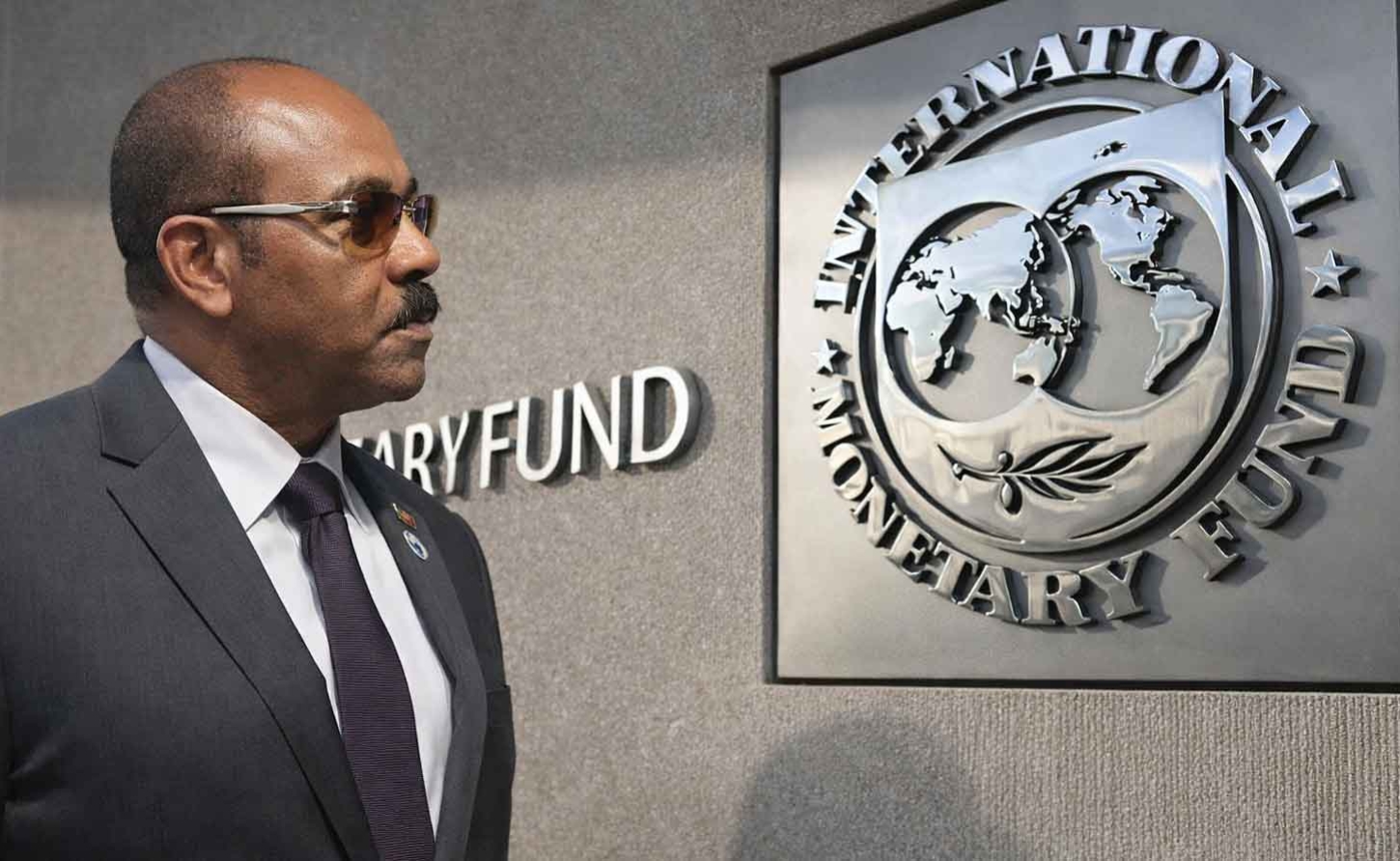
Antigua and Barbuda Prime Minister Gaston Browne
Fund warns of "pressing need" for revenue mobilization while criticizing tax rate cuts that undermine fiscal progress
The International Monetary Fund's latest assessment of Antigua and Barbuda's economic trajectory delivers a sobering message wrapped in diplomatic language: beneath modest growth projections lies a fiscal house still struggling to put its affairs in order, with persistent arrears and questionable policy choices threatening to undermine hard-won progress.
The IMF projects real GDP growth of 2.8 percent for 2026—a figure that converges toward the estimated potential growth rate of 2.5 percent in the medium term. This stands in stark contrast to the government's own 2026 Budget assumptions of 5 percent growth, a gap that raises immediate questions about the revenue projections underpinning fiscal planning.
When your economic forecaster and your budget planner are working from different playbooks, something has to give—and it's usually the optimistic projections that crumble first.
The growth outlook itself reflects Antigua's positioning as a tourism-dependent economy banking on high-profile events. The November 2026 Commonwealth Heads of Government Meeting, expanded room capacity, and new port facilities are expected to drive visitor arrivals.
But the IMF's assessment is hardly euphoric: inflation moderating to 2 percent, a current account deficit stuck at 10.75 percent of GDP, and downside risks that include "prolonged global uncertainty" and vulnerability to extreme weather events.
The CIP Vulnerability

The IMF isn't saying CIP revenues will disappear—but warns that building fiscal plans around continued robust CIP inflows is wishful thinking.
The 2026 Budget explicitly assumes "continued CIP inflows" to meet revenue targets. But if U.S. policy changes make Antigua passports less attractive to prospective investors, that revenue stream could dry up quickly—and unlike tax revenues that decline gradually with economic slowdowns, CIP inflows can collapse suddenly when program attractiveness is compromised.
The IMF's emphasis on "ensuring strong AML/CFT and CIP frameworks" and its welcome for the new independent regional CIP regulator reflect deeper concerns about program sustainability.
The establishment of uniform regulatory standards and public compliance reporting isn't just about good governance—it's about protecting a revenue source that Antigua has become dangerously dependent upon. When your fiscal planning relies on selling citizenship, any threat to that program's viability becomes an existential fiscal risk.
The timing is particularly awkward: just as Antigua prepares to host Commonwealth leaders, questions about citizenship sales programs and their geopolitical implications are intensifying. The IMF isn't saying CIP revenues will disappear—but it's clearly warning that building fiscal plans around continued robust CIP inflows is wishful thinking dressed as policy.
The Arrears Elephant in the Room
Behind the growth numbers lies what the IMF repeatedly characterizes as the central fiscal challenge: "persistent arrears and elevated financing needs." The debt-to-GDP ratio has fallen impressively from a pandemic peak of 100 percent to 68 percent in 2025, edging closer to the Eastern Caribbean Currency Union benchmark of 60 percent by 2035.
But this headline figure obscures uncomfortable realities—substantial arrears to Paris Club and domestic creditors remain unresolved, and the government is still in the process of "validating the extent of their arrears to domestic suppliers."
The IMF's language is diplomatically firm: Antigua needs "a comprehensive strategy for addressing persistent arrears" that includes completing arrears validation, developing a clearance strategy covering all creditors, and "strengthening cash management and expenditure controls, to reduce risks of accumulating new arrears."
Translation: Get your house in order, figure out what you actually owe, and stop creating new problems while trying to solve old ones.
This matters beyond mere accounting. Unresolved arrears constrain access to external financing, limit fiscal space, and undermine the creditworthiness that makes economic planning possible. When domestic suppliers are left waiting for payment, it ripples through the economy—affecting their own ability to operate, invest, and employ.
The Revenue Mobilization Warning
Perhaps most striking is the IMF's blunt assessment of Antigua's revenue performance: "Revenue mobilization remains a pressing need." Despite recent progress, tax collections remain "well below those of regional peers," reaching just over 18 percent of GDP in 2025 compared to the government's own target of 20 percent.
Moreover, the IMF notes that the underlying fiscal position, "excluding temporary factors, has yet to fully align with the authorities' own objectives."
Then comes the Fund's sharpest criticism: the government's decision to temporarily reduce the Antigua and Barbuda Sales Tax rate from 17 percent to 7 percent.
The IMF's position is unambiguous—this measure "will reduce revenue collection" and "promptly restoring the ABST rate is needed for progress towards the authorities' revenue objective."
This is where fiscal policy meets political reality. Tax cuts are popular; they're also expensive. The IMF is essentially warning that Antigua risks squandering its debt reduction gains by undermining the revenue base needed to sustain fiscal discipline.
When you're still trying to reach a 20 percent tax-to-GDP ratio and dealing with persistent arrears, slashing your consumption tax rate doesn't signal fiscal prudence—it signals political expediency.
Institutional Weakness Persists
The Fund's assessment also highlights persistent institutional capacity constraints. The Ministry of Finance's state-owned enterprise oversight function "remains understaffed," while capacity at the Supreme Audit Institution "appears strained."
These aren't trivial administrative details—they're the institutional infrastructure that prevents fiscal slippage and ensures accountability.
The IMF calls for "stronger fiscal institutions and oversight" to "enhance accountability, transparency, and policy credibility." In plain language: You need the people and systems to actually execute what you're promising.
The Bottom Line
Antigua and Barbuda has made genuine progress in reducing its debt burden and maintaining economic stability. But the IMF's 2026 assessment reads as a cautionary tale about the danger of losing focus when the finish line comes into view.
With growth projections modest, revenue performance lagging regional peers, CIP revenues under threat, arrears unresolved, and policy choices pointing toward short-term political gains over fiscal sustainability, the question becomes whether Antigua will use the Commonwealth meeting year to demonstrate fiscal maturity—or whether the event will mask continued drift.
The Fund has laid out the roadmap. Whether Antigua follows it or continues improvising remains to be seen.
-30-
