
ST LUCIA | US Embassy Contradicts Prime Mininster Philip J Pierre on Cuba Medical Training
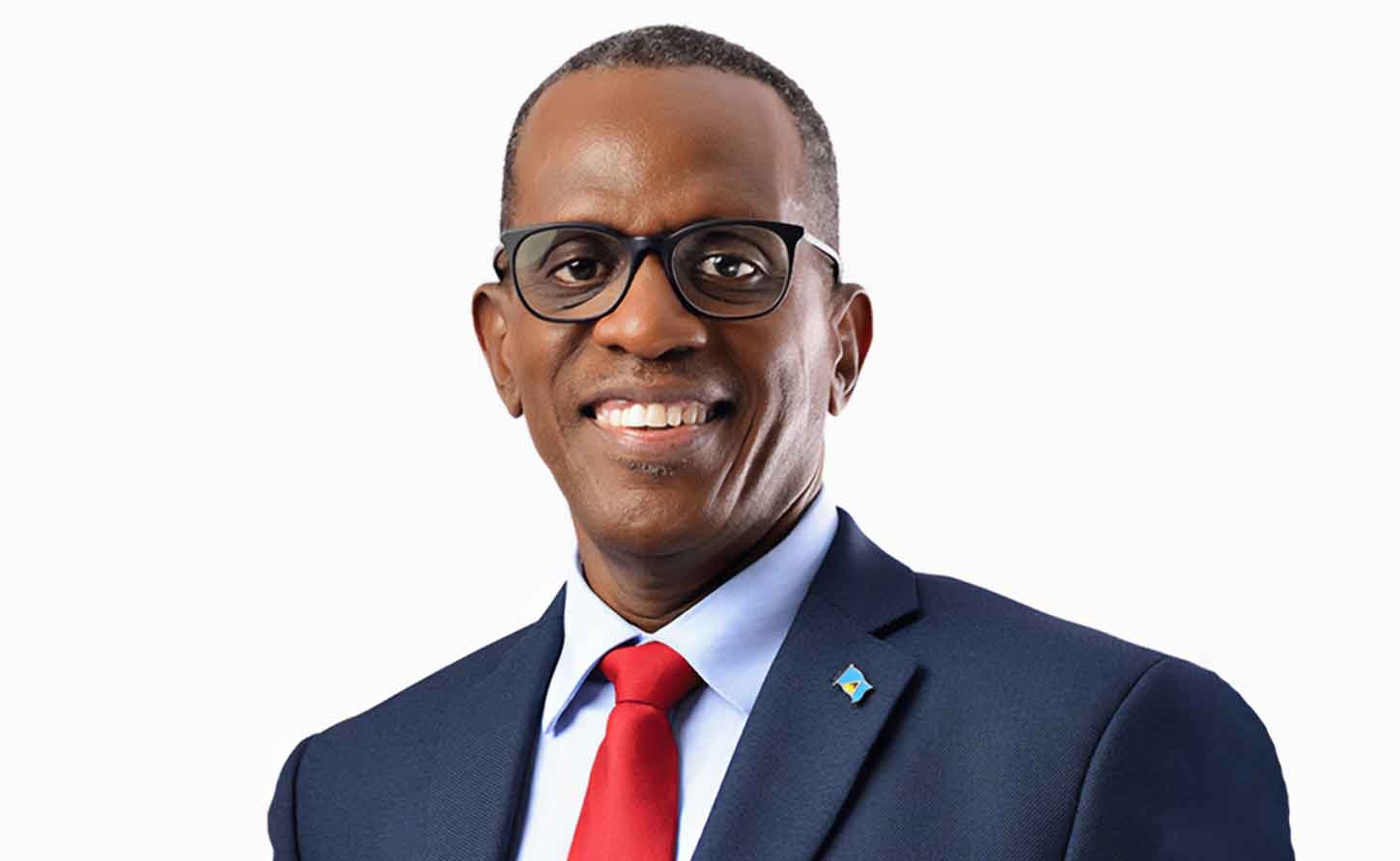
Prime MInister of St. Lucia, Philip J Pierre
Washington wants the compliance without the accountability—and Caribbean leaders are left holding the bag
By WiredJa Staff
Caribbean Prime Ministers do not lie about diplomatic pressure from Washington. They have nothing to gain and everything to lose from such admissions. Yet on February 4, 2026, the United States Embassy in Barbados issued a Media Advisory that amounts to diplomatic gaslighting—a flat denial of pressure that St. Lucia's Prime Minister Philip J. Pierre had publicly acknowledged just days earlier.
The contradiction is stark and demands examination.
Standing before the Second World Congress on Racial and Ethnic Health Disparities in late January, Pierre made an admission that carried significant political cost: "I have a big problem. Many of our doctors got trained in Cuba, and now the great United States has said we can't do that any longer." He added, with unmistakable clarity: "The American government has said we can't even train them in Cuba. So I have a major issue on my hand."
Then came Washington's response—not through private diplomatic channels, but via a public Media Advisory designed for maximum visibility: "The United States has not recently talked to Saint Lucia about international education and respects countries' sovereign decisions regarding the education of their citizens."
The Political Arithmetic of Pressure
Consider what Pierre's admission cost him politically. No Caribbean leader willingly announces capitulation to foreign demands. Such statements invite accusations of weakness, of surrendering sovereignty, of bowing to the hegemon. Pierre gained nothing from his public acknowledgment—except perhaps the honesty his citizens deserve about why their medical education pipeline is being dismantled.
The Embassy's denial, by contrast, costs Washington nothing while providing convenient cover. American officials can now claim clean hands while Caribbean healthcare systems scramble to fill gaps that Cuban-trained physicians have addressed for decades.
This is not speculation. Trinidad and Tobago's Tertiary Education Minister, Dr. Prakash Persad, confirmed that his government declined Cuban medical scholarships this year—a decision he insists was made independently due to conditions students face in Cuba. Yet this "independent" decision arrives precisely as Washington intensifies its campaign against Cuba's medical programs across the Eastern Caribbean. Coincidence strains credulity.
Parsing the Denial
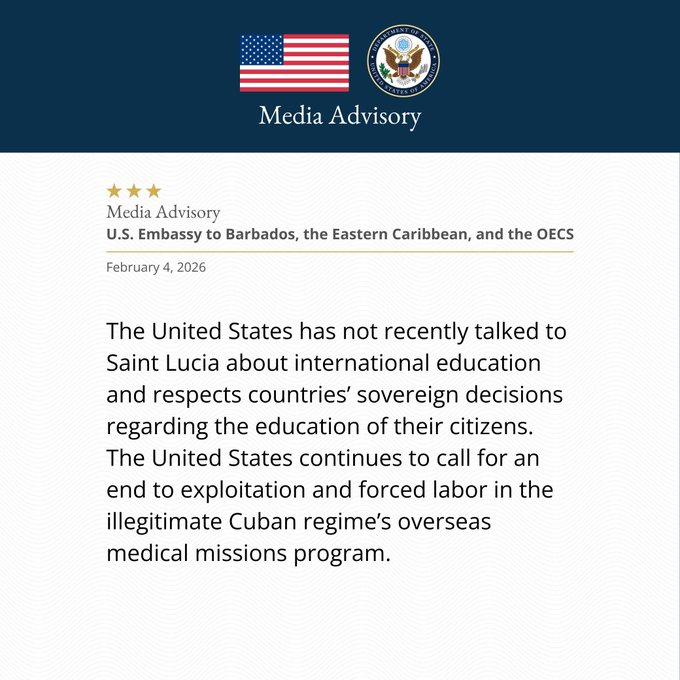 The Embassy's careful wording deserves scrutiny. "Has not recently talked" leaves considerable room for interpretation. What constitutes "recent"? What qualifies as "talked"? Formal diplomatic notes? Casual conversations at receptions? Messages conveyed through intermediaries? The phrasing is designed to be technically defensible while remaining functionally meaningless.
More revealing is what the same Media Advisory confirms: "The United States continues to call for an end to exploitation and forced labor in the illegitimate Cuban regime's overseas medical missions program."
There it is. Washington publicly brands Cuba's medical program—the very program that has trained the majority of St. Lucia's physicians—as "illegitimate" and based on "forced labor."
The Embassy denounces the arrangement through official channels, Secretary of State Marco Rubio imposes visa restrictions on Cuban officials, President Trump designates Cuba a security threat, and yet we are expected to believe no pressure was applied to Caribbean governments dependent on American goodwill for everything from trade preferences to disaster relief?
The message Caribbean leaders receive is unmistakable. It need not be whispered in private meetings when it is shouted from official platforms.
Who Is Really Being Dishonest?
Prime Minister Pierre spoke a truth that damaged him politically. He admitted vulnerability, acknowledged constraint, and leveled with his citizens about the forces reshaping their healthcare future. That is what honest leadership looks like, even when the honesty is uncomfortable.
The Embassy's denial, by contrast, insults Caribbean intelligence. It asks the region to disbelieve its own leaders while Washington simultaneously maintains a public campaign against the very programs those leaders are quietly being pressured to abandon.
This is the architecture of imperial pressure in the twenty-first century: apply force through policy, rhetoric, and understood consequences, then deny the pressure exists when small states buckle. Washington gets the compliance; Caribbean governments absorb the political damage; and American officials maintain the pretense of respecting "sovereign decisions."
The Caribbean deserves better from its supposed partners. And Caribbean citizens deserve to know that when their Prime Ministers speak of American pressure, they are telling the truth—even when Washington finds that truth inconvenient to acknowledge.
-30-
