ANTIGUA Not a Dumping Ground: Pringle Blast Browne over Secret US Deportee Deal
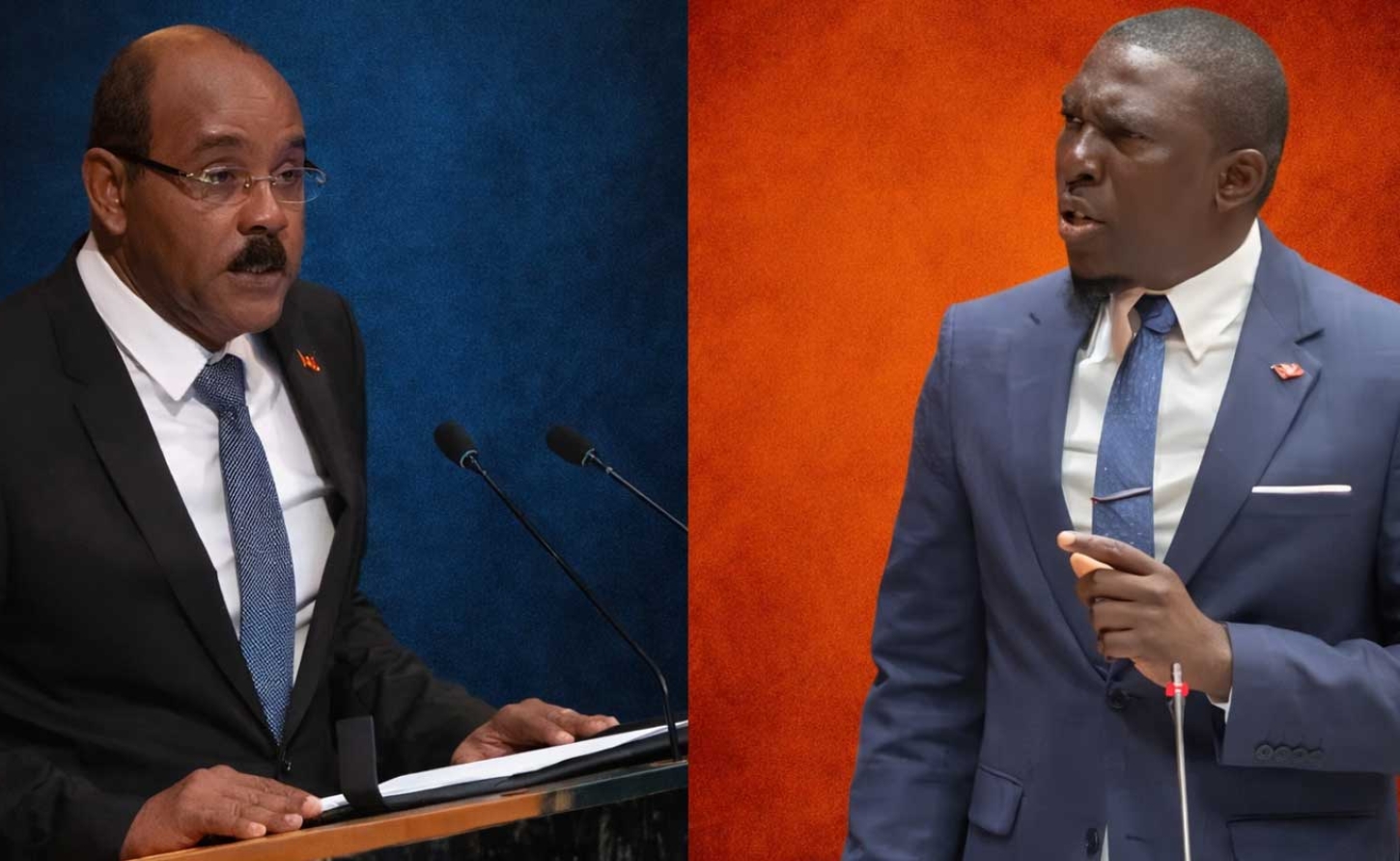
Prime Minister Gaston Browne and Opposition Leader Jamale Pringle
ST JOHN’S ANTIGUA AND BARBUDA, January 4, 2026 - In words that landed like a gauntlet thrown at the feet of the Browne administration, Opposition Leader Jamale Pringle has issued a blistering condemnation of what he characterizes as a secret agreement to accept "non-criminal deportees or refugees" from the United States—persons he says would be imported based on "perceived skills needs."
The accusation, delivered through an official press release, strikes at the heart of Antigua and Barbuda's sovereignty and raises urgent questions about backroom deals made without the consent of Parliament or the public.
"Antigua and Barbuda is not to be used for barter," Pringle declared, "neither is it a pressure-release valve for the personal and political problems facing the Prime Minister."
The language is unsparing, the implication clear: that Prime Minister Gaston Browne may be trading national sovereignty to relieve external pressure from Washington—or worse, to curry favour with the Trump administration as it aggressively seeks third-country dumping grounds for its mass deportation campaign.
The Third-Country Playbook
Pringle's allegations arrive against a troubling backdrop. The Trump administration has been courting nations across Latin America, Africa, and the Caribbean to accept deportees who are not their own citizens—a practice that has already ensnared Honduras and Uganda into controversial agreements.
Reports have circulated that Caribbean nations including The Bahamas and Turks and Caicos were approached to serve as repositories for persons Washington cannot or will not return to their home countries.
While PM Browne has publicly stated he sees "no moral grounds" to reject Antiguan nationals deported from the US—a position shared by most CARICOM leaders—Pringle's statement suggests something far more expansive and opaque: an arrangement to accept non-nationals, persons with no ties to Antiguan soil, under the guise of filling skills gaps.
Questions Without Answers
The Opposition Leader's statement poses questions that deserve immediate responses. What independent vetting and security protocols would apply to these arrivals, and who would oversee them? What legal framework would govern their status, employment, healthcare, and long-term residency?
What burden would this place on housing, education, social services, and law enforcement—institutions already stretched thin? And critically, what are the implications for Antigua's tourism-dependent economy and the employment prospects of local youth?
Pringle has called for the immediate disclosure of any discussions, correspondence, or agreements with foreign authorities—"including all payments, conditions, and obligations."
The demand reflects a fundamental democratic principle: that decisions affecting the composition and security of a nation's population cannot be made unilaterally by any prime minister, regardless of the pressures they face.
Echoes of Antigua Airways
For those with long memories, Pringle's alarm carries the weight of recent history. The 2022-2023 Antigua Airways controversy—in which nearly a thousand West Africans arrived under circumstances that remain murky to this day—exposed a pattern of opacity on immigration matters.
Some of those arrivals later perished attempting to reach other destinations by sea. The government's handling of that episode, punctuated by conflicting explanations and unresolved investigations, provides little reassurance that transparency will prevail now.
A Call to Resistance
Pringle's statement concludes with an appeal to Antiguans and Barbudans at home and throughout the diaspora: "We must strenuously object... We must protest. We must resist. We must reclaim Antigua and Barbuda." Whether this represents the opening salvo of a sustained political campaign or a moment of opposition theatre remains to be seen.
But the underlying question transcends partisan politics. If small Caribbean states can be pressured—or enticed—into becoming overflow facilities for the immigration enforcement policies of powerful neighbours, what remains of sovereignty?
And if such arrangements can be concluded without parliamentary scrutiny, without public debate, without the informed consent of the governed, what remains of democracy?
The ball is now in Prime Minister Browne's court. Silence will only deepen suspicion. Antigua and Barbuda deserves answers—and it deserves them now.
—30—
