
CUBA Denounces US "Kidnapping" of Maduro as "Fascist Aggression," Warns Region Under Threat
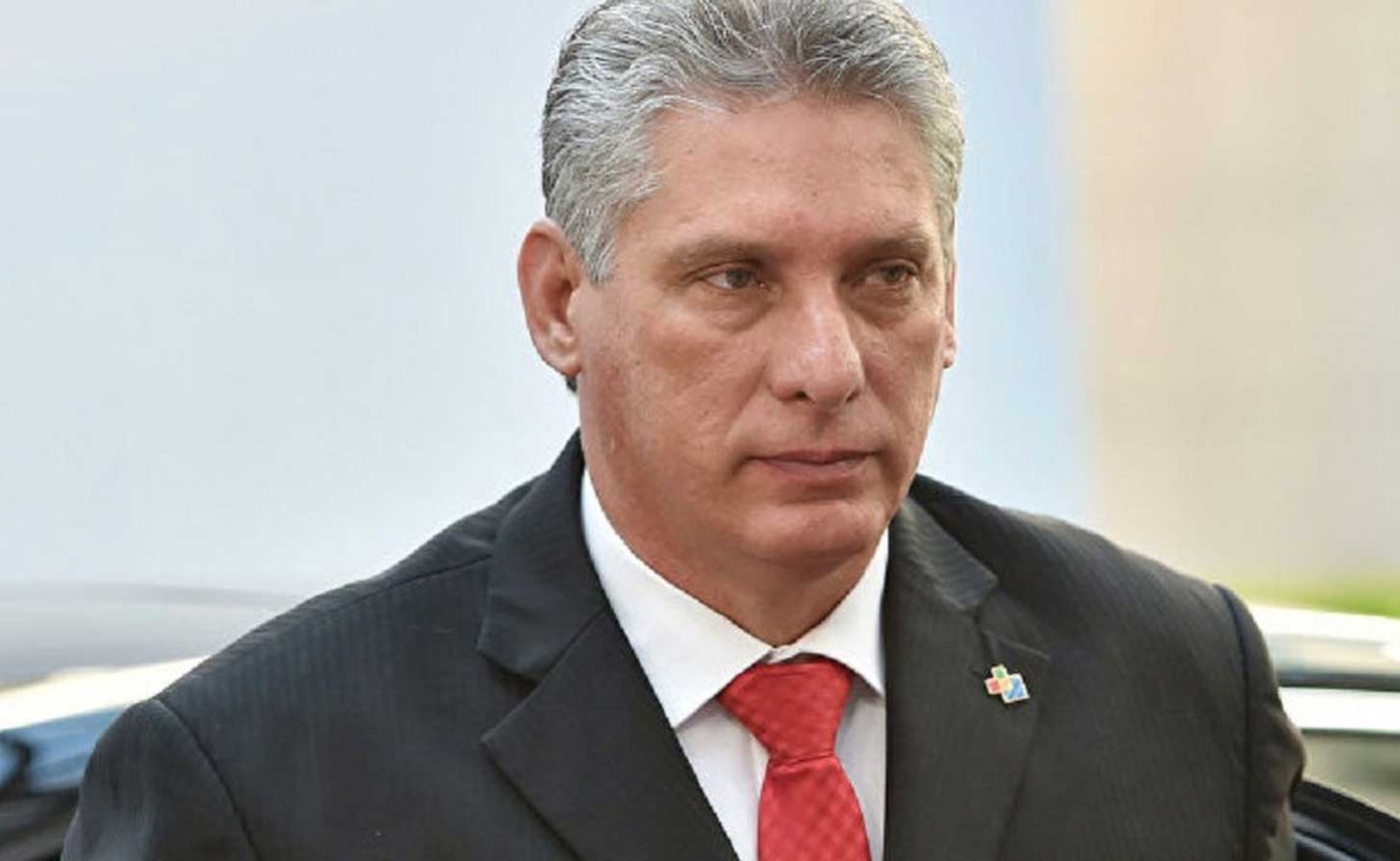
Cuban President Miguel Daz Canel has called the kidnapping of President Nicolás Maduro and his wife Cilia Flores, a "criminal act"
HAVANA/CARACAS , January 3, 2026- — Cuba issued a blistering condemnation of the United States early Saturday, hours after US forces conducted military strikes in Venezuela and seized President Nicolás Maduro and his wife Cilia Flores, calling the operation a "criminal act" that threatens to plunge Latin America into a new era of American military intervention.
In a statement, the Revolutionary Government of Cuba demanded immediate proof of life for the captured Venezuelan leaders and warned that "all nations of the region must remain alert, as the threat hangs over all."
The extraordinary US military action, which President Donald Trump personally announced from Mar-a-Lago, saw American forces bomb targets in Caracas before extracting Maduro from the Fort Tiuna military installation. The Venezuelan president and first lady were subsequently flown to New York aboard a Department of Justice aircraft, where they arrived Saturday afternoon to face drug trafficking and weapons charges.
Cuba's response pulls no punches. The statement describes the operation as "a blatant imperialist and fascist aggression" aimed at reviving "US hegemonic ambitions over Our America, rooted in the Monroe Doctrine." The reference to the 19th-century doctrine that proclaimed American dominance over the Western Hemisphere signals Havana's view that Trump's action represents not merely a law enforcement operation, but a fundamental reassertion of US control over the region.
"This cowardly US aggression constitutes a criminal act and a violation of international law and the Charter of the United Nations," the Cuban government declared, placing full responsibility for "deaths, as well as the human and material damage" on Trump, Secretary of State Marco Rubio, and what it termed "aggressive elements hostile to Latin America and the Caribbean."
The timing of Cuba's invocation of the 2014 Proclamation of Latin America and the Caribbean as a Zone of Peace—signed unanimously by regional governments in Havana—is particularly pointed. That declaration, negotiated during a brief thaw in hemispheric relations, now reads as historical irony in light of Saturday's events.
Cuba's statement goes further than mere diplomatic protest. In language reminiscent of the Cold War's most dangerous moments, Havana pledged that "for that sister nation and its people, we are prepared to give, as we would for Cuba, even our own blood." The declaration ended with the revolutionary slogan "Homeland or Death. We Shall Overcome!"
The Cuban government's framing of the operation as primarily about control of Venezuela's oil resources—the world's largest proven reserves—echoes concerns raised by protesters who gathered in multiple US cities Saturday. Anti-war demonstrators in Washington, New York, Chicago, and Los Angeles carried signs reading "No War on Venezuela" and "US hands off Latin America," with some explicitly linking the action to resource extraction.
Venezuelan Vice President Delcy Rodríguez, who has assumed acting presidential powers following Maduro's capture, echoed Cuba's demand for proof of life during a press conference in Caracas, saying authorities "do not know the whereabouts" of the president and first lady.
The international response has been divided along familiar geopolitical lines. Russia's Foreign Ministry condemned what it called an "act of armed aggression" and called for an emergency UN Security Council meeting. The European Union, while noting that it does not recognize Maduro's legitimacy following disputed elections, nonetheless stressed that "international law and the UN Charter must be respected."
Trump, for his part, has shown no hesitation about the unprecedented nature of the action. In a Fox News interview Saturday morning, the president said the United States will "be involved very much" in determining Venezuela's next government, adding, "We can't take a chance in letting somebody else run and just take over what he left."
The operation marks only the second time in nearly four decades that the United States has used military force to capture a foreign head of state—the first being the 1989 invasion of Panama that resulted in the arrest of Manuel Noriega, an operation that occurred exactly 36 years ago to the day.
As Caribbean airspace reopens after being shut down during the operation, and as Maduro prepares for Monday arraignment in Manhattan federal court, Cuba's warning that "the threat hangs over all" nations in the region underscores the volatile new chapter that has opened in hemispheric relations.
For smaller Caribbean and Latin American nations watching from the sidelines, the question is no longer whether Washington is willing to use military force against a sitting government in the region—but rather, who might be next.
-30-
