
VENEZUELA | "We're Going to Run It": Trump Unveils Colonial-Era Oil Grab After Kidnapping Venezuelan President
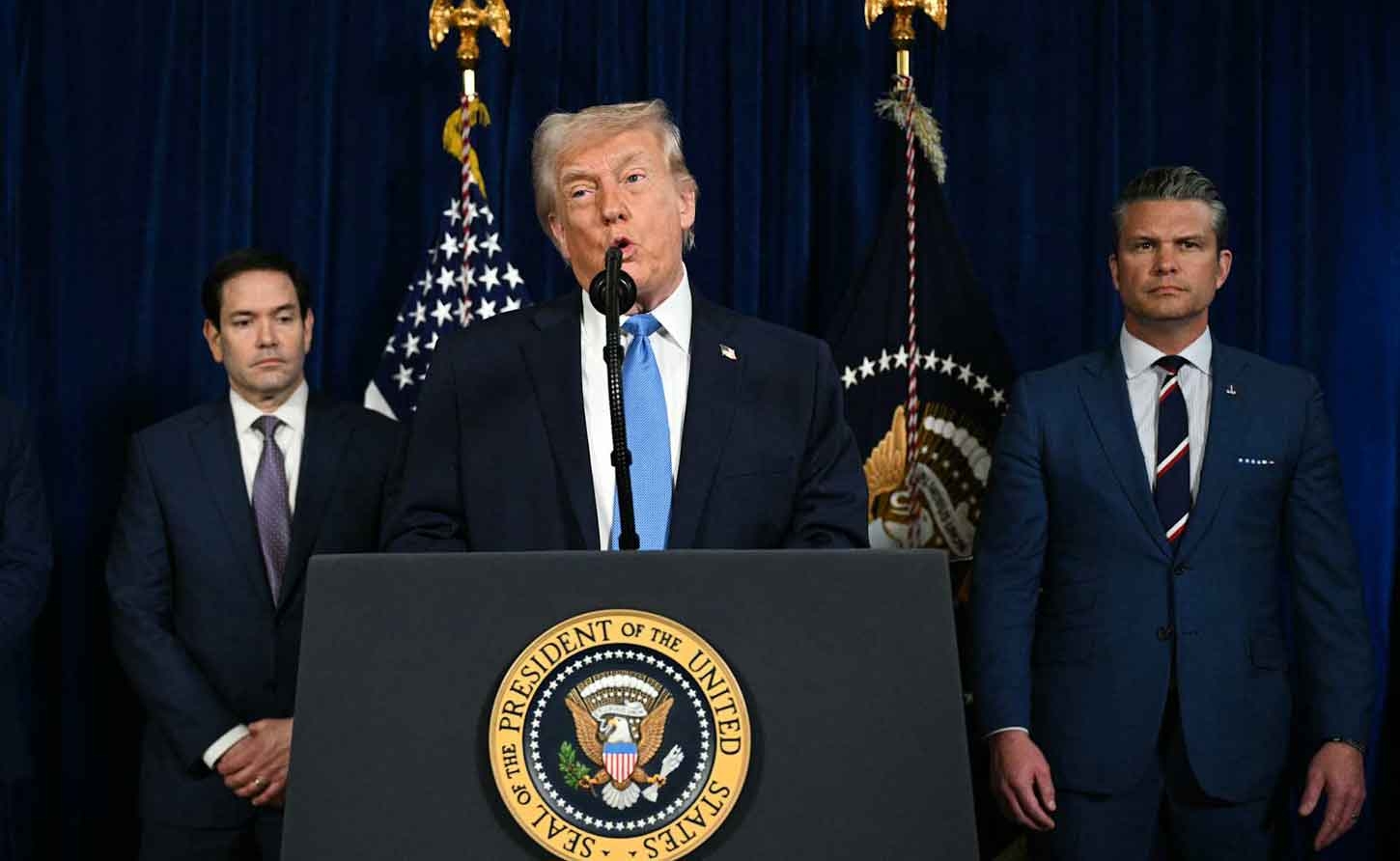
US President Donald Trump at a press conference on Saturday January 3, 2025 after his regime's incursion into Venezuela kidnapping President Nicolas Maduro.
U.S. president announces American companies will "fix" Venezuelan infrastructure, sell oil globally—after seizing sovereign nation's elected leader
WASHINGTON/CARACAS — In a stunning declaration that echoes 19th-century gunboat diplomacy, U.S. President Donald Trump announced Saturday that American oil companies will take control of Venezuela's petroleum industry following a military operation that kidnapped President Nicolás Maduro—the sitting head of state of a sovereign nation—and plunged the South American country into chaos.
"We're going to have our very large United States oil companies, the biggest anywhere in the world, go in, spend billions of dollars, fix the badly broken infrastructure, the oil infrastructure, and start making money for the country," Trump told reporters at his Mar-a-Lago resort, hours after U.S. forces struck multiple targets across Venezuela's capital, Caracas, and seized Maduro from his own country.
The operation represents an extraordinary violation of international law—the forcible removal of a recognized head of state from his own territory. Unlike a fugitive being apprehended, Maduro was the president of Venezuela, a UN member state with full international legal standing, making his seizure not a "capture" but a kidnapping under international law.
But it was Trump's explicit framing of Venezuela's nationalized oil sector as stolen American property that laid bare the administration's aims. "We built Venezuela's oil industry with American talent, drive, skill, and the socialist regime stole it from us," he asserted, calling the 1976 nationalization "one of the largest thefts of American property in the history of our country."
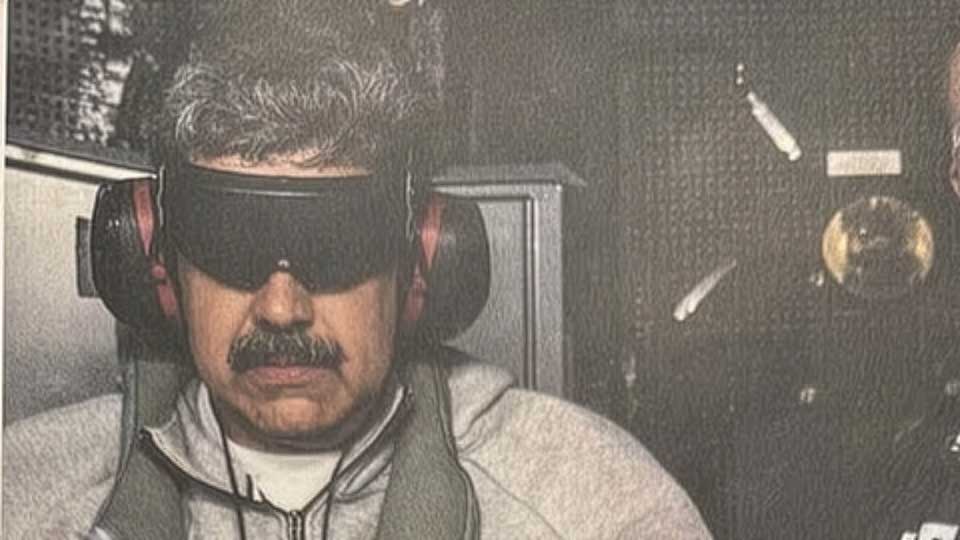 Venezuelan president Nicolas Maduro on the USS Iwo Jima blindfolded and in handcuffs afyer being kidnapped by the Trump regime on Saturday January 3.Reversing Sovereignty at Gunpoint
Venezuelan president Nicolas Maduro on the USS Iwo Jima blindfolded and in handcuffs afyer being kidnapped by the Trump regime on Saturday January 3.
The president's language represents a remarkable assertion: that a sovereign nation's decision to nationalize its own resources—a move made by countries worldwide including Britain, Mexico, and Saudi Arabia—constitutes "theft" warranting military invasion and the kidnapping of its leader decades later.
Venezuela sits atop the world's largest proven oil reserves, an estimated 300 billion barrels that dwarf even Saudi Arabia's endowment. Yet decades of underinvestment, corruption, and international sanctions have crippled production from a 1990s peak of 3.5 million barrels daily to barely 1 million today.
Trump made clear the U.S. intends not merely to facilitate Venezuela's recovery, but to directly occupy it. "We're there now, but we're going to stay until such time as the proper transition can take place," he told reporters, adding ominously: "We're not afraid of boots on the ground."
The Economics of Occupation
The president outlined an arrangement where American oil giants would invest billions in rebuilding Venezuela's crumbling infrastructure—pipelines that haven't been updated in 50 years, according to state oil company PDVSA estimates—and then "be reimbursed for what they're doing."
How exactly foreign companies would be "reimbursed" by a government the U.S. itself is occupying remains unclear.
"We'll be selling large amounts of oil to other countries, many of whom are using it now, but I would say many more will come," Trump said, indicating the U.S. plans to directly market Venezuelan crude on global markets—oil that belongs to the Venezuelan people, not to Washington.
Energy analysts expressed skepticism about major companies' willingness to enter what remains a volatile security environment. "Companies will be wary to enter without a stable security environment, and very favorable terms to reduce the risk," Eurasia Group analyst Gregory Brew noted, particularly given current oversupplied markets and low prices.
Indeed, Politico reported last month that when the administration approached U.S. oil companies about returning to Venezuela, they "firmly declined."
"Virtually Unprecedented"—and Illegal
International legal experts were unequivocal. "International law prohibits the use of force as a means of national policy," noted analysis from Chatham House. "Short of a UN Chapter VII mandate, force is only available in response to an armed attack or possibly to rescue a population under imminent threat of extermination.
Clearly, none of these requirements are fulfilled by the US's armed operation against Venezuela."
Todd Robinson, a former U.S. diplomat in Venezuela, called the military operation "virtually unprecedented," noting the extraordinary nature of a hemispheric power invading another country and seizing its leader.
When questioned about proceeding without congressional authorization, Trump dismissed critics as "weak, stupid people" and insisted "it was really genius."
International reaction has been swift and scathing. Britain's Prime Minister Keir Starmer stated the UK was uninvolved and that "we should all uphold international law." France said the operation violated international law principles. Brazil's President Lula da Silva characterized it as crossing "an unacceptable line."
Colombia's President Gustavo Petro called for an emergency UN Security Council session, prompting Trump to warn: "He does have to watch his ass."
The Prize Behind the Pretext
Venezuela's oil reserves represent both extraordinary potential and daunting challenges. Restoring production to 1990s levels would require over $8 billion in investments according to U.S. Energy Information Administration estimates—likely far more given decades of deterioration.
The infrastructure challenges are compounded by Venezuela's extra-heavy crude, which requires specialized technical expertise to extract and process. That expertise was exactly what international oil companies once provided—before Venezuela decided it could manage its own resources.
Whether Trump's vision of American companies rebuilding and profiting from Venezuela's oil sector represents pragmatic reconstruction or naked colonial resource extraction is not really a question.
The president who campaigned on "America First" and against foreign entanglements has just invaded a sovereign nation, kidnapped its president, and announced plans to run the country indefinitely while American corporations extract wealth from its natural resources.
The operation's codename, "Absolute Resolve," proves grimly apt. Trump has resolved, absolutely, to reverse half a century of Venezuelan sovereignty over its own natural resources—through military force and the abduction of a sitting head of state.
The precedent being set should alarm every nation in the Global South: your resources may be "American property," and international law is no protection if Washington decides to take them back.
-30-
