
CARIBBEAN | No Doctors, No Deal: Mexico Defies Washington Over Cuban Medical Missions
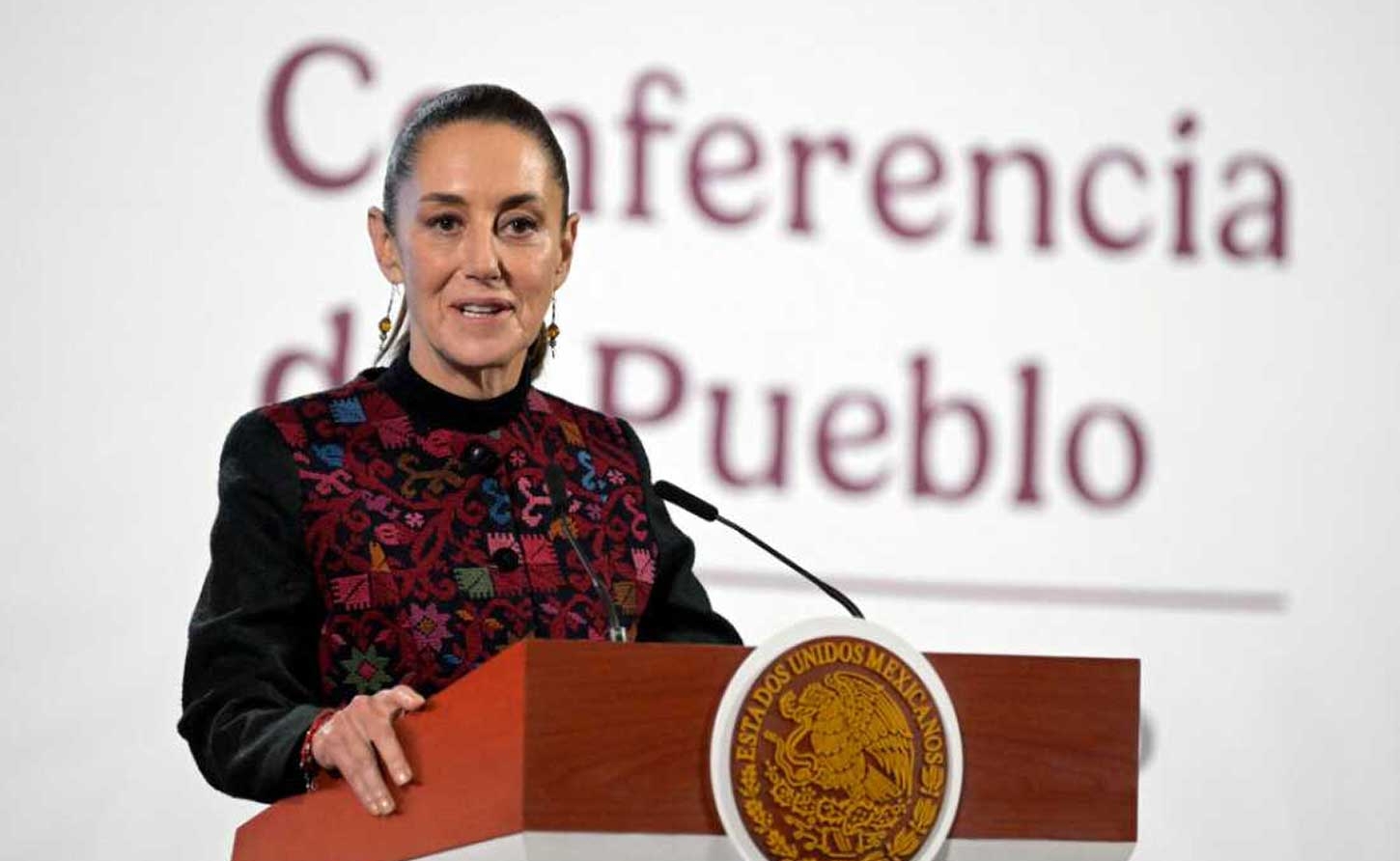
Mexican President Claudia Sheinbaum speaks during a news conference in Mexico City, Mexico | Alfredo Estralla/AFP via Getty Images
CARIBBEAN | GEOPOLITICS
While Sheinbaum defies US pressure and keeps Cuban medical workers in her country's rural communities, the Trump administration charges Caribbean health professionals $100,000 to enter the American workforce — and offers nothing in return.
Calvin G. Brown
When Mexican President Claudia Sheinbaum stepped to the microphone this week and told reporters her country would not be ditching its Cuban doctors, she did more than defend a bilateral healthcare agreement. She exposed, in plain sight, the staggering hypocrisy at the heart of Washington's crusade against Cuba's medical missions.
"We have a very good agreement that’s also been a great help to us," Sheinbaum said, describing the thousands of Cuban medical professionals deployed across Mexico’s poor, rural areas since 2022. “It’s hard to get Mexican doctors and specialists to go out to many rural areas where we need medical specialists, and the Cubans are willing to work there.”
Those words represent far more than good governance — they are a direct rebuke to US Secretary of State Marco Rubio, who has branded Cuba’s global medical programme “human trafficking” and “basically forced labour,” and whose State Department has spent the better part of two years bullying smaller nations into terminating their Cuban health agreements under the threat of sanctions and visa bans.
THE NUMBERS DON’T LIE
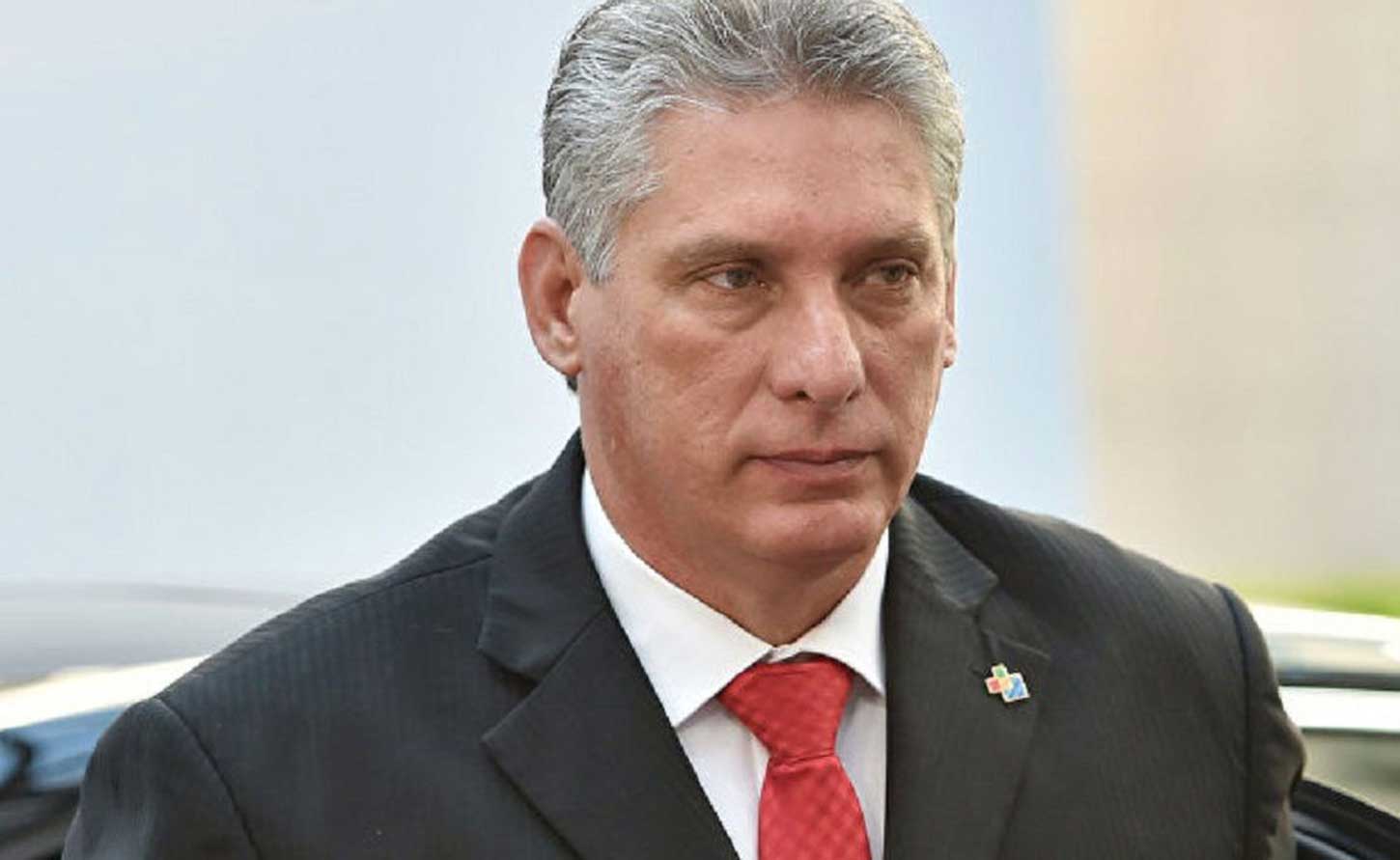
Cuban President Migues Diez-Canel
The arrangement generates between US$6 billion and US$8 billion annually for the Cuban government, according to the US State Department’s own 2024 Trafficking in Persons Report — an astonishing figure that explains both why Havana prizes the programme and why Washington is so determined to dismantle it.
Cuba trains its doctors entirely at state expense — from secondary school through medical university and specialisation — then deploys them internationally under bilateral agreements negotiated between governments.
Host countries pay the Cuban state; the doctors themselves earn a fraction of that fee but still significantly more than their domestic Cuban salary. Critics, including US-backed advocacy groups, cite this gap as evidence of exploitation.
Defenders point out that the doctors volunteer, that Cuba’s investment in their training is real, and that the entire model is one of state-sponsored solidarity — not commercial trafficking.
“The countries that have broken off these contracts are afraid. They are afraid of retaliation by the United States. This is typical of Donald Trump’s foreign policy, which is based essentially on coercive diplomacy: ‘Do it our way, or else.’”— Prof. William LeoGrande, American University
NOT TRUMP’S WAR — WASHINGTON’S WAR
To frame Marco Rubio’s assault on Cuban medical missions as a product of the Trump era alone is to misread the history. Cuba began dispatching medical brigades abroad in the years immediately following the 1959 revolution that brought Fidel Castro to power — an era when Washington’s hostility to Havana was already taking shape in the corridors of the CIA.
Castro’s government dismantled the pro-business arrangements of US-backed dictator Fulgencio Batista, nationalised industries, and pivoted Cuba toward a socialist model that Washington regarded as an existential provocation ninety miles from Florida’s shore.
The rupture was swift and total. The US severed diplomatic relations, imposed an economic embargo in 1960 that persists to this day, and authorised the CIA to orchestrate multiple attempts to topple Castro’s government — including the catastrophic Bay of Pigs invasion of 1961 and a series of assassination plots that became the stuff of Cold War legend.
None succeeded. What Havana built instead, in part as an expression of revolutionary solidarity and in part as a shrewd exercise in soft power, was a global healthcare export machine that would eventually reach more than fifty countries and generate billions in annual revenue.
Every US administration since Eisenhower has, to varying degrees, maintained hostility toward Cuba’s government. What Trump and Rubio have added is not a new grievance but a new instrument: leveraging America’s visa and sanctions arsenal to force third-party nations — including small Caribbean states with no leverage to resist — to do Washington’s bidding in the economic siege of Havana.
The “forced labour” argument is the latest rebranding of a sixty-five-year campaign. The goal has never changed. Only the vocabulary has.
THE FEE THAT DAMNS WASHINGTON’S ARGUMENT
Here is where the moral bankruptcy of the Trump-Rubio position becomes impossible to ignore. While demanding that Caribbean nations send Cuban doctors home — leaving behind gaping holes in public health systems from Kingston to Georgetown — the Trump administration has made it virtually impossible for Caribbean health professionals to fill those gaps by working in the United States.
In September 2025, President Trump signed a proclamation imposing a US$100,000 fee on new H-1B visa petitions — the primary pathway by which foreign-trained health professionals enter the American workforce. Before this proclamation, the cost ranged from US$2,000 to US$5,000. With a single stroke of the pen, Trump raised the barrier by a factor of fifty.
The American Medical Association, the American Hospital Association, and dozens of leading medical societies have sounded the alarm, warning that the fee is devastating the pipeline of international medical graduates — who account for roughly one in four practising physicians in the United States — and will worsen already critical doctor shortages in rural and underserved communities.
Yet Washington asks Caribbean nations to abandon their Cuban healthcare arrangements. Not because Washington has trained replacements. Not because the US has offered to send its own doctors to rural Jamaica, rural Guyana, or rural Antigua. Not because some alternative arrangement exists. But simply because the arrangement benefits Cuba — and destabilising Cuba remains the Trump administration’s central obsession in the hemisphere.
SMALLER NATIONS HAVE ALREADY BUCKLED
The Bahamas, Honduras, Guatemala, Jamaica, and Guyana have all terminated or suspended their Cuban medical agreements under American pressure. In Jamaica’s case, the decision by the Holness government has drawn fierce criticism from communities that depended on Cuban doctors for primary and specialist care.
Jamaicans continue to pressure the JLP to seek reinstatement of a fifty-year-old programme that served their healthcare needs — not Washington’s geopolitical agenda.
These are not abstract foreign policy decisions. They translate directly into fewer doctors in rural health centres, longer wait times at public hospitals, and communities left without specialist care they previously received at no direct cost.
The Caribbean has been told to sacrifice real healthcare access on the altar of US regime-change ambitions in Cuba.
THE OFFER THAT WAS NEVER MADE
Neither the Trump administration nor the Rubio State Department has offered to train Caribbean doctors, fund Caribbean medical schools, waive visa fees for Caribbean health professionals, or provide any replacement healthcare capacity for the communities now losing Cuban doctors.
The Rubio/Trump administration is not hiring Cuban health professionals, and neither is it sending American ones to fill the void it is deliberately creating.
What it has done is threaten nations with sanctions, revoke visas of government officials in countries that maintained Cuban medical partnerships, and pass legislation opening the door to penalties for countries that continue arrangements Washington disapproves of. Coercion, not care, is the policy.
Mexico, with the geographic and economic weight to resist, has said no. Sheinbaum’s government continues to send humanitarian aid to Cuba even as US-orchestrated oil blockades have plunged the island into recurring blackouts.
For the smaller nations of the Caribbean — whose US visa access and trade exposure make resistance far more costly — the pressure remains crushing.
But the question deserves to be asked, loudly and repeatedly: if Washington’s concern is truly for the welfare of Cuban doctors, why does it charge US$100,000 to bring a Caribbean doctor to America? And if its concern is for Caribbean healthcare, where is its offer to fill the gap?
The silence answers everything.
-30-
