CARICOM | The Showdown in Basseterre: CARICOM's Moment of Reckoning with Cuba, Haiti, and the USA
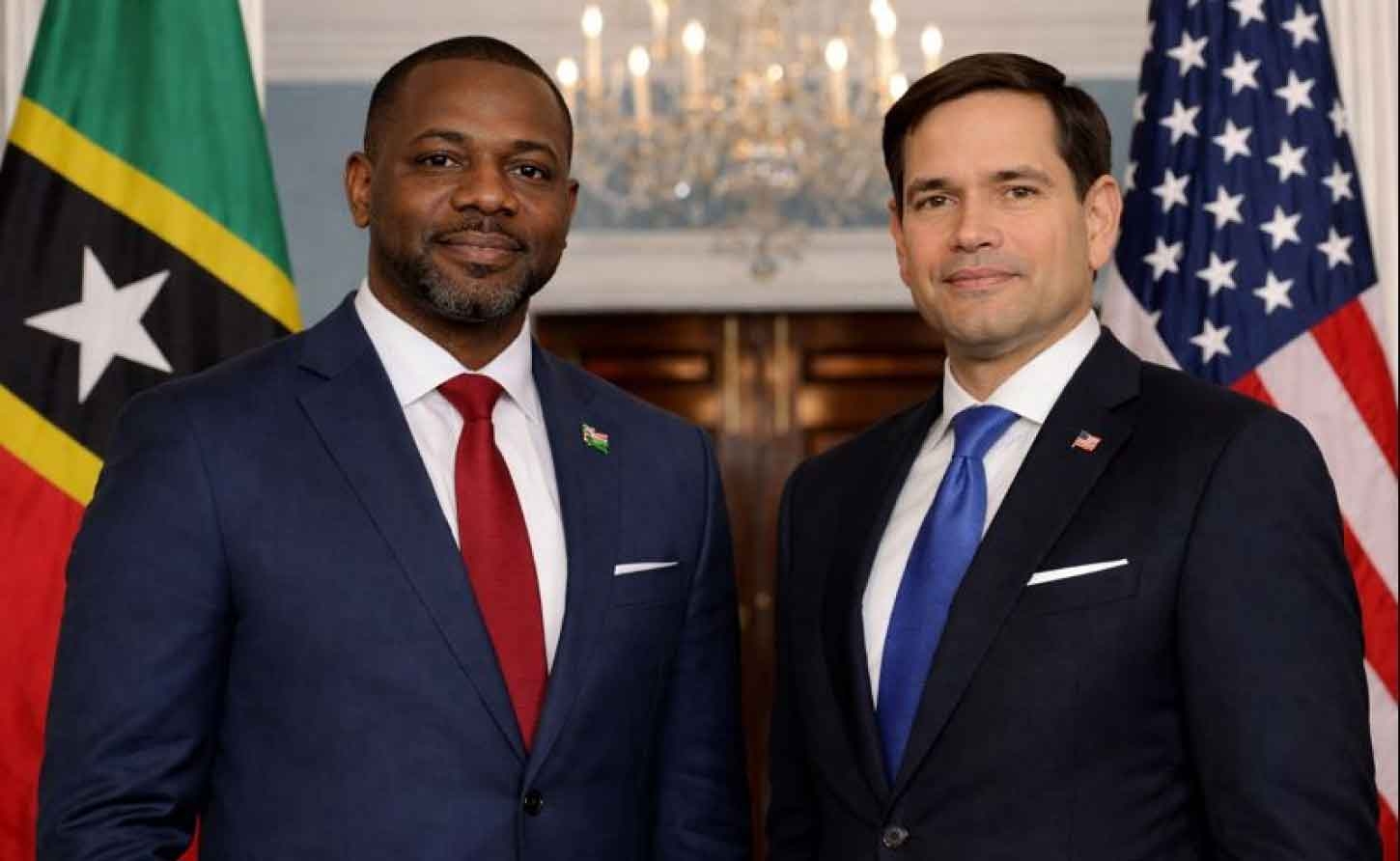
CARICOM Chair Prime Minister Dr.Terrence Drew and US Secretary of State Marco Rubio
By Calvin G. Brown | WiredJa
MONTEGO BAY, Jamaica, February 2, 2026 | When Dr. Terrance Drew gavels open the Fiftieth Regular Meeting of CARICOM Heads of Government in Basseterre on February 24th, he will preside over what may be the most consequential summit in the organization's history.
The formal agenda—CSME implementation, climate financing, reparations—will be overshadowed by twin crises that threaten the very foundations of Caribbean sovereignty: Haiti's descent into ungoverned chaos, and Washington's economic war aimed at strangling Cuba into submission.
The timing is brutal. Leaders will gather just seventeen days after Haiti's Transitional Presidential Council ceased to exist—not because it accomplished its mission of stabilizing the nation and paving the way for elections, but because its mandate simply expired on February 7th. A date that now reads like an epitaph over yet another failed chapter in Haiti's tortured political history.
The Exhaustion of Good Offices
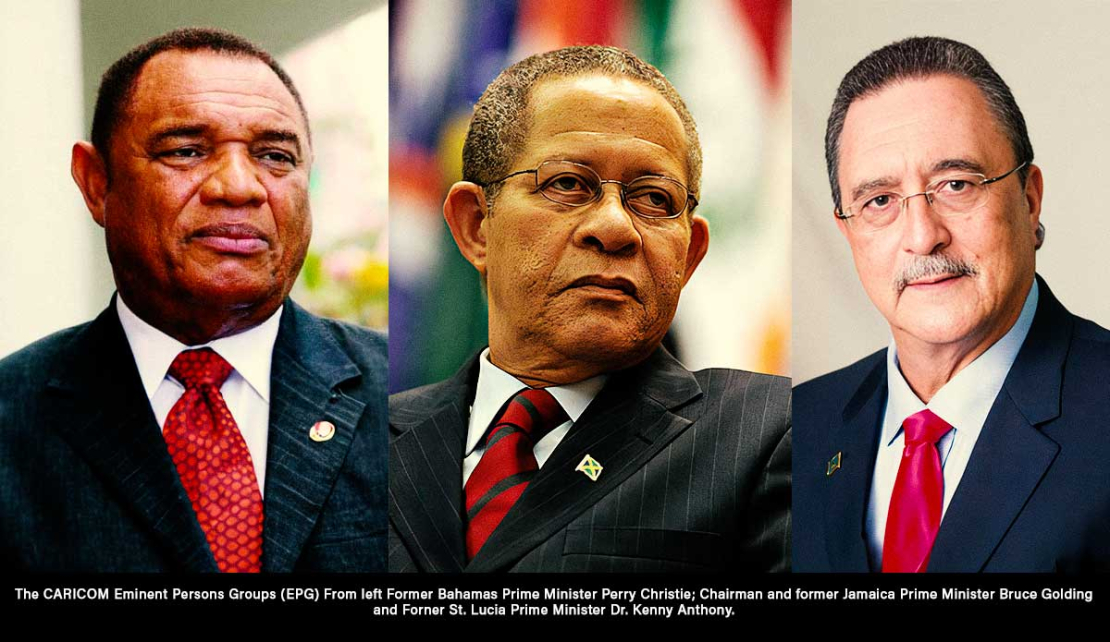 CARICOM's Eminent Persons Group recently called on Haitian stakeholders to "demonstrate patriotism above all other sentiments." The statement carries an unmistakable undertone of exhaustion. How many communiqués must be issued? How many eminent persons dispatched? How many times must the region watch Haiti's political class choose personal ambition over national survival?
The Caribbean has invested heavily in Haiti's stability—not from altruism alone, but from recognition that regional security is indivisible. A failed state in the heart of the Caribbean threatens migration patterns, trafficking routes, and the fundamental premise that small island nations can govern themselves effectively.
The Chokehold Tightens
Yet Haiti's collapse, devastating as it is, pales beside the existential threat now facing Cuba—and by extension, every CARICOM nation that has benefited from over half a century of Caribbean solidarity. The January 3rd kidnapping of Venezuelan President Nicolás Maduro severed Cuba's economic jugular. Venezuela supplied roughly one-third of Cuba's oil—a lifeline sustaining the revolution through decades of American sanctions. That lifeline is now under Washington's control.
On January 29th, President Trump signed an executive order declaring Cuba an "unusual and extraordinary threat" to American national security and threatening tariffs on any nation that dares supply Cuba with oil.
The pressure campaign's mechanics were laid bare in real time: on Friday, Trump publicly claimed he had asked Mexican President Claudia Sheinbaum during their Thursday phone call to halt oil shipments to Cuba. On Sunday, Sheinbaum flatly denied it: "No hablamos nunca con el presidente Trump del tema del petróleo con Cuba"—we never discussed Cuban oil with President Trump.
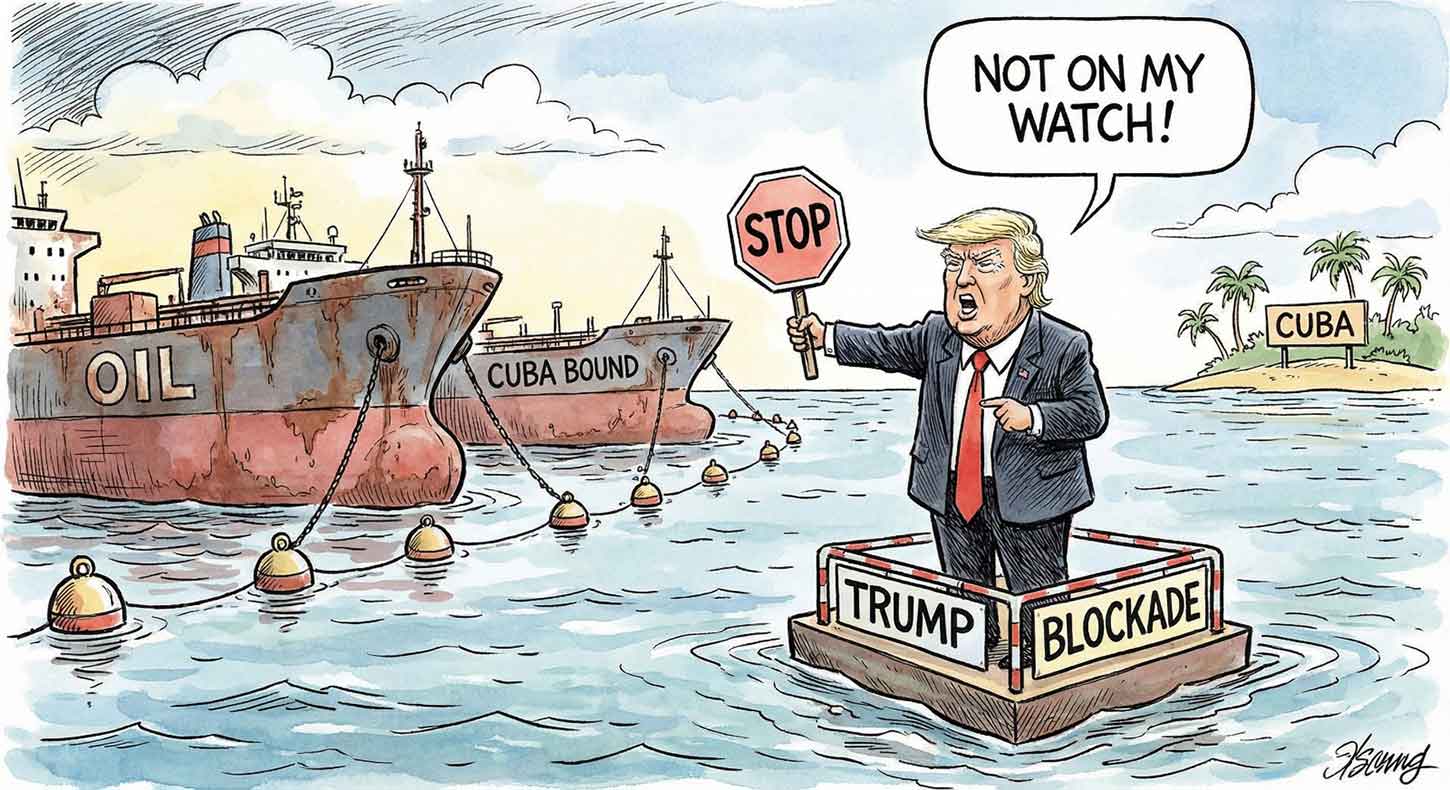 Yet Mexico's actions speak louder than its denials. Shipments that averaged 20,000 barrels per day collapsed to roughly 7,000 barrels after Secretary of State Marco Rubio's September visit to Mexico City.
Sheinbaum announced Sunday that Mexico will send food and humanitarian aid but is "holding off" on oil shipments while seeking "diplomatic solutions." The pattern is unmistakable: public denials, private capitulation.
Energy analyst Jorge Piñon warns that Cuba now faces a daily shortfall of 60,000 barrels. "No oil, no economy," he stated bluntly. Without tankers appearing within weeks, Cuba's future is "grim."
Rather than capitulate, Havana is digging in. State television broadcasts military exercises training civilians to repel invasion. President Díaz-Canel speaks of "a countrywide war" of guerrilla resistance.
The USS Iwo Jima and USS San Antonio—amphibious assault vessels capable of deploying marines—now patrol waters north of Cuba. It is the largest American naval presence in the Caribbean since Grenada.
The Fracturing of Regional Unity
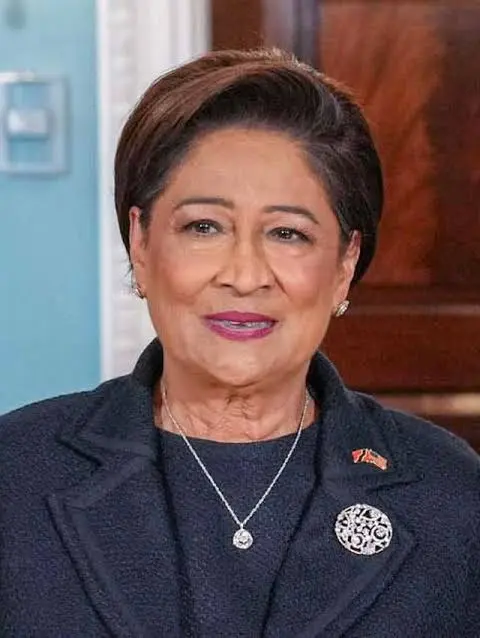
Trinidad and Tobago Prime Minister Kamla Persad-Bissessar
Having publicly branded the regional body an "unreliable partner" and threatened to re-evaluate her country's membership, Persad-Bissessar was forced to walk back her rhetoric before Parliament, reassuring that Trinidad and Tobago had "no active plans to withdraw" from the organization that her nation helped build in 1973.
The irony is bitter beyond words. Trinidad and Tobago—birthplace of CARICOM, host of the Chaguaramas signing, one of the four nations that defied Washington to recognize Cuba in 1972—now aligns itself with American military expansion in a region the Community has designated a Zone of Peace.
Persad-Bissessar has permitted US military aircraft to transit Trinidadian airports, publicly backed Washington's Operation Southern Spear, and distanced her government from CARICOM statements expressing concern over American aggression.
Venezuela has declared her persona non grata. Her reward? Washington has not—yet—suspended visa processing for Trinidadian nationals.
Sir Ronald Sanders, Antigua and Barbuda's Ambassador to the United States, has warned that CARICOM faces "external pressure intensifying" and "new norms hardening among powerful states." The evidence is everywhere.
Washington announced visa restrictions on twelve Caribbean nations while conspicuously exempting Guyana and Trinidad—countries cooperating with American military expansion. Grenada refused to host US installations and promptly received an elevated travel advisory. The message is unmistakable: compliance is rewarded; independence is punished.
Then there is healthcare. In March 2025, Secretary of State Marco Rubio stood in Kingston and delivered a thinly veiled ultimatum: Cuban medical personnel represent "forced labour," and countries participating in these programmes could face visa restrictions.
Jamaica hosts over 400 Cuban medical professionals helping keep its struggling health system functional. Prime Minister Holness pushed back publicly, but diplomatic defiance is one thing—contingency planning is another.
The Crossroads
In December 1972, Errol Barrow, Michael Manley, Eric Williams, and Forbes Burnham gathered in Chaguaramas and announced to the world their sovereign decision to establish relations with Cuba.
It was, as one diplomat recently recalled, "speaking truth to power"—four young Caribbean nations collectively defying the isolation Washington had imposed on Havana. That act of courage defined CARICOM's foreign policy identity for fifty-three years.
What does 2026 demand from their successors? The Ninth CARICOM-Cuba Summit is scheduled for Havana in March. Will Heads of Government attend? Will they issue the same principled declarations their predecessors did—or will those declarations ring hollow as Haiti founders, Cuba suffocates, and one founding member openly courts the empire?
The Caribbean Zone of Peace remains enshrined in regional declarations. But as warships patrol Caribbean waters, economic warfare starves a neighbour, and Port of Spain genuflects before Washington, the question confronting Dr. Drew and his colleagues in Basseterre is stark: Will CARICOM's next fifty years be defined by capitulation to imperial diktat, or by the same spirit of resistance that gave birth to the Community in the first place?
History is watching. So is the hemisphere.
-30-
