CUBA | Trump's Latest Cuba Squeeze Threatens The Caribbean's Lifeline
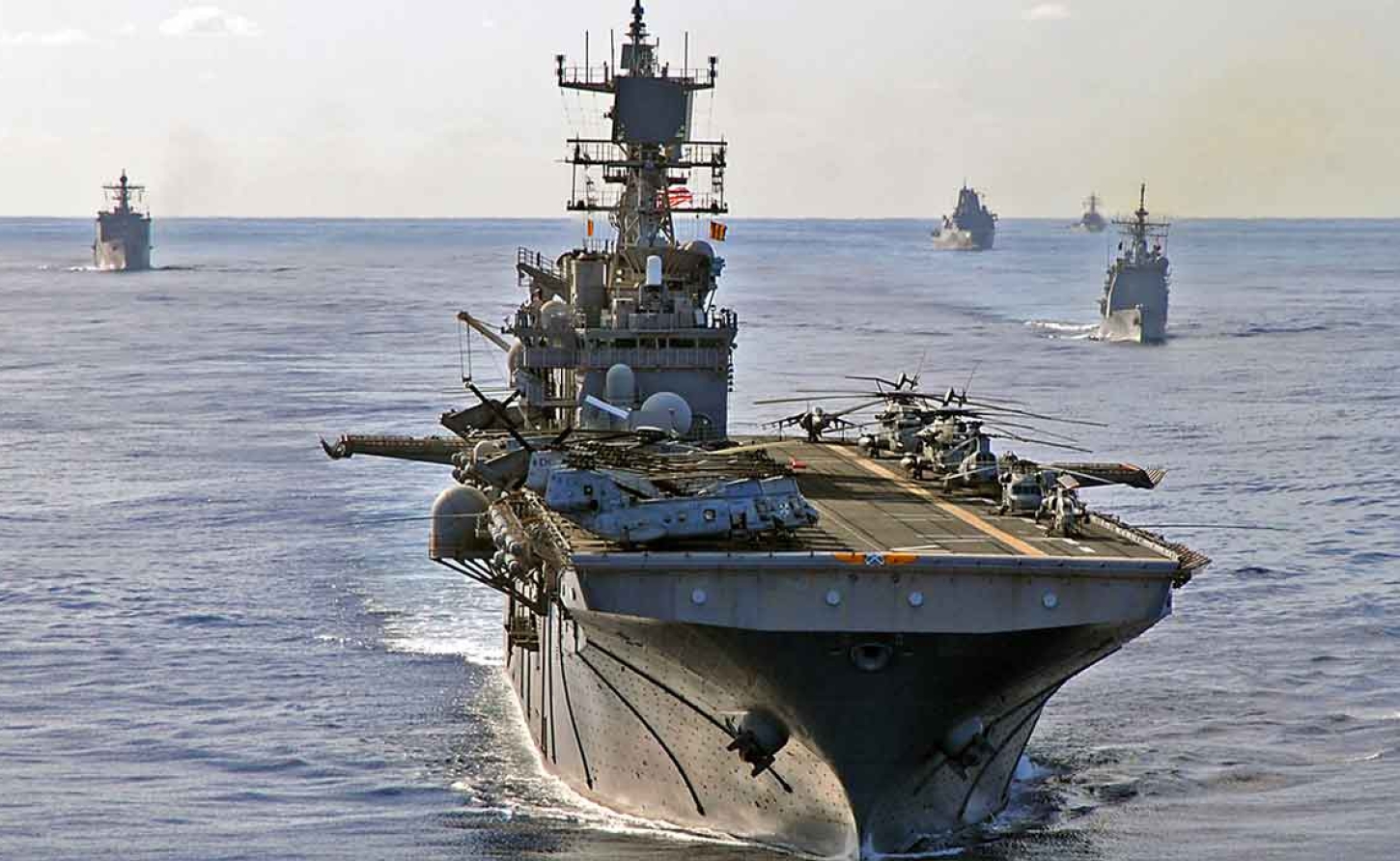
Following recent operations in Venezuela, the U.S. Navy has repositioned two amphibious assault ships, the USS Iwo Jima and the USS San Antonio, to Atlantic waters north of Cuba.
As Washington cuts off Cuba's oil supply and positions warships off Havana, tourism-dependent Caribbean nations face existential economic threat from a conflict they did not choose
MONTEGO BAY, Jamaica, - Calvin G. Brown - January 31, 2026 | In Artemisa, a photographer makes coffee over charcoal during blackouts that outlast the hours of power. In Havana, a doctor waits twenty-nine days for his turn at the petrol pump. Across Cuba, residents share a bitter joke: What's the difference between Cuba and the Titanic? The Titanic still had its lights on when it went down.
This is deliberate policy—what one US diplomat in Havana called "a real blockade" where "nothing is getting in." As Washington strangles Cuba's economy while positioning warships off the island, the Caribbean finds itself trapped between an American president finishing the Cold War's unfinished business and a Cuban government preparing for "countrywide war."
The Strategy of Strangulation
The January 3rd capture of Venezuelan President Nicolás Maduro severed Cuba's economic jugular. Venezuela supplied roughly one-third of Cuba's oil—a lifeline sustaining the revolution through decades of sanctions. That lifeline is now under American control. Trump swiftly issued an executive order threatening tariffs on any nation supplying Cuba with oil. Mexico buckled, announcing a "sovereign decision" to halt shipments.
"If the oil valve is really shut off, Cuba faces imminent economic collapse," energy analyst Jorge Piñon warned. "No oil, no economy."
Cuba now faces a daily shortfall of 60,000 barrels. Russia, Angola, Algeria could theoretically help—but defying Washington carries costs few will pay.
Preparing for the Unthinkable
Rather than capitulate, Havana is digging in. State television broadcasts military exercises training civilians to repel invasion. President Miguel Díaz-Canel speaks of "a countrywide war" of guerrilla resistance. The remains of thirty-two Cuban officers killed in Venezuela received a hero's funeral—a body count before any war has been declared.
The USS Iwo Jima and USS San Antonio—amphibious assault vessels capable of deploying marines and heavy military equipment—now patrol waters north of Cuba. The largest US naval presence in the Caribbean since Grenada sends an unmistakable message.
CARICOM in the Crossfire
For tourism-dependent Caribbean nations, this confrontation poses an existential threat they cannot prevent. The Venezuelan operation demonstrated the consequences: flight cancellations, FAA airspace restrictions, elevated travel advisories, tourists fleeing to safer destinations.
Sir Ronald Sanders, Antigua and Barbuda's Ambassador to the United States, warned that CARICOM faces "external pressure intensifying" and "new norms hardening among powerful states." A shooting war ninety miles from Florida would devastate every tourism-dependent economy in the region.
The pressure is already fracturing regional unity. Some nations host US military installations; Grenada refused—and promptly received an elevated travel advisory. Washington announced visa restrictions on twelve Caribbean nations while exempting Guyana and Trinidad—countries cooperating with American military buildup.
Then there is healthcare. CARICOM nations depend heavily on Cuban medical personnel—a cooperation program now caught in geopolitical crossfire.
Jamaica's Proximity Problem
No CARICOM nation has more cause for concern than Jamaica, separated from Cuba by a mere 150 kilometres. Cuban rafters have already begun washing up on Jamaican shores—six detained on Harvey Beach near Montego Bay, others intercepted in Trelawny and Rose Hall. In December 2024, Jamaica repatriated twenty-one Cuban migrants by sea. If Cuba's economy collapses entirely, that trickle becomes a flood.
Then there are the boat strikes. Since September, US military forces have conducted more than thirty-five strikes on vessels in Caribbean waters, killing an estimated 125 people. Human Rights Watch calls them extrajudicial killings; the Guardian reports many victims were fishermen, not traffickers. These strikes occur in international waters that Jamaican fishermen also traverse. The message: the Caribbean Sea has become a war zone where American military assets fire first and verify later.
For Jamaica, caught between Cuba and the American military buildup, the arithmetic of collateral damage grows more frightening by the day.
The Tourism Time Bomb
Canadian travel agents report cancellations for destinations near Venezuela. Industry observers describe Caribbean tourism as already "melting" from conflict uncertainty. If full-scale hostilities erupt, tourism-dependent nations face catastrophic economic consequences—collateral damage in America's decades-long obsession with Cuba.
The Choice Before the Region
The Caribbean's post-independence tradition of peaceful democracy now faces its gravest test. Small island states cannot stop American warships or Cuban guerrilla preparations. They can only watch as two larger powers play a game whose consequences they will bear.
CARICOM can stand together, speaking with discipline and acting with foresight. Or it can fracture under pressure, each nation cutting separate deals while their collective voice disappears. What it cannot do is pretend this crisis belongs to someone else. The Caribbean did not choose this confrontation. But the Caribbean will pay for it.
—30—
