JAMAICA | BOJ Cuts Rates, But Hurricane Melissa’s Shadow Still Looms Over Jamaica’s Recovery
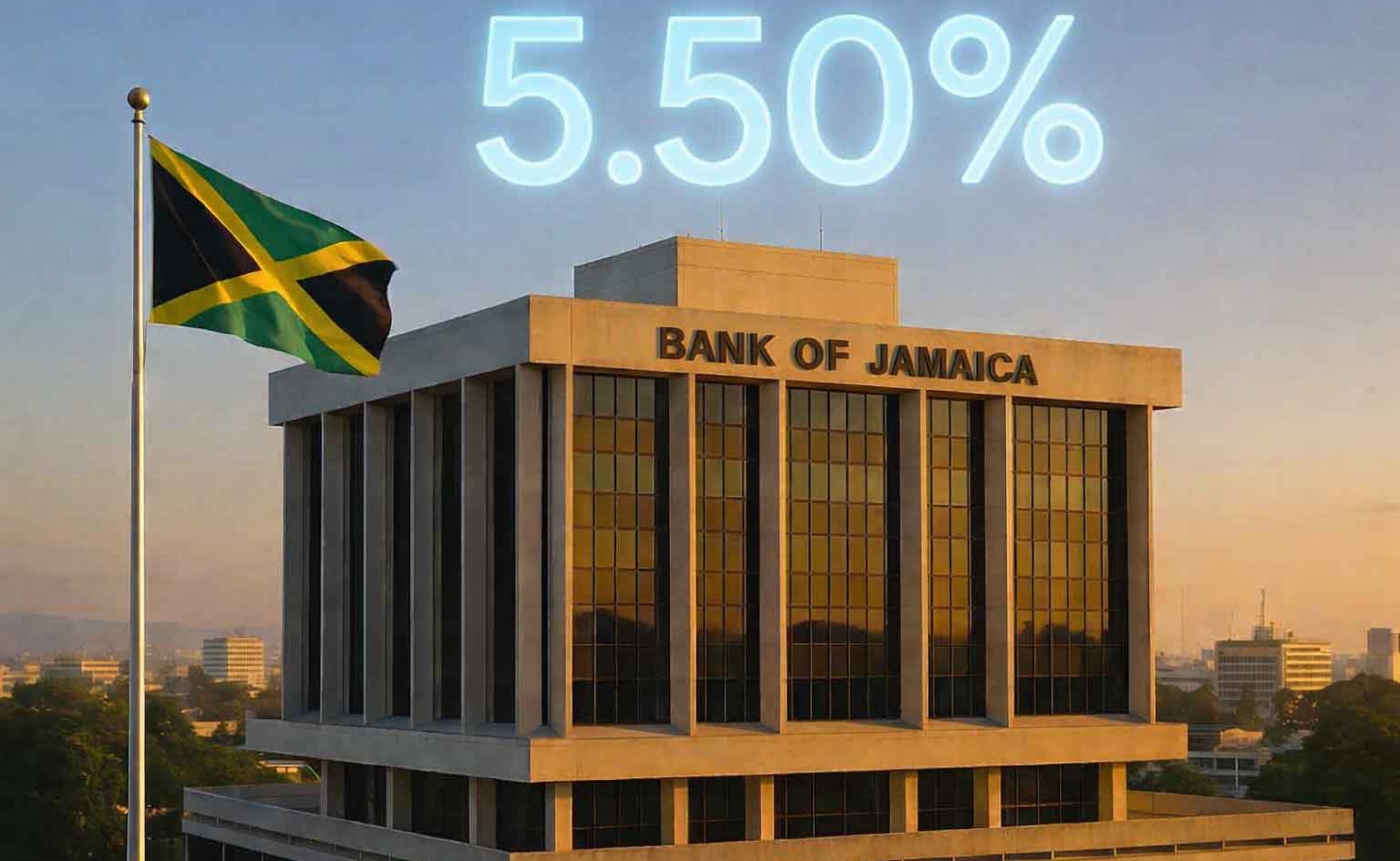
Bank of Jamaica’s Monetary Policy Committee (MPC) cut its benchmark interest rate by 25 basis points to 5.50% per cent
Central bank trims benchmark rate to 5.50 per cent as inflation cools faster than expected — but warns that post-storm spending could yet rekindle price pressures.
KINGSTON, JAMAICA — February 24, 2026 - Calvin G Brown
There is a moment in the life of every economy — battered by storm, squeezed by rising prices, and straining to find its footing — when the numbers finally begin to tell a different story. For Jamaica, that moment arrived last week, quietly but decisively, when the Bank of Jamaica’s Monetary Policy Committee (MPC) cut its benchmark interest rate by 25 basis points to 5.50 per cent.
It is the first reduction since May of last year, and by the standards of central banking — a world of measured language and deliberate understatement — it represents a meaningful signal. The BOJ is telling the market, and by extension, every Jamaican household still counting the cost of Hurricane Melissa, that the worst of the inflationary pain may be behind us.
The decision, taken unanimously at the MPC’s meetings on February 19 and 20, 2026, was grounded in data that offered a degree of relief. Annual headline inflation stood at 3.9 per cent in January 2026, comfortably below the Bank’s own projection and down from 4.5 per cent recorded in December 2025. Core inflation — which strips out the volatile prices of agricultural food products and fuel — tracked identically, also easing to 3.9 per cent from 4.2 per cent the previous month.
A Storm’s Silver Lining
The irony is not lost on anyone: the very hurricane that devastated communities, shuttered hotels, and displaced tens of thousands of workers has, in a perverse economic twist, helped cool food prices.
A faster-than-expected improvement in agricultural supplies following Melissa’s passage, combined with a mild appreciation in the exchange rate, created conditions that allowed inflation to retreat more quickly than the BOJ’s models had anticipated. The Bank noted explicitly that “the direct impact of Hurricane Melissa on inflation was less severe than initially anticipated.”
Looking ahead, the MPC projects that inflation will generally remain within its 4.0 to 6.0 per cent target range over the next eight quarters, though temporary breaches of the upper limit are anticipated during the June and September 2026 quarters.
Critically, the Bank now expects inflation to return to target by the end of December 2026 — earlier than previously forecast — driven by a moderation in projected second-round price increases and falling private sector inflation expectations.
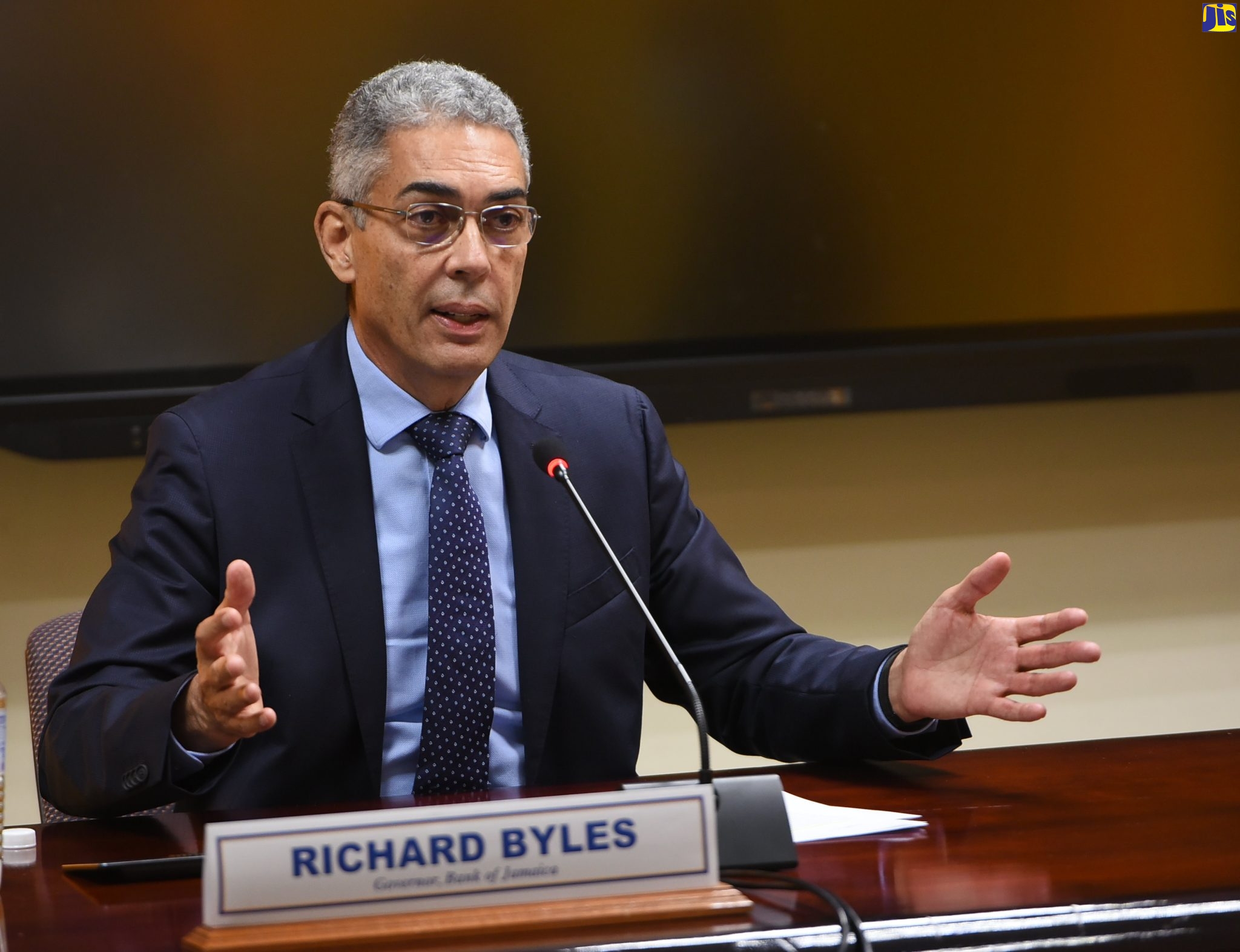 Governor of the Bank of Jamaica Richard BylesThe Spending Sword of Damocles
Governor of the Bank of Jamaica Richard Byles
Yet the BOJ’s optimism is calibrated, not unconditional. Threading through the MPC’s assessment is a clear-eyed warning: the Government’s expanded post-hurricane spending programme could yet reignite the very price pressures the rate cut is meant to celebrate subduing.
The government’s temporary suspension of the fiscal rule — the framework that normally constrains public borrowing — will permit fiscal deficits over the next three years as Jamaica rebuilds. The BOJ acknowledges that this elevated spending, while necessary for recovery, carries real inflationary risk.
Higher overall domestic demand, pressing against the economy’s productive limits, could generate the kind of second-round price increases that erode the gains the central bank is now celebrating. The current account of Jamaica’s balance of payments is, separately, projected to record higher deficits in the near term as the rebuilding effort draws in imported goods and materials.
For its part, the Bank has been unambiguous: it “remains proactive in preserving relative stability in the foreign exchange market” and stands ready to reverse course if the balance of risks shifts against inflation’s return to target. The MPC’s next policy decision is scheduled for March 31, 2026.
An Economy Still Finding Its Feet
Beyond inflation, the broader economic picture remains sobering. The BOJ anticipates a real GDP contraction of between 1.0 and 3.0 per cent for fiscal year 2025/26, though it notes this is a smaller decline than its previous estimate — a sign that the economy has demonstrated greater resilience than feared in Melissa’s immediate aftermath.
A rebound is projected for 2026/27, with growth of 1.0 to 3.0 per cent forecast, though the Bank cautions that downside risks to this outlook predominate.
External conditions provided a mixed backdrop for the MPC’s deliberations. The United States Federal Reserve held its own policy rate steady in January 2026, within a range of 3.50 to 3.75 per cent, as American inflation stabilised but remained somewhat elevated.
Meanwhile, crude oil prices rose by 3.8 per cent in January, fuelled by geopolitical tensions, while grain and liquefied natural gas prices fell — a commodity picture that neither clearly helps nor hurts Jamaica’s import bill.
Relief That Must Reach the Ground
The technical decision to trim the policy rate by a quarter of a percentage point may seem, at first glance, a matter for financial markets and commercial banks. But its implications ripple outward. Lower policy rates, over time, tend to reduce the cost of borrowing for businesses and households — potentially easing the burden on the thousands of Jamaicans whose mortgage moratoriums from Melissa’s aftermath are already running down, and whose employers in the tourism and agricultural sectors remain shuttered or understaffed.
That transmission, however, is rarely swift or automatic in a small island economy. The BOJ can cut rates; it cannot compel banks to pass those savings on to borrowers, nor can monetary policy alone rebuild a hotel, replant a farm, or restore a displaced worker’s income. The real test of Jamaica’s post-Melissa recovery will be measured not in basis points, but in livelihoods stabilised and communities rebuilt.
For now, the Bank of Jamaica has done its part — offering a cautious vote of confidence that the storm’s inflationary fury has, for the moment, passed. The harder work of ensuring that confidence translates into tangible recovery for ordinary Jamaicans belongs to the government, the private sector, and the policymakers who must together navigate the fragile space between fiscal necessity and price stability.
-30-
Source: Bank of Jamaica Monetary Policy Press Release, 23 February 2026; Summary of Monetary Policy Discussion and Decisions, February 2026.
