
JAMAICA | BOJ Holds Policy Rate at 5.75% as Hurricane Melissa Damage Estimate Soars to US$8.8 Billion
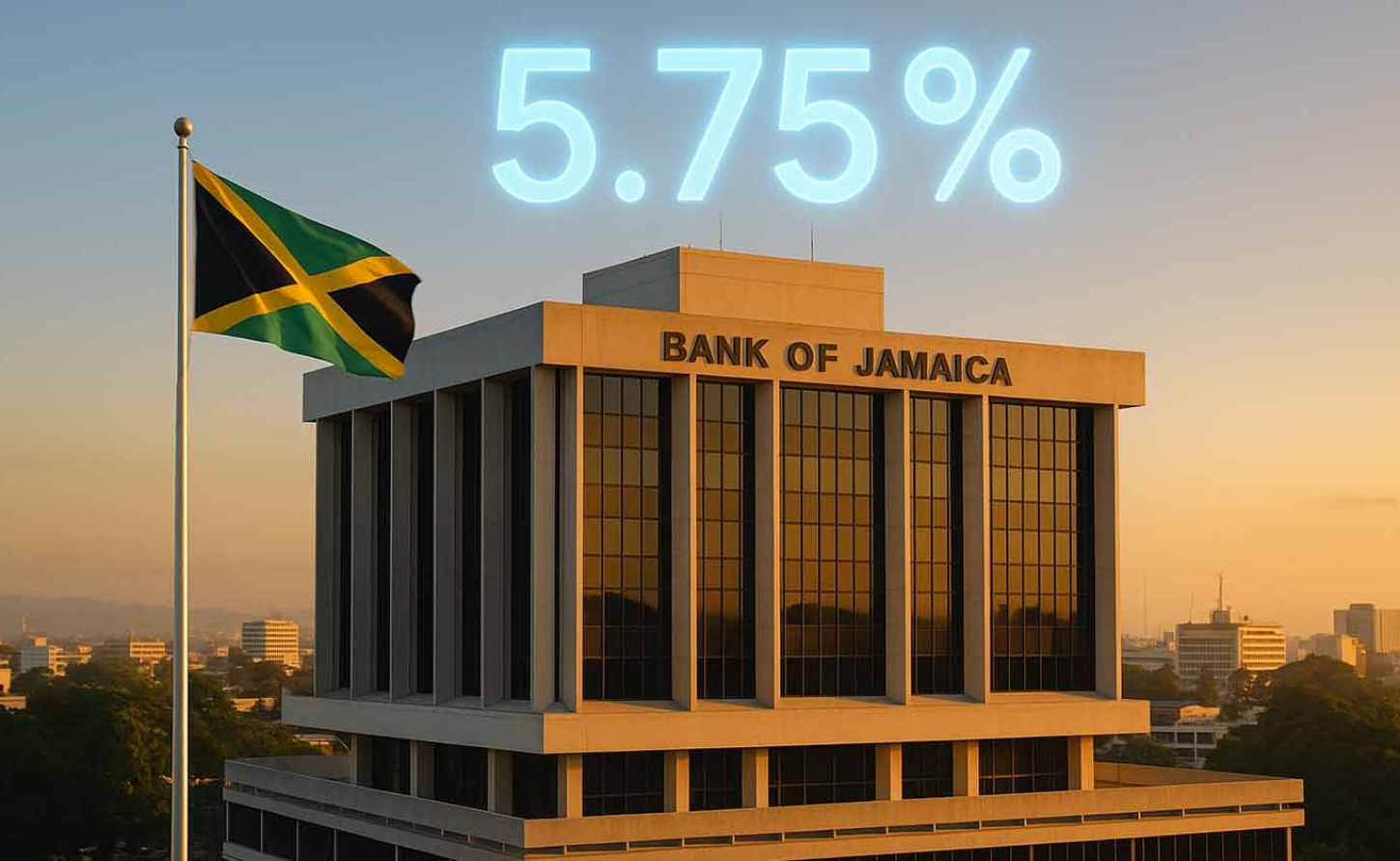
JAMAICA | BOJ Holds Policy Rate at 5.75% as Hurricane Melissa Damage Estimate Soars to US$8.8 Billion
Central bank maintains steady hand on monetary policy while projecting inflation will breach target range by early 2026
Kingston, Jamaica – December 22, 2025 – The Bank of Jamaica announced this morning that it will maintain its policy interest rate at 5.75 per cent per annum while committing to proactive foreign exchange market interventions, as the country grapples with Hurricane Melissa's devastating economic impact.
In a dramatic revision of earlier estimates, the central bank disclosed that damage to critical infrastructure now stands at approximately US$8.8 billion—more than 40 per cent of Jamaica's GDP—up significantly from the initial 30 per cent estimate. The upward revision encompasses extensive damage to roads, houses, factories, schools, the electricity grid, and other public and private assets.
Speaking at the Bank's quarterly Monetary Policy Report press conference, officials outlined the severe economic toll across multiple sectors. The agriculture sector has been "particularly devastated," with losses estimated at US$389 million. The tourism sector, concentrated in western parishes, saw 43 per cent of room stock closed immediately after the storm, with worker layoffs already reported despite some less-affected properties resuming operations.
Four Pillars of Policy Decision
The Monetary Policy Committee's unanimous decision to hold the policy rate steady rests on four principal factors, all reflecting the complex balancing act facing monetary authorities in the hurricane's aftermath.
First, annual headline inflation is projected to rise sharply from the 4.4 per cent recorded in November 2025, exceeding the Bank's target range of 4.0 to 6.0 per cent by early 2026. This increase primarily reflects the hurricane's impact on major food-producing parishes and supply chain disruptions in energy and agriculture.
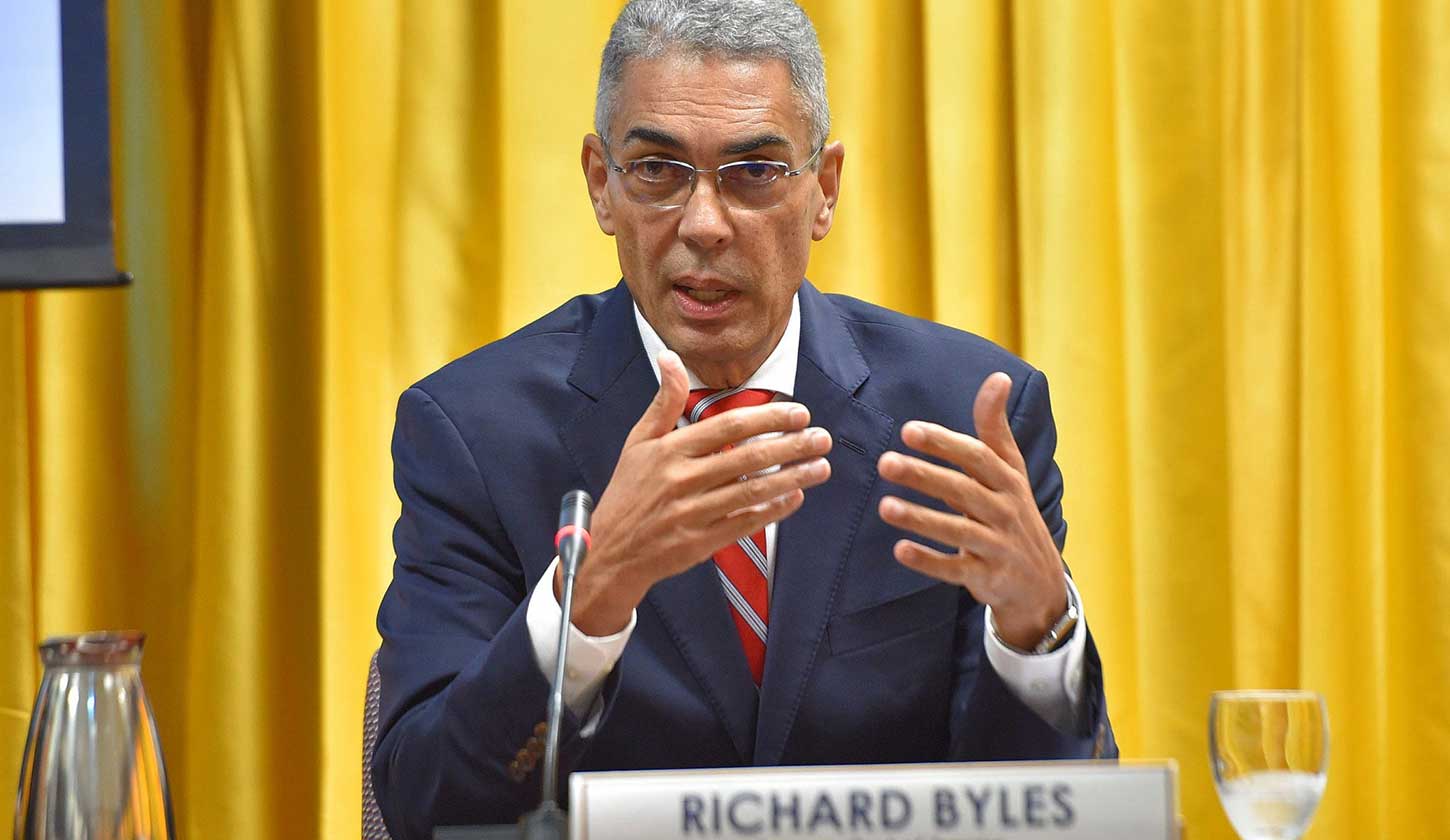
Governor of the Bank of Jamaica Mr. Richard Byles
Second, core inflation—which excludes agricultural food and fuel prices—will also breach the target range in early 2026. This reflects anticipated secondary price increases for goods and services including home repairs, restaurant meals, and personal care items.
The central bank attributed the higher core inflation to the expected surge in spending and economic activity related to recovery and rebuilding efforts, supported largely by external financing flows to both private and public sectors.
Third, the government's suspension of the fiscal rule for an initial one-year period will facilitate increased public sector spending for recovery and relief.
While acknowledging this spending as "absolutely essential" to rebuild economic foundations, the Bank stated it must position policy to temper potential inflationary impulses from the increased government expenditure. Larger fiscal deficits are projected over the next three fiscal years compared with previous forecasts.
Fourth, risks to the inflation outlook are "skewed strongly to the upside," meaning inflation has a greater likelihood of exceeding projections.
Factors include higher-than-expected reconstruction demand, rising inflation expectations among households and firms, protracted agricultural recovery, and potential long-term damage to specific industries that could slow supply improvements.
Foreign Exchange Market Stability
In response to increased foreign exchange demands driven by reconstruction-related imports, the Bank of Jamaica has undertaken substantial market interventions. Since Hurricane Melissa's passage, the central bank has sold US$250 million into the market.
Additionally, BOJ has directly supplied foreign exchange to selected energy sector players to remove large purchases from the open market and reintroduced scheduled advance notices of intervention sales to assure adequate foreign currency liquidity.
These measures have proven effective, with the exchange rate remaining stable over the period from November 1 to December 16, 2025, compared to end-October levels.
Cumulatively, BOJ sold US$1.1 billion via its B-FXITT facility over the 12 months ending November 2025, largely consistent with the previous 12-month period. Net foreign exchange purchases amounted to approximately US$1.0 billion over the same timeframe.
The central bank pledged to continue proactive interventions to maintain orderly foreign exchange market conditions, noting that instability in this market can fuel higher prices throughout the economy.
Jamaica's international reserves remain robust at US$6.3 billion as of December 16, 2025—representing approximately 151 per cent of the level considered adequate. These reserves are expected to be bolstered by disaster risk financing, multilateral funding, grant flows, and proceeds from the Caribbean Catastrophe Risk Insurance Facility and Catastrophe Bond.
 Sobering Economic Outlook
The near-term macroeconomic outlook has been severely affected by the hurricane. The Planning Institute of Jamaica (PIOJ) estimates the economy will contract between 11 and 13 per cent in the December 2025 quarter.
For Financial Year 2025/26, BOJ anticipates real GDP will decline in the range of minus 4.0 to minus 6.0 per cent, largely due to extensive infrastructure damage and disruption to productive activity.
Recovery is expected to be gradual, with Financial Year 2026/27 real GDP growth projected between minus 1.0 and positive 1.0 per cent, reflecting the initial stages of recovery efforts.
The Bank anticipates funding inflows from multilateral and private sources will support spending over the next three years, contingent on execution capacity for planned projects.
Jamaica's external accounts are expected to deteriorate significantly in the near term. The current account is projected to shift to a deficit—a major reversal from the surpluses recorded over the three prior fiscal years.
This deterioration stems primarily from a worsening trade deficit and lower tourism inflows, partially offset by higher remittances.
Exports are projected to decline on average due to falloffs in Manufacturing, Mining and Quarrying, Agriculture, and Re-exports. Conversely, imports are expected to rise, driven by higher consumer goods demand and increased requirements for raw materials, transport equipment, and capital goods related to relief efforts and reconstruction.
Inflation Trajectory
 The Statistical Institute of Jamaica reported headline inflation of 4.4 per cent in November 2025, exceeding BOJ projections and up from 2.9 per cent in October. The increase was driven mainly by higher food prices, reflecting early hurricane impacts on raw food prices. Core inflation reached 4.3 per cent in November, up from 3.7 per cent in October.
Bank officials project inflation will rise above the target range over the next four quarters, peaking in the June 2026 quarter before moderating back to the 4.0 to 6.0 per cent target range in early 2027 as supply conditions improve and monetary policy takes effect.
In concluding remarks, BOJ officials emphasized that preserving a stable macroeconomic environment is essential to the country's recovery and reconstruction efforts. The Bank reaffirmed its commitment to managing Hurricane Melissa's inflationary effects, noting that unchecked inflation would adversely impact "every sector of Jamaican society, especially the poor and most vulnerable."
The Monetary Policy Committee stated it will continue monitoring food price impacts on overall inflation and stands ready to adjust monetary policy if identified risks threaten the projected return of inflation to the target range "in the shortest possible timeframe."
-30-
