
CARICOM Secretary-General's Message of Unity Defies the Stormy Petrel of Regional Fracture

Dr Carla Barnett, Secretary-General of the Caribbean Community (CARICOM) commended implementation of the CARICOM Single Market and Economy (CSME) by Barbados, Belize, Dominica, and St Vincent and the Grenadines to commence full free movement of persons among themselves.
Dr. Carla Barnett charts course for Caribbean solidarity as Trinidad's vassalage and Trump's aggression threaten to shatter the Community
MONTEGO BAY, Jamaica, December 22, 2025 - In any other year, Hurricane Melissa alone would have defined the Caribbean's trials—the lives lost, homes destroyed, economies battered. But 2025 has delivered catastrophes that make natural disasters seem almost merciful by comparison.
The Trump administration has turned Caribbean waters into a killing field, murdering over 100 people under the cynical guise of "drug interdiction." American warships now prowl the region like colonial gunboats, seizing oil tankers and enforcing blockades in flagrant violation of international law and the Caribbean Community's longstanding "Zone of Peace" doctrine.
And then came Trinidad and Tobago's betrayal.
While Prime Minister Kamla Persad-Bissessar hasn't fully broken with CARICOM—she has actively collaborated with American aggression, installing U.S. radar systems on Trinidadian soil, hosting marine deployments, and granting military aircraft access to the nation's airports.
Her rhetoric has been even more damaging than her actions. She has dismissed CARICOM's Zone of Peace principles as "fakery," declared the regional body "not a reliable partner," and openly praised Donald Trump while condemning sister nations for refusing to genuflect before Washington.
Former Prime Minister Keith Rowley, who left office in May, watched in horror as his successor transformed Trinidad into what he bluntly called a "vassal state." His words carried the weight of a man who spent years projecting Trinidad and Tobago "internationally as a secure and independent state," only to see that dignity surrendered in months.
Venezuela responded by cutting gas agreements and declaring Persad-Bissessar persona non grata—a diplomatic humiliation that she shrugged off with disturbing nonchalance.
Yet into this maelstrom of violence, vassalage, and regional fracture stepped Dr. Carla Barnett with a message that refused to surrender to despair.
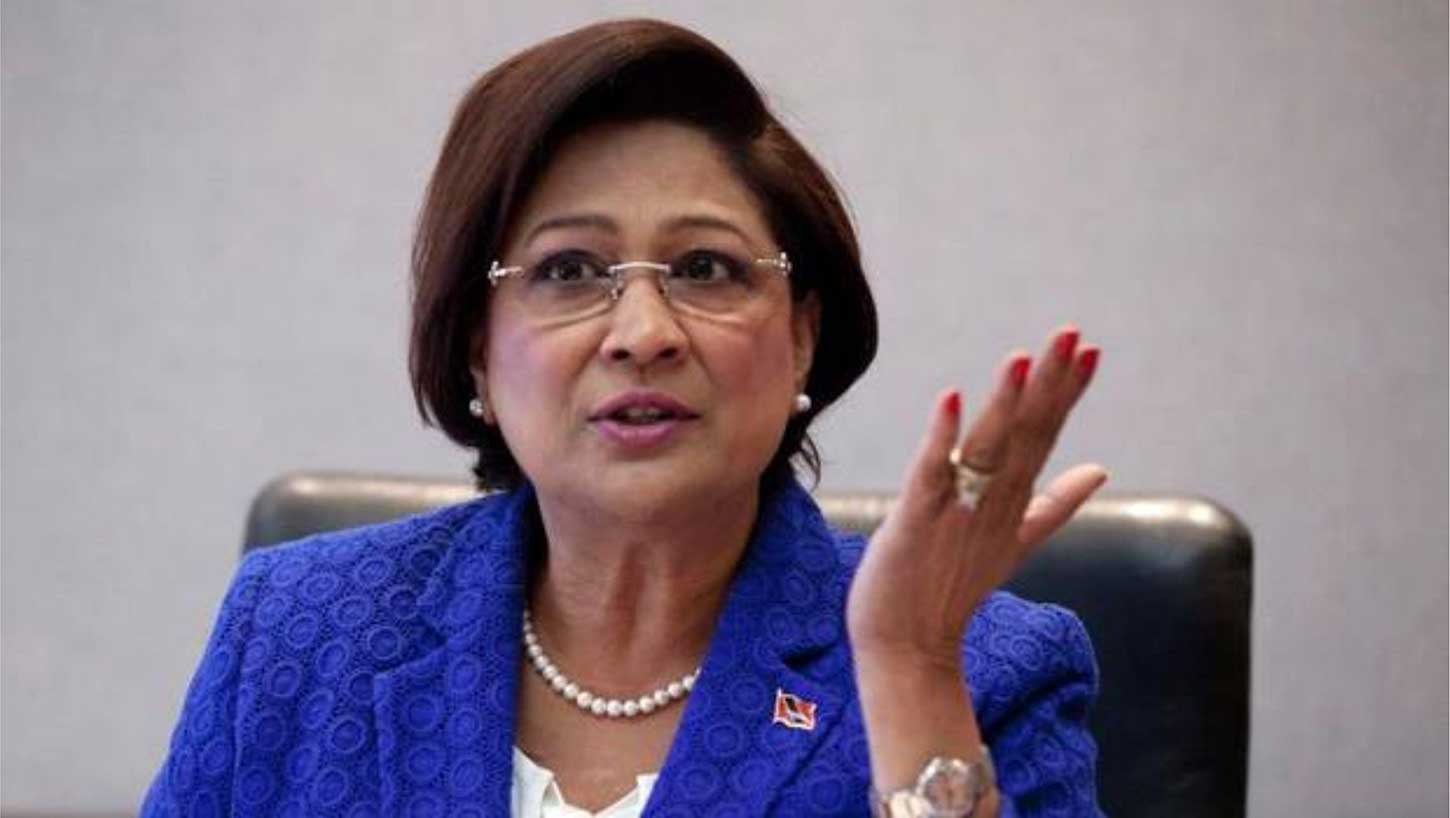
Kamla told Trinis “Careful, you don’t end up like Antigua and Barbuda and Dominica who badmouthing the US, and guess what happen, all their visas restricted now. They cut their visas. Which Trini wants to cut their visas? So behave yourself,” she said.
But she also refused to let catastrophe define the Community's story.
Dr. Barnett highlighted progress that would be remarkable in calm times, let alone during regional upheaval. Four CARICOM nations—Barbados, Belize, Dominica, and St. Vincent and the Grenadines—commenced full free movement of persons among themselves, advancing the CARICOM Single Market and Economy despite every pressure to retreat into narrow nationalism.
A comprehensive Industrial Policy and Strategy moved forward. CARIFESTA XV celebrated Caribbean culture with defiant joy. Seven member states and five associate members held peaceful elections, honoring democratic traditions while others spoke of military solutions.
The contrast could not be starker. While Trump threatens land strikes against Venezuela and Persad-Bissessar cheers American warships, Dr. Barnett speaks of "an engaged and empowered citizenry" as the region's greatest asset.
While Trinidad installs foreign military infrastructure, CARICOM advances integration. While one prime minister dismisses regional solidarity as weakness, the Secretary-General insists on "a Community for All, that is resilient, prosperous and united."
This is not naive optimism—it is strategic defiance. Dr. Barnett understands what Persad-Bissessar apparently does not: that small nations survive through solidarity, not by offering themselves as aircraft carriers for great powers pursuing regime change.
She recognizes what Trump's cheerleaders refuse to see: that American military "solutions" have consistently produced failed states, mass migration, and humanitarian disasters throughout Latin America and the Caribbean.
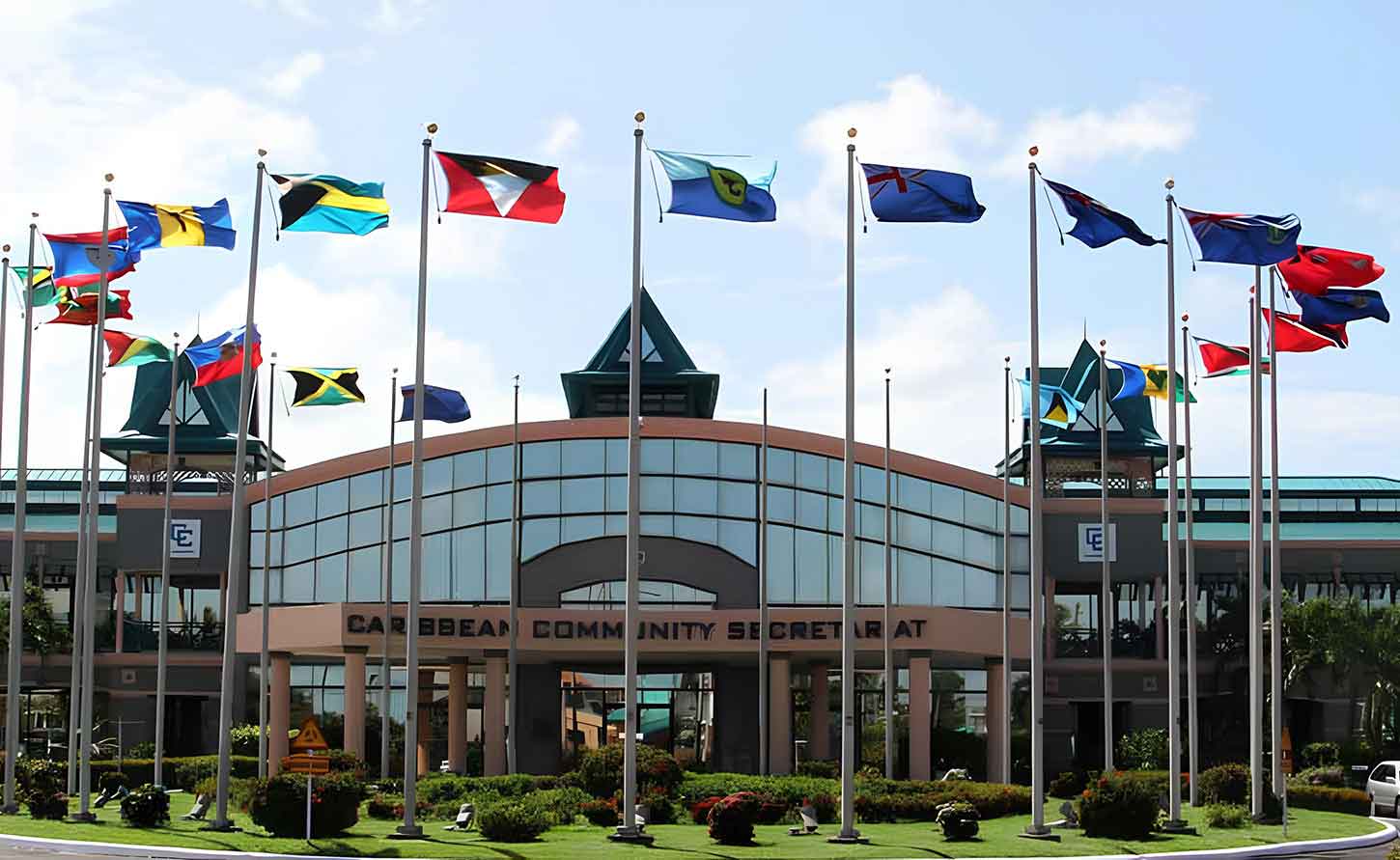
CARICOM Secretariat, Turkeyen, Greater Georgetown, Guyana
Dr. Barnett's message lands at a critical juncture. The Caribbean stands at a fork: one path leads toward the integration, sovereignty, and collective strength that CARICOM was founded to achieve; the other descends into the fragmentation and dependency that characterized colonial times.
Trinidad has chosen its path. The question is whether other nations will follow Port of Spain's example or Dr. Barnett's vision.
The hurricanes of 2025 will be remembered. The American aggression will not be forgotten. But if the Caribbean Community survives this crucible intact, historians will credit leaders like Dr. Carla Barnett who refused to accept that military might makes right, who insisted that sovereignty and dignity matter even for small island states, and who understood that resilience means standing together precisely when standing alone seems easier.
May her optimism prove prophetic rather than tragic. The region—and the world—desperately needs her to be right.
-30-
