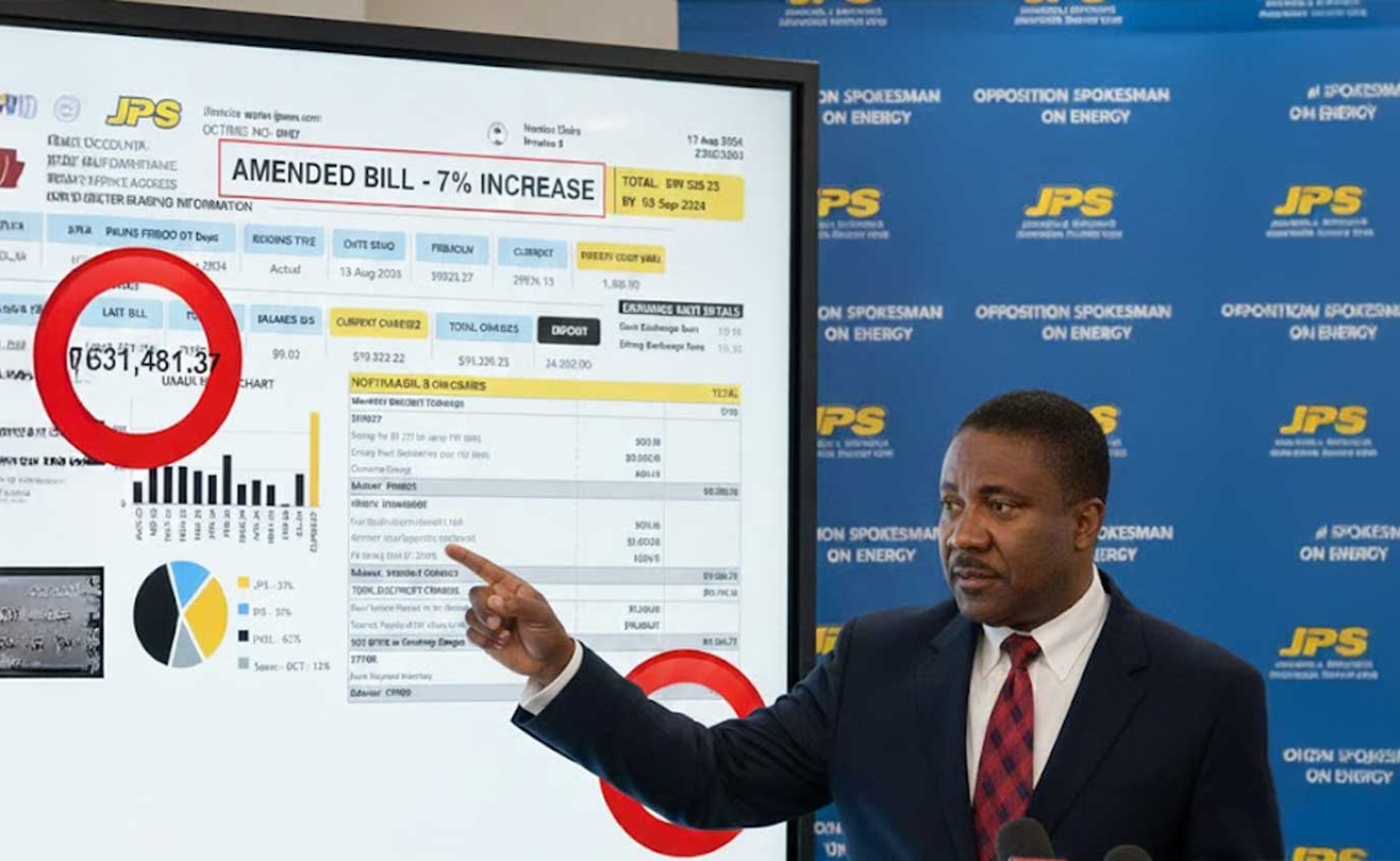
JAMAICA | Hurricane Victims Hit with 7% Power Bill Shock—Paulwell Wants JPS To Explain Why
JAMAICA | Hurricane Victims Hit with 7% Power Bill Shock—Paulwell Wants JPS To Explain Why
Shadow Energy Minister demands transparency as utility's explanation for increase collapses under scrutiny
KINGSTON, Jamaica – December 16, 2025 - The arithmetic of disaster relief has taken a cynical turn in Jamaica. While thousands of citizens struggle to rebuild homes shattered by Hurricane Melissa, Jamaica Public Service Company has delivered its own storm surge—a 7 percent bill increase wrapped in explanations so vague they border on insult.
Shadow Minister on Energy Phillip Paulwell isn't buying it. And his systematic dismantling of JPS's justification exposes a pattern of opacity that raises uncomfortable questions about who really pays the price when natural disasters strike.
At the heart of Paulwell's challenge lies a phrase that should alarm every Jamaican consumer: "some days before." That's the precision—or rather, the calculated imprecision—JPS offered when explaining why it allegedly switched to more expensive diesel fuel around the time Hurricane Melissa made landfall. Not five days. Not ten days. Not even a range. Just "some days before."
"This demands immediate substantiation," Paulwell declared, cutting through the corporate fog. "JPS must provide the specific dates for the alleged decommissioning of regular LNG and renewable plants, and clearly state which billing cycles used estimated readings."
The questions pile up like unpaid bills. If JPS decommissioned its regular fuel sources, when exactly did this happen? Which customers are being charged for estimated readings rather than actual consumption? And perhaps most damningly—why is any of this information missing from a utility company's explanation for raising rates on a population still reeling from a Category 4 hurricane?
But Paulwell's interrogation goes deeper, targeting what appears to be an uncomfortable collusion between JPS and the Independent Power Producers who supply much of Jamaica's electricity. In its Bill Update statement, JPS presumed to speak on behalf of these IPPs, attributing part of the increase to rising fuel costs across the board.
"We call upon the IPPs to publicly declare they are not in collusion with JPS regarding this charge adjustment," Paulwell stated, effectively daring the power producers to either confirm or contradict JPS's narrative. The silence from the IPPs thus far speaks volumes about an industry that appears more interested in maintaining unified pricing strategies than in consumer transparency.
Then there's the Office of Utilities Regulation—the supposed watchdog that Paulwell accuses of rolling over. "The OUR has clearly sanctioned this increase. Its complicity in this opaque process is unacceptable." The regulator's failure to demand the kind of documentation Paulwell now seeks raises fundamental questions about whose interests Jamaica's utility oversight actually serves.
Paulwell's prescience adds weight to his current offensive. In late October, he warned Jamaicans about impending bill shocks. Those warnings, dismissed or ignored at the time, now look like the responsible governance the country actually needed. The specific disclosures he demanded then remain unfulfilled today—even as JPS moves forward with rate increases that will hit households already devastated by Melissa's destruction.
Adding to the credibility crisis is JPS's cryptic reference to an "offsite data storage failure" that may have compromised the company's ability to access accurate meter readings. If true, this means some portion of the 7 percent increase is being calculated on estimates rather than actual consumption—a detail JPS buried in its announcement rather than leading with transparency.
"Without full transparency on these points, the increase lacks legitimacy and places an unjust burden on consumers already under strain," Paulwell concluded, framing what should be the standard for any rate adjustment: prove it or withdraw it.
The burden of proof does indeed lie with JPS and the OUR. Jamaicans rebuilding homes, replacing lost appliances, and struggling to maintain normalcy after Melissa deserve better than "some days before" and vague allusions to fuel costs. They deserve itemized explanations, specific dates, verifiable data, and regulators who remember that their mandate is consumer protection, not utility company enablement.
The complete disaggregation of electricity bills—breaking down every component so customers understand exactly what they're paying for—isn't a radical demand. It's the minimum standard of accountability in any functioning democracy. That JPS has resisted this transparency for so long suggests they have much to hide behind their current mathematics of disaster.
Hurricane Melissa was nature's fury. This 7 percent increase feels like something else entirely.
-30-
