
JAMAICA | Roads to Nowhere: Jamaica's $51 Billion Infrastructure Mirage
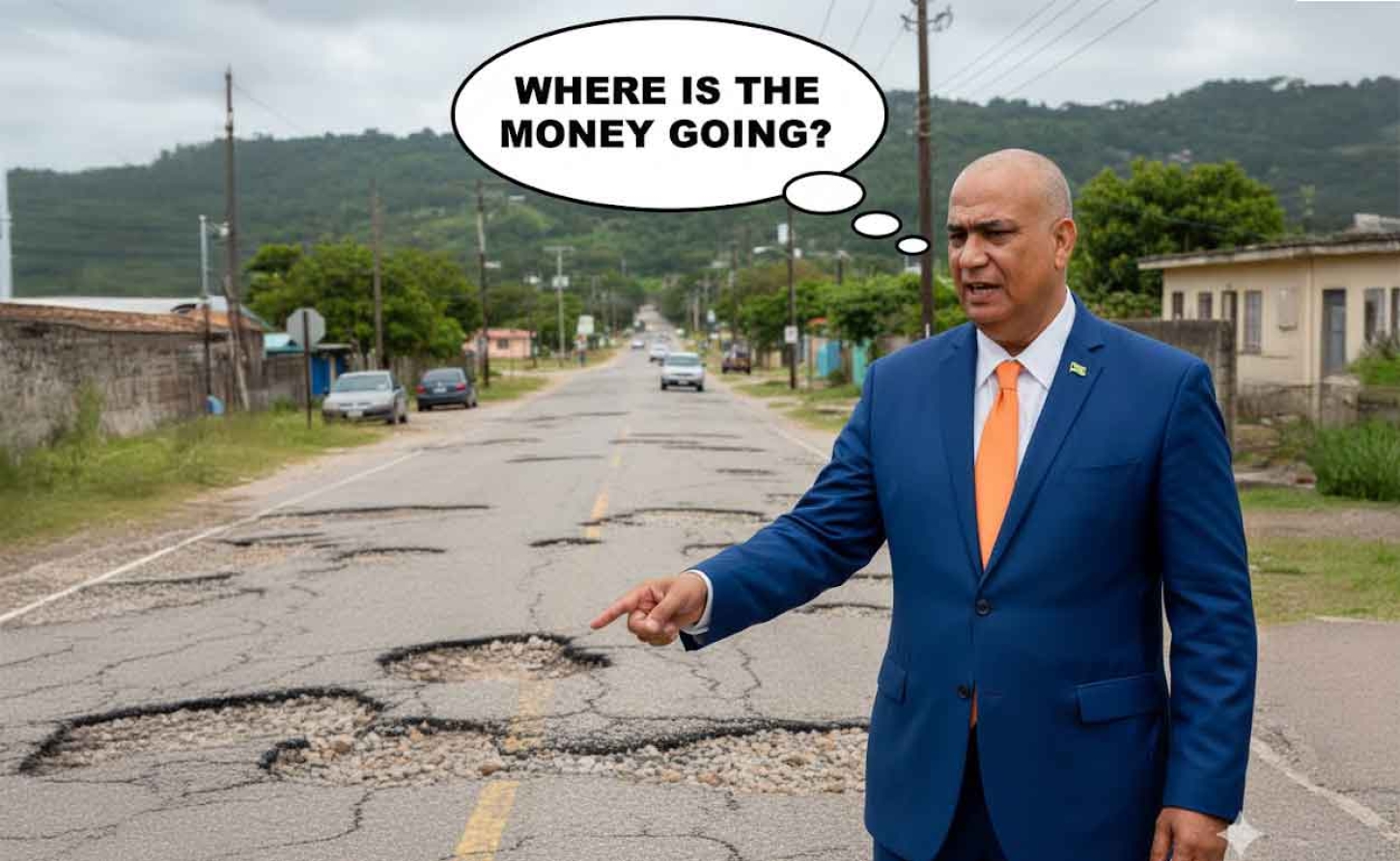
AI generated Image of Richard Azan inspecting a piece of bad road
As programmes multiply and announcements pile up, Jamaicans navigate the same craters — and their patience has finally cracked
KINGSTON, Jamaica, January 9, 2026 - The taxi operators who blocked roads in Bath, St Thomas last week weren't staging a political stunt. They were making a simple, desperate point: the roads they depend on for their livelihoods have become virtually impassable, and no amount of government acronyms has changed that reality.
Their protest is the latest eruption in what has become a nationwide crisis of confidence — a yawning chasm between the billions announced for road rehabilitation and the broken, dangerous surfaces Jamaicans actually drive on every day.
Opposition Spokesman on Roads and Works, Richard Azan, has now demanded answers. Where, precisely, has the money gone?
The Fifty-One Billion Dollar Question
The numbers are staggering. The SPARK programme — Shared Prosperity through Accelerated Improvement to our Road Network — carries a price tag of J$45 billion, including $5 billion for waterline improvements. The REACH programme — Relief Emergency Assistance and Community Help — was initially announced at $3 billion before being expanded to $5 billion. The GO programme — Graded Overlay Emergency Road Rehabilitation — added another $1.6 billion in December 2024.
Combined total: approximately J$51.6 billion in announced road spending.
Yet the pattern is consistent: grand unveilings followed by glacial implementation — or none at all. Some programmes have yet to break ground. Others have touched a smattering of roads while leaving entire parishes in dangerous neglect. The result is an infrastructure policy that appears designed primarily for press releases rather than pavement.
"Jamaicans were promised improved road conditions," Azan noted. "What they have received instead is a masterclass in public relations while their vehicles are destroyed and their transport costs skyrocket."
The frustration extends far beyond St Thomas. Residents in St Mary and East Portland report conditions that have worsened despite repeated government assurances that rehabilitation was underway. The gap between announcement and reality has become a defining feature of Jamaica's infrastructure landscape.
Eastern Hanover: Where Billions Meet Potholes
Nowhere is this disconnect more visible than in Eastern Hanover, where communities like Hopewell, Cascade, and Jericho endure roads that have deteriorated beyond mere inconvenience into genuine hazard.
These aren't remote tracks serving a handful of residents. They are arteries connecting communities to schools, clinics, markets, and livelihoods. Yet they remain in conditions that demand not mere patching but complete rebuilding — roads that have been waiting while programmes are announced, re-announced, and announced again.
For residents navigating these surfaces daily, J$51 billion in government commitments offers cold comfort. They don't need new acronyms. They need functional roads.
Following the Money — Or Trying To
Azan has raised pointed questions about accountability, referencing troubling allegations circulating about road funds in St Thomas that may have served private interests rather than public need. While these claims require verification, they underscore a deeper transparency deficit.
With over fifty billion dollars allocated across multiple programmes, Jamaicans should be witnessing transformed road networks. Instead, they absorb the same vehicle damage, pay the same inflated transport costs, and navigate the same treacherous surfaces. The arithmetic simply doesn't add up.
"The Government owes the country a clear and detailed accounting," Azan said. "Line by line, parish by parish — exactly how these funds have been allocated and spent."
Beyond the Press Release
The Spokesperson has indicated he will pursue formal parliamentary questions to compel disclosure. But the larger issue transcends any single politician's demands.
Jamaica's road crisis represents a test of governance itself — whether announcements translate into outcomes, whether public funds serve public purposes, whether citizens can trust that programmes bearing optimistic names will actually deliver optimistic results.
The taxi operators in Bath have already rendered their verdict. The residents of Hopewell, Cascade, and Jericho know it intimately. And Jamaicans across the island are asking the same uncomfortable question: when it comes to roads, is this government building infrastructure — or merely building narratives?
Fifty-one billion dollars later, the potholes provide a definitive answer.
-30-
