GUYANA | The Constitution Is Not Optional Says Amanza Walton-Desir

Leader of the Forward Guyana Movement, Amanza Walton-Desir
GEORGETOWN, Guyana, January 21, 2026 - Amanza Walton, M.P. - Guyana’s democracy does not depend on who feels comfortable with an outcome. It depends on whether we respect the Constitution even when outcomes are politically uncomfortable.
Recent statements by the Attorney General, Anil Nandlall, concerning the impending election of a Leader of the Opposition raise issues far more serious than partisan disagreement.
They strike at the heart of constitutional order, parliamentary independence, and the rule of law.
I have said repeatedly that this is not about personalities. I hold no brief for anyone in these circumstances. It is about whether Guyana remains a constitutional democracy governed by rules or drifts toward governance by preference and pressure.
 The Leader of the Opposition is not a symbolic role. It is a structural pillar of Guyana’s constitutional system. If a lawfully elected Leader of the Opposition is not recognized, the damage does not stop with the Opposition.
The Government itself becomes constitutionally compromised. A state cannot claim full legitimacy while operating with a disabled or obstructed constitutional counterweight.
Elections alone do not complete a democracy; institutions do. The people do not need permission from the government to choose who they vote for.
Voters made their choices knowing the circumstances surrounding the candidates, and once those votes were lawfully cast, the Constitution protects them.
Ignoring those votes because the result is uncomfortable is not respect for the Constitution it is disrespect of the will of the people.
A government that benefits from constitutional authority cannot selectively deny that same Constitution when it produces an inconvenient result.
The Constitution deliberately excludes the President and the Executive from any role in choosing the Leader of the Opposition. This exclusion is not accidental. It is a safeguard against intimidation and coercion.
When the Attorney General publicly warns that Members of Parliament who vote in a particular way will be “noted” or “judged,” that is not mere political commentary.
It is an attempt to influence a constitutionally protected parliamentary process. In any democracy, such conduct would be understood as improper pressure, if not outright intimidation. I will not be intimidated.
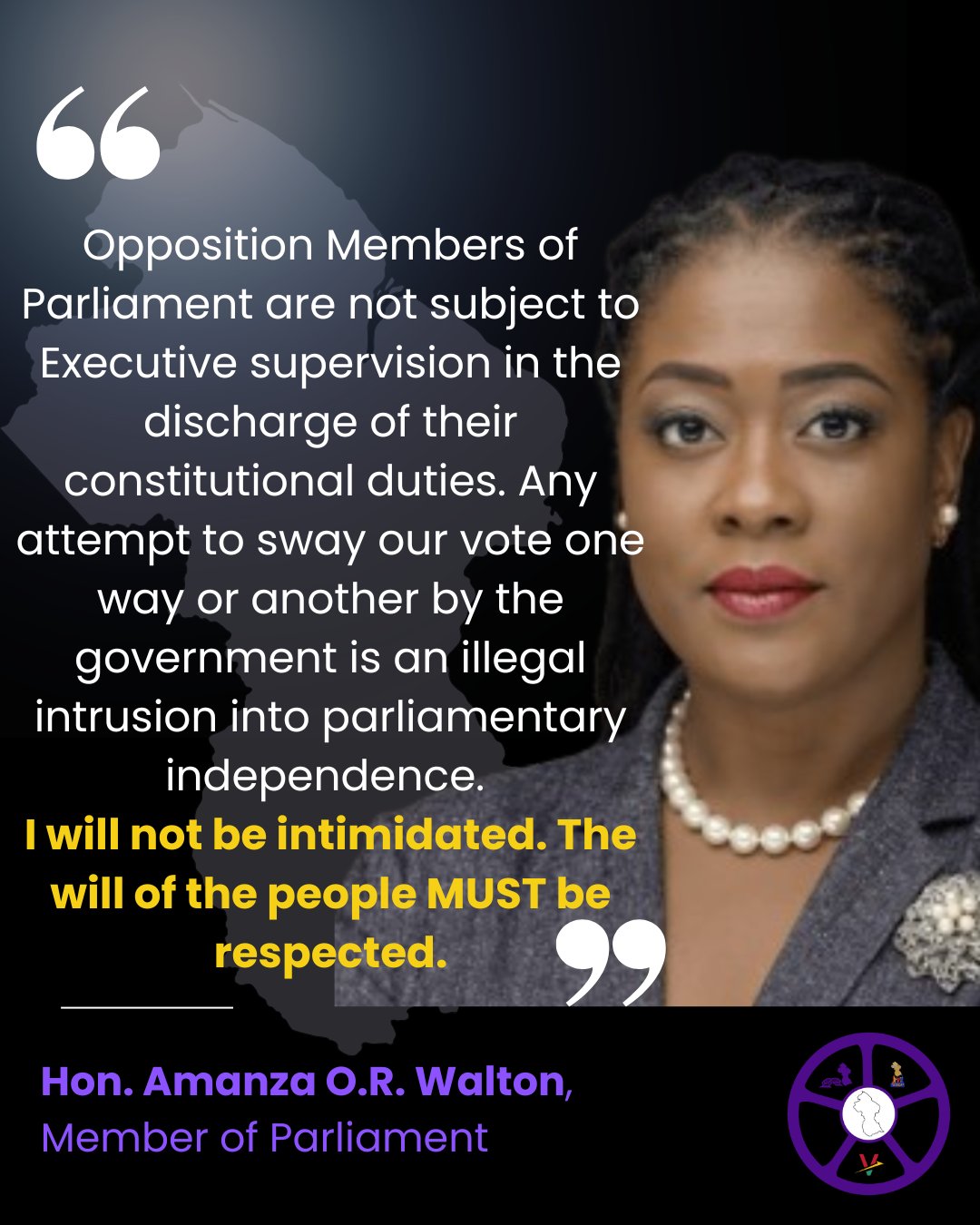
Opposition Members of Parliament are not subject to executive supervision in the discharge of their constitutional duties. Any attempt to sway our vote one way or another by the government is an illegal intrusion into parliamentary independence.
Guyana’s Constitution does not recognize different standards of innocence for different political actors.
It is a matter of public record that Irfaan Ali, prior to assuming office, faced nineteen fraud-related charges that had not been adjudicated at the time of his political elevation.
During that period, there were also limitations affecting his international travel in the form of sanctions. Yet at all times, he was rightly regarded as innocent until proven guilty, and those matters were later discontinued without judicial determination by the Director of Public Prosecution.
 This history is not raised to diminish the presidency. It is raised to affirm a constitutional principle, that allegations whether foreign or domestic, do not extinguish political rights in the absence of conviction or constitutional disqualification. The rule of law collapses the moment that principle is applied selectively.
Assertions that Guyana would face diplomatic or international repercussions simply because members of the Opposition elect a Leader of the Opposition according to constitutional rules are not supported by reality.
Engagements with the United States, Canada, CARICOM, and other international partners have consistently emphasized respect for democratic institutions and continuity of governance.
There has been no indication that the lawful exercise of parliamentary authority would derail international cooperation. Democratic systems are expected to function within their constitutional frameworks, not around them.
The claim that the Leader of the Opposition is an “alternative president” is constitutionally incorrect and misleading.
The Leader of the Opposition exercises no executive power, controls no state resources, and governs nothing. It certainly does not control me as an independent holder of office, unaffiliated or financed by him or her.
The role exists to scrutinize, to balance, and to safeguard democratic accountability, not to rival the presidency
This moment will be remembered not for those who benefited politically, but for those who defended constitutional principle.
Guyana’s democratic progress has always depended on restraint, on the willingness of those in power to accept limits, even when inconvenient.
The Constitution is not a tool to be invoked selectively. It is a safeguard against abuse and the final restraint on the exercise of power.
History will record whether we defended that safeguard, or allowed it to be weakened by pressure, threats, and misrepresentation.
This is a constitutional argument. It is also a matter of record.
-30-
