
AFRICA | Dangote Bets $17 Billion on Kenya — and Buries East Africa’s Regional Dream
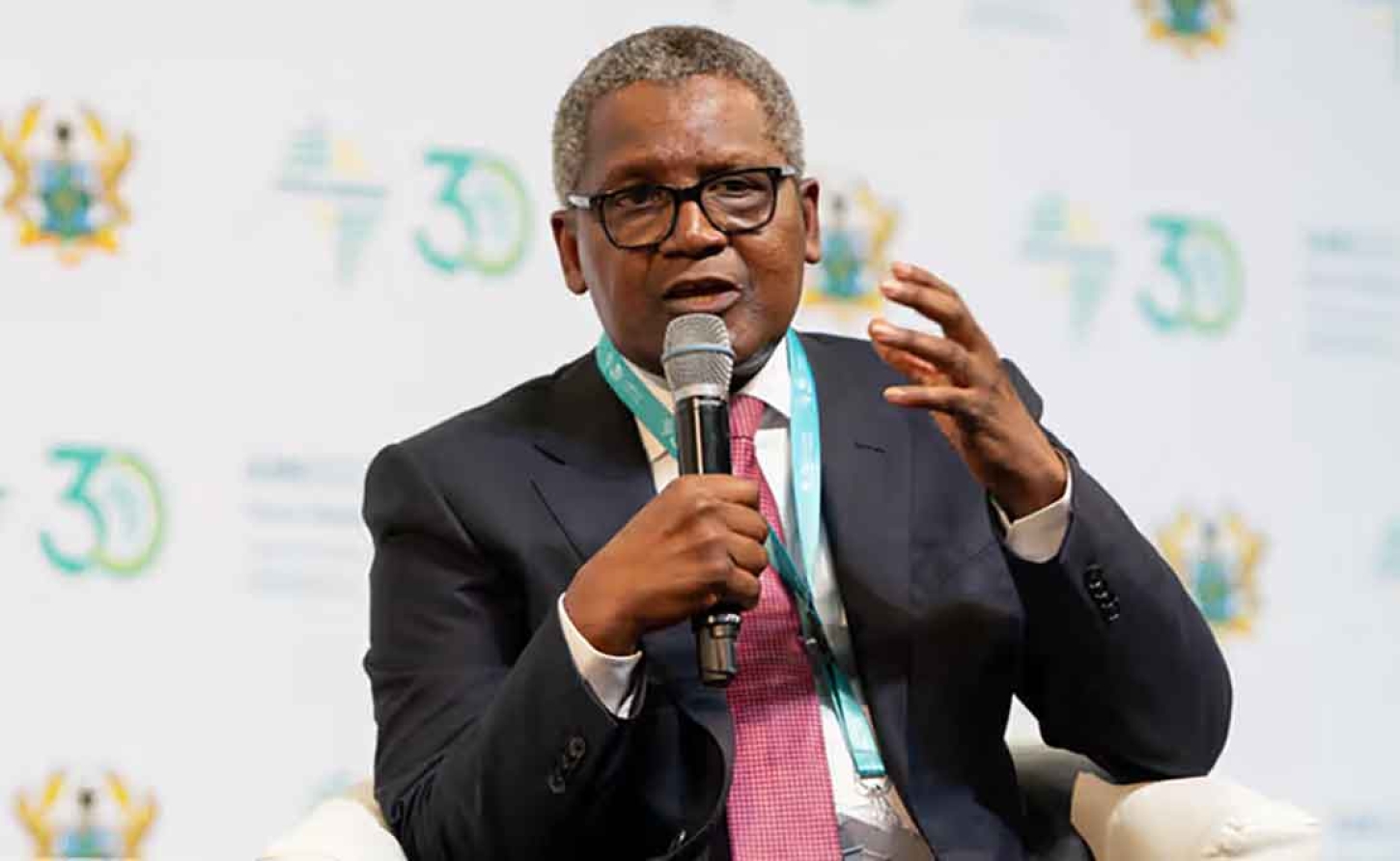
Africa’s wealthiest man, Aliko Dangote, has proposed a refinery, estimated at $17 billion which, according to The Financial Times, would be one of the largest industrial investments in East Africa.
Africa’s richest man has chosen Mombasa over a multilateral energy alliance, exposing the fragility of regional cooperation — and raising uncomfortable questions about who really shapes the continent’s economic destiny.
When Aliko Dangote, Africa’s wealthiest man, looks at East Africa’s energy map, he does not see borders or diplomatic protocols — he sees a $17 billion opportunity. His decision to favour Kenya’s Mombasa as the site for a proposed 650,000-barrel-per-day oil refinery has upended months of regional diplomacy, shattered the illusion of a pan-African energy alliance, and placed a single uncomfortable truth on the table: private capital moves faster than political goodwill.
One Refinery, A Continent’s Shame
The numbers tell a damning story. East and Central Africa — a region of half a billion people sitting atop significant hydrocarbon reserves — operates exactly one functional refinery. One. Compare that to North Africa’s 21, South Africa’s seven, and West Africa’s 14, and the picture that emerges is not merely one of underdevelopment, but of inexcusable neglect.
Every litre of refined petroleum that crosses into the region carries a premium that bleeds ordinary people dry, inflates transportation costs, and hobbles economic competitiveness.
This is the yawning void Dangote is moving to fill — not out of charity, but out of calculated commercial ambition. He has said plainly that his goal is to build a $100 billion enterprise by 2030. Kenya is not a benevolent detour; it is a strategic conquest.
“The ball is in the hands of President Ruto. Whatever President Ruto says is what I’ll do.” — Aliko Dangote
The Tanga Mirage — A Dream Announced Too Soon
The full irony of Dangote’s pivot can only be understood against the backdrop of what Kenyan President William Ruto had publicly championed just months earlier. At the Africa We Build Summit in Nairobi in April, Ruto stepped before cameras to announce a bold regional vision: a joint refinery in Tanga, Tanzania, that would process oil from the Democratic Republic of Congo, Kenya, South Sudan, and Uganda.
A pipeline from Tanga to Mombasa. Infrastructure jointly owned across borders. It was the kind of pan-African solidarity speech that makes for excellent headlines.
There was only one problem. Tanzania’s President Samia Suluhu Hassan had not been consulted. She said so herself — and her public surprise at the announcement she was supposedly a partner in delivered a quiet but devastating rebuke to Nairobi’s diplomatic credibility. A regional project cannot be announced by one country while the host country learns about it from the news.
Mombasa Wins on Merits — And That Is Precisely the Problem
Dangote’s preference for Mombasa is not arbitrary. He has been transparent about the logic: a deeper, larger port; a bigger economy; higher consumption of refined products. “Kenyans consume more,” he said simply. In the cold arithmetic of return on investment, the case is solid.
A 650,000-barrel-per-day facility — smaller than his Lagos megaproject which is expanding toward 1.4 million barrels per day, but still transformative by any East African standard — would reshape the region’s energy economics.
But the fact that a private investor’s bilateral calculation can so easily displace a multilateral vision should give African leaders pause. When the richest man on the continent can unilaterally redraw an energy map by choosing one port city over another, it exposes just how shallow regional economic integration truly remains.
COMESA, EAC, and the African Continental Free Trade Area are frameworks that need more than ambition — they need architecture that prevents individual capital from constantly outmanoeuvring collective political will.
Ruto’s Gamble — And What Comes Next
For President Ruto, Dangote’s declaration that “the ball is in your hands” is both a gift and a burden. If the $17 billion refinery is secured for Kenya, it would represent one of the largest industrial investments in East African history — a legacy-defining win. If Ruto fumbles the negotiation, or if regional partners interpret Kenya’s bilateral manoeuvring as yet another act of economic nationalism dressed in pan-African clothing, the diplomatic cost could be severe.
Meanwhile, Tanzania, Uganda, South Sudan, and the DRC — all of whom were nominally enrolled in the Tanga vision — will be watching to see whether Kenya’s gain comes at their collective expense. Energy independence that benefits one nation while entrenching dependence for its neighbours is not African development; it is African competition dressed in investment-summit language.
The $17 billion may arrive in Mombasa. The regional dream, however, may already be buried there.
— 30 —
