
JAMAICA | She Built It, Sold It, and Took It Back: Audrey Marks Reclaims Paymaster — and the Stakes Just Got Bigger
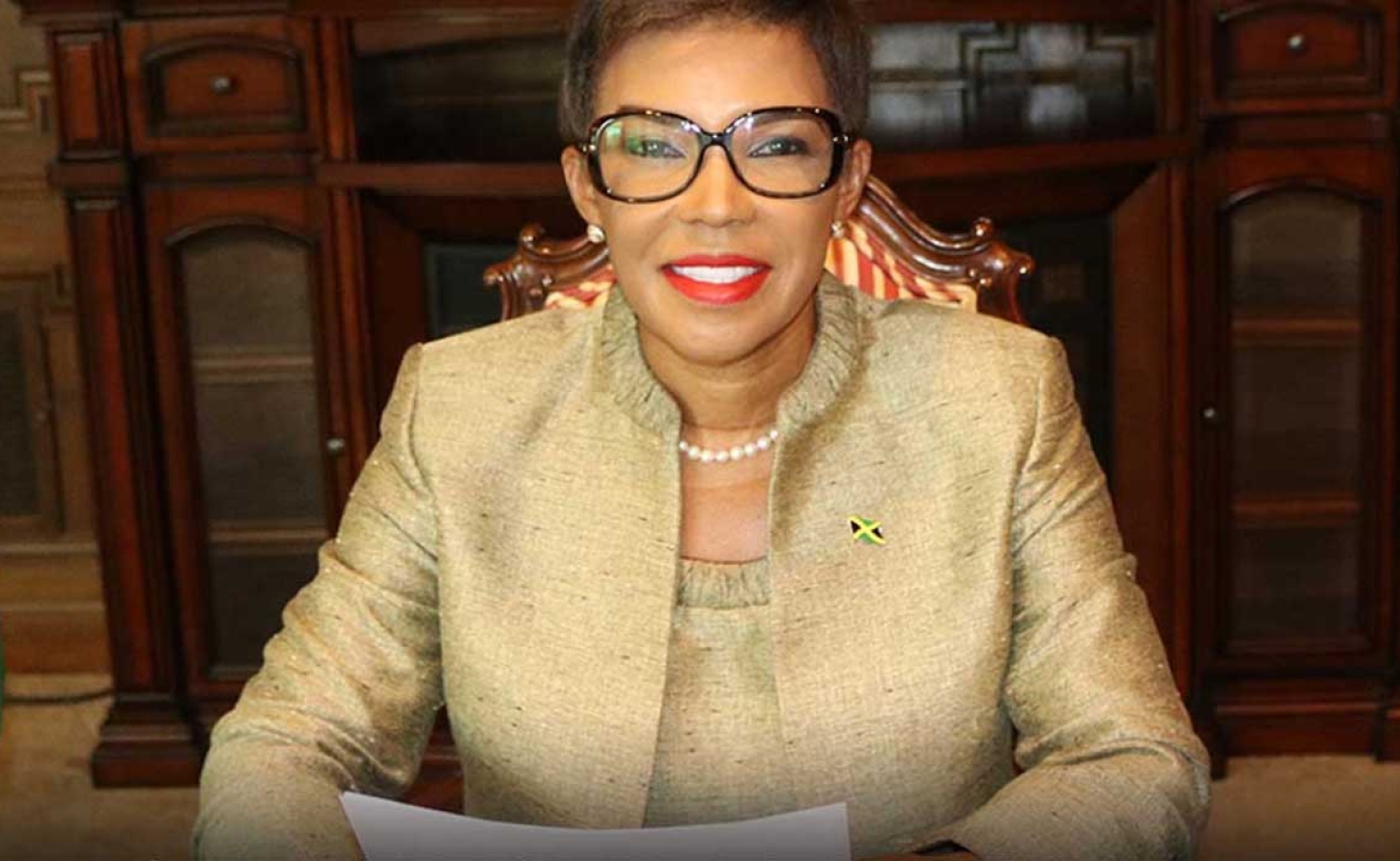
Minister of Efficiency, Innovation and Digital Transformation, Ambassador Audrey Marks
Jamaica’s Ambassador-turned-Minister has reacquired the pioneering payment company she founded — and with JAM-DEX stalled, some banks stonewalling, and Paymaster already holding a BOJ-approved digital wallet, the company is poised for tremendous growth.
KINGSTON, Jamaica, June 14, 2026 - Calvin G. Brown - There is a certain poetic justice — or perhaps a certain audacity, depending on where you sit — in watching a woman reclaim what she built from scratch, sold to a corporate giant, and has now quietly wrestled back into her own hands.
Ambassador Audrey Marks, who served as Jamaica’s envoy to Washington before returning home to take up the portfolio of Minister of Efficiency, Innovation and Digital Transformation, has reacquired Paymaster Jamaica Limited from Digicel, restoring full ownership of the company she founded in 1997 to the hands that conceived it.
The deal, which concluded negotiations that began in 2024, sees Marks acquiring Digicel’s 80 per cent stake in APM Holdings Limited, the parent company of Paymaster Jamaica Limited. In doing so, she ends the telecommunications conglomerate’s hold on a brand that, for nearly three decades, has been woven into the financial DNA of ordinary Jamaicans — paying bills, remitting funds, bridging the gap between formal banking and the informal economy that sustains millions.
The First of Its Kind
It is worth pausing to recall what Paymaster actually represented when Marks launched it in 1997. Jamaica had no equivalent. The company did not merely provide a service — it introduced a concept: a dedicated, accessible payment infrastructure that allowed citizens to settle utility bills, government fees, and financial obligations without the friction and exclusivity of traditional banking. It was, in the most literal sense, a first-mover innovation in the Caribbean payment space, arriving years before mobile money, fintech disruption, or digital wallets entered the popular vocabulary.
“Paymaster has always been about innovation, accessibility, and delivering value to our customers.”— Ambassador Audrey Marks
At its peak, Paymaster’s reach extended into almost every post office in Jamaica — a distribution footprint that spoke not just to commercial success, but to genuine mass-market penetration across urban centres and rural communities alike.
That the company eventually passed to Digicel — and has now passed back — is, in its own way, a metaphor for a broader tension in Caribbean business development: local entrepreneurs build the infrastructure, international capital acquires it, and the question of who ultimately benefits from homegrown innovation remains perpetually unresolved.
Marks’s reacquisition strikes a blow, however small, for the answer being Jamaicans themselves.
The JAM-DEX Question That Nobody Is Asking — But Should Be
Here is what transforms this story from a noteworthy business transaction into a matter of broader national interest. Bank of Jamaica Governor Richard Byles has spent three years trying — and largely failing — to drive mass adoption of JAM-DEX, the country’s central bank digital currency.
National Commercial Bank was the first institution to take up the JAM-DEX wallet through its Lynk platform, with Jamaica National following. But uptake across the wider banking sector has been sluggish, and JAM-DEX still represents just 0.1 per cent of currency in circulation despite transaction values surging 550 per cent in 2025 over 2024.
Byles, who demits office in August, has said the slow adoption is among his biggest regrets and a deep personal disappointment — a governor’s unfinished business handed to his successor. Governor Byles has frequently lamented the heavy reliance on cash in the Jamaican economy. He expressed deep frustration that cash continues to dominate the informal sector.
Byles pointed out that cash continues to be the king in large parts of the informal economy, stunting the central bank's goals for modernizing payments and broadening financial inclusion.
Into that landscape steps a reacquired Paymaster — and MyCash, the BOJ sandbox-approved digital wallet it already operates. MyCash works on any phone, any network, including basic feature phones, and can be activated with nothing more than a TRN and basic identification.
With over 200 physical locations islandwide serving as cash-in and cash-out points, and agent relationships spanning more than 40,000 locations across the United States and Canada, Paymaster has quietly assembled the kind of last-mile distribution infrastructure that JAM-DEX has struggled to build through the traditional banking channel.
MyCash may not need JAM-DEX. But JAM-DEX may eventually need MyCash — and therein lies a dynamic worth watching closely.
The more immediate question is not partnership, but competition. MyCash, now back in Marks’s hands, appears well positioned to go it alone — offering Jamaicans a digital payment alternative that operates independently of the JAM-DEX ecosystem. With the infrastructure lead it already holds, MyCash could carve out the cashless space that JAM-DEX has been unable to reach, particularly among the unbanked and the diaspora.
Whether JAM-DEX, which is due for serious strategic rethinking under the incoming BOJ governor, could one day seek to formally integrate or partner with an operation like MyCash is a conversation that may well be inevitable. For now, the two exist on parallel tracks — one stalled on the promise of state-backed digital currency, the other unburdened by institutional resistance and already moving.
The Diaspora Dimension
What is genuinely compelling about Marks’s declared vision for the post-reacquisition Paymaster is the diaspora angle. She speaks of developing a global market — physical locations and online platforms — that would allow Jamaicans abroad to access affordable financial services tied to home.
Given that remittances constitute one of Jamaica’s most critical economic lifelines, the idea of Paymaster evolving into a diaspora-facing digital financial institution has real strategic weight. The existing agent relationships with over 40,000 North American locations give that vision a foundation most start-ups could only dream of.
The business logic of the reacquisition is sound: Digicel’s pivot back to core telecommunications left Paymaster strategically orphaned. Marks saw the gap and moved.
But whether a company operating under the stewardship of a sitting minister — however carefully ring-fenced — can pursue that growth agenda without its decisions being coloured by the policy environment its owner helps shape, is a question that structures and assurances alone cannot settle. Only full transparency can.
A Caribbean Story About Who Owns the Future
Strip away the political complexity and what remains is a story that the Caribbean needs to tell more often: a woman who built something visionary from nothing, navigated the corporate marketplace, and returned to reclaim her creation with a sharper sense of where it needs to go. Marks did not found Paymaster on borrowed imagination.
She identified a gap in Jamaica’s financial landscape that the market and the government had both missed, and she filled it with an institution that still bears her entrepreneurial fingerprints nearly thirty years later.
The reacquisition, Marks says, is “both a return to the company’s entrepreneurial roots and the beginning of an exciting new chapter.” That framing is apt. But new chapters carry obligations.
If Paymaster is to become the infrastructure that finally delivers Jamaica’s cashless future to the unbanked and the diaspora alike, that is a national story — not a private one. The Jamaican public deserves to know, in precise and public detail, exactly where the minister ends and the owner begins.
Ambassador Marks built something worth taking back. If she also intends to use it to solve what the banks could not, that ambition deserves both applause and the most rigorous public scrutiny Jamaica can bring to bear.
— 30 —
