
CARICOM | Fifty-Three Years On, CARICOM Learns to Speak French: Martinique Takes Its Seat
CARICOM | Fifty-Three Years On, CARICOM Learns to Speak French: Martinique Takes Its Seat
After a decade of patient diplomacy and a legislative marathon through Paris, the French Caribbean territory arrives in Saint Lucia this week as CARICOM’s seventh Associate Member — and the regional map may never look the same.
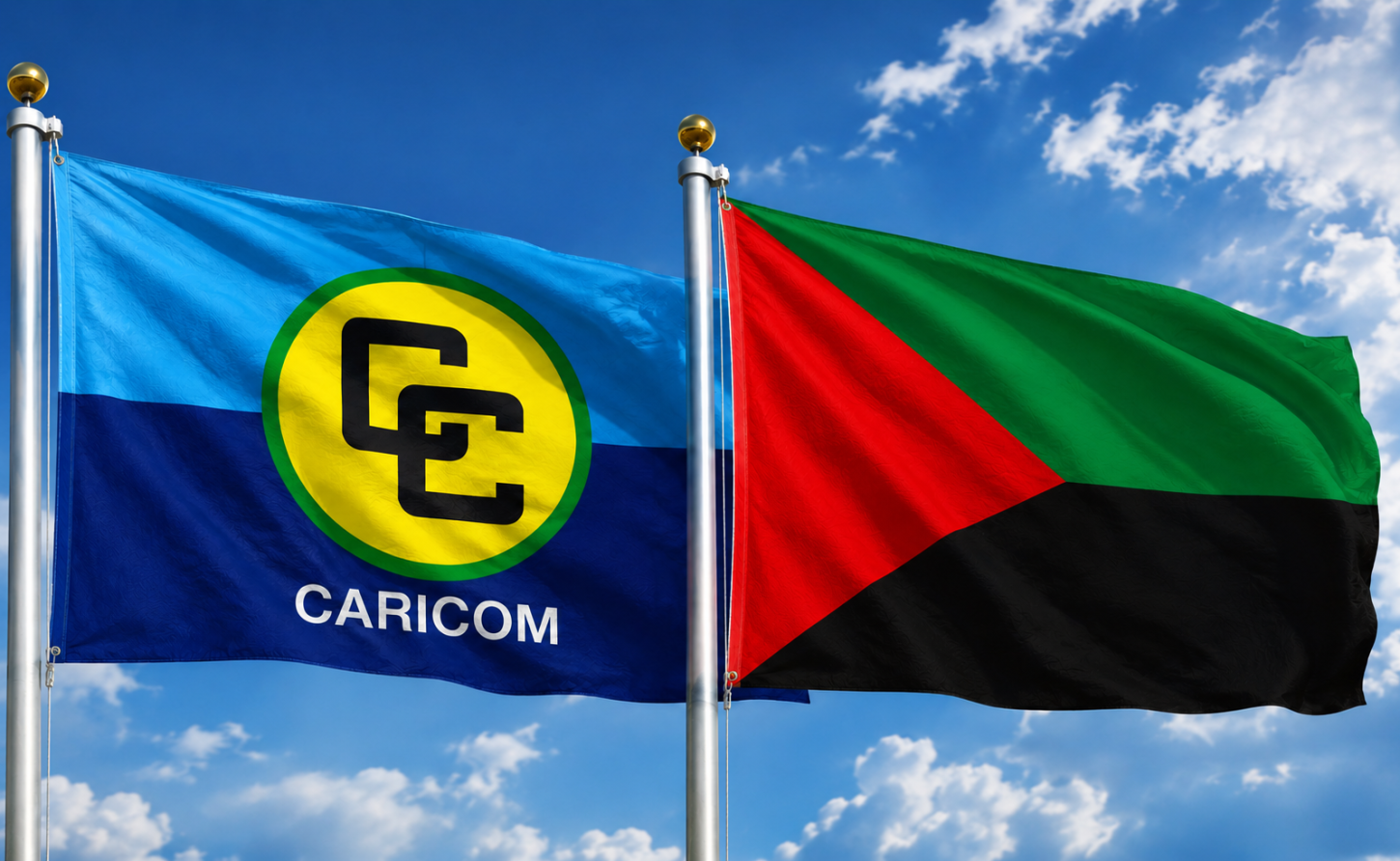
MONTEGO BAY, Jamaica, July 5, 2026 - Calvin G. Brown | Caribbean Affairs |When the heads of government of the Caribbean Community file into their Fifty-first Regular Meeting in Saint Lucia this week, there will be a new flag in the room — and it carries the tricolore of the French Republic.
Martinique, the volcanic jewel of the French Antilles, formally became an Associate Member of CARICOM on 16 June 2026, the Secretariat confirmed Sunday, ending one of the longest institutional courtships in the Community’s fifty-three-year history.
The announcement, delivered from Turkeyen with the Secretariat’s customary restraint, undersells its own significance. This is not merely a seventh name added to the Associate Membership roll. It is the moment a bloc born of the anglophone Caribbean — forged at Chaguaramas on 4 July 1973 by leaders who had just shed the Union Jack — opened its institutional doors to a territory that remains, constitutionally, a piece of France and an outermost region of the European Union.
A Decade in the Making
Martinique did not arrive at this table overnight. The territory has been methodically stitching itself into the Caribbean’s institutional fabric for more than ten years — joining ECLAC as an associate in 2012, the Association of Caribbean States in 2014, and the Organisation of Eastern Caribbean States in 2015. CARICOM was the last, and most consequential, piece of the puzzle.
The formal accession agreement was signed in Bridgetown on 20 February 2025, with then CARICOM Chair Mia Mottley and Serge Letchimy, president of Martinique’s Executive Council, putting pen to paper. What followed was a legislative obstacle course through Paris: the French Senate gave its assent on 28 January 2026, the National Assembly followed on 16 April, and France deposited the Instrument of Accession in June — triggering the entry into force of the Agreement on the Privileges and Immunities of CARICOM and sealing the deal.
That France had to legislate at all is a reminder of the peculiar constitutional tightrope Martinique walks. Paris was at pains to stress that accession involves no transfer of sovereignty: Martinique remains a French collectivity, foreign policy stays with the Élysée, and the territory keeps its EU status intact.
Associate Membership grants participation in CARICOM’s organs, agencies and programmes — but no vote on binding decisions and no seat in the Single Market and Economy, which remains the preserve of full Member States.
More Than Symbolism
Cynics will call it a flag ceremony. They would be wrong. Martinique now gains formal entry to the technical machinery that increasingly defines Caribbean survival: the Caribbean Public Health Agency, the Caribbean Disaster Emergency Management Agency, and the Implementation Agency for Crime and Security.
In a region where hurricanes do not check passports — as western Jamaica learned brutally under Hurricane Melissa — and where guns and gangs move as freely as sargassum, pulling the French Antilles into the same operational rooms as Kingston, Port of Spain and Georgetown is not symbolism. It is self-preservation.
There is an economic logic too, viewed from Fort-de-France. Martinique’s political leadership has long chafed at the territory’s overwhelming dependence on metropolitan France for trade, transport and capital. Regional integration offers ballast — new markets for cooperation in tourism, education, culture and sport, and expanded avenues for academic and professional mobility across the Caribbean basin.
A bloc born of the anglophone Caribbean has opened its doors to a piece of France — and behind Martinique stand Guadeloupe, French Guiana, Saint Martin and Saint Barthélemy, watching closely.
The Door Paris Left Open
Perhaps the most consequential line in the entire saga came not from Georgetown but from the Quai d’Orsay, which confirmed that the legal framework built for Martinique “paves the way” for the other territorial collectivities of the Antilles-Guyana region to follow. Guadeloupe, French Guiana, Saint Martin and Saint Barthélemy each face their own legislative procedure — but the precedent is set, the template drafted.
Should French Guiana one day take the same road, CARICOM’s continental footprint in South America would expand dramatically. The long-term picture is a Community steadily shedding its colonial-era linguistic fault lines — anglophone, francophone, Dutch and Spanish-speaking territories bound less by imperial inheritance than by shared geography and shared threat.
For a Community of roughly sixteen million citizens — sixty per cent of them under thirty — that is the integration project the Treaty of Chaguaramas always imagined but rarely delivered. This week in Saint Lucia, one day after CARICOM’s fifty-third birthday, it took a measurable step closer. The Caribbean Sea, after all, has never recognised the borders Europe drew across it. Now, at last, the region’s premier institution is catching up.
— 30 —
