HAITI | The Puppet Masters' Coronation: How Haiti's Oligarchs Finally Claimed the Throne They've Always Controlled
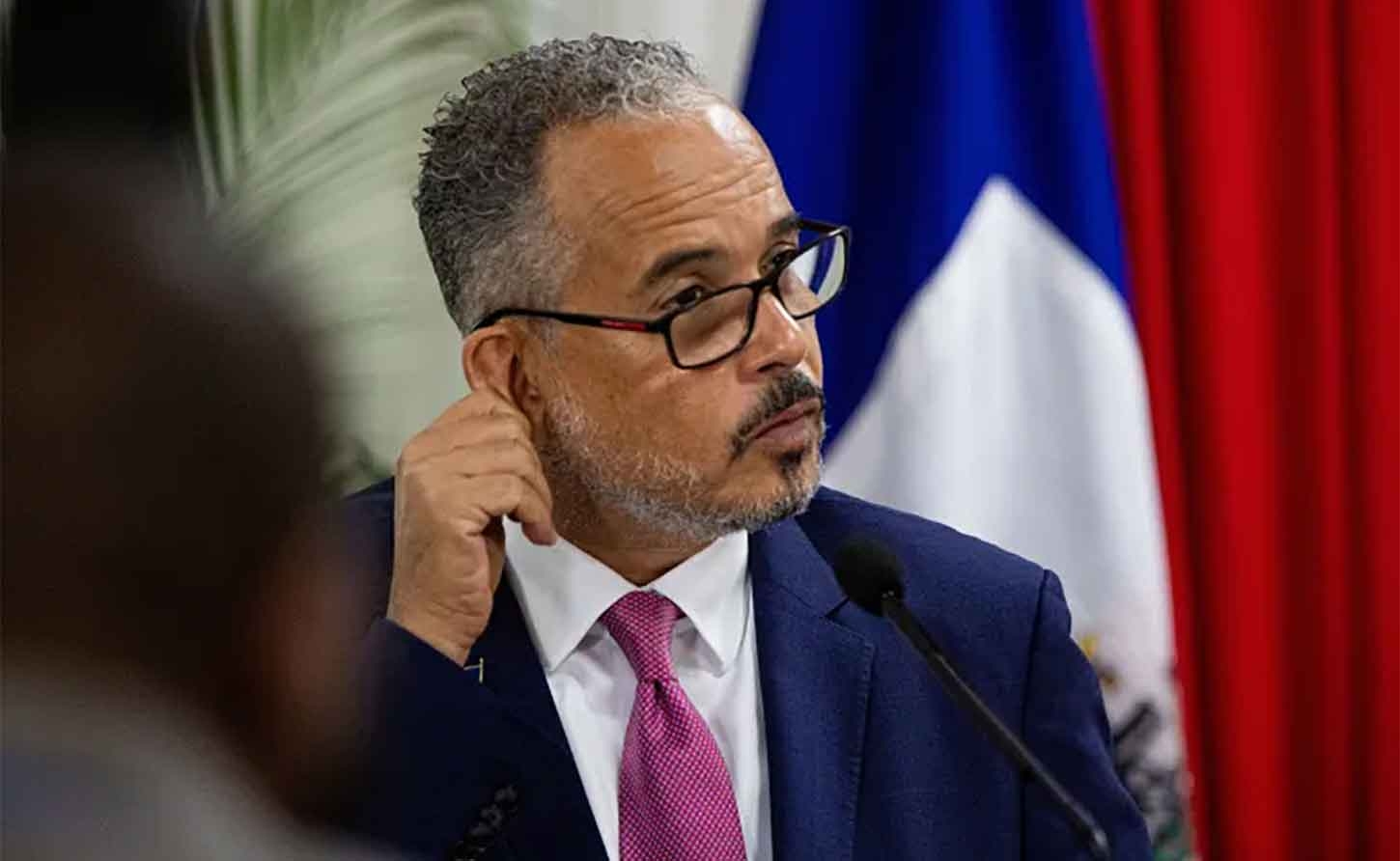
Prime Minister Alix Didier Fils-Aimé, has the strong support of the United States of America Government.
As American warships enforce "stability," a businessman assumes sole power in a nation run for centuries by six families who profit from chaos
PORT AU PRINCE, Haiti, | February 10, 2026, By WiredJa Staff | February 7th has always held sacred meaning in Haiti—the anniversary of democracy's triumph over the Duvalier dictatorship, traditionally the day presidents take their oath.
This year, that historic date carried a bitter irony that cuts to the bone of Haiti's dysfunction: power was formally transferred not to an elected leader, but to an unelected businessman, while the oligarch families who have bled the nation for over a century watched from the shadows they have always preferred.
The nine-member Transitional Presidential Council officially dissolved Saturday, handing sole executive authority to Prime Minister Alix Didier Fils-Aimé, a 54-year-old businessman who has never faced voters. The ceremony unfolded with grim formality—and with American naval vessels anchored offshore to ensure no one disrupted Washington's preferred outcome.
"Mr Prime Minister, in this historic moment, I know that you are gauging the depth of the responsibility you are taking on for the country," outgoing council President Laurent Saint-Cyr intoned. What went unsaid is perhaps more significant: Saint-Cyr himself is the former head of the American Chamber of Commerce in Haiti.
With his departure and Fils-Aimé's ascension, Haiti's government now rests entirely in the hands of the private sector—a first in the nation's modern history, and the culmination of a process that has been centuries in the making.
The BAM BAM: Haiti's Hidden Rulers
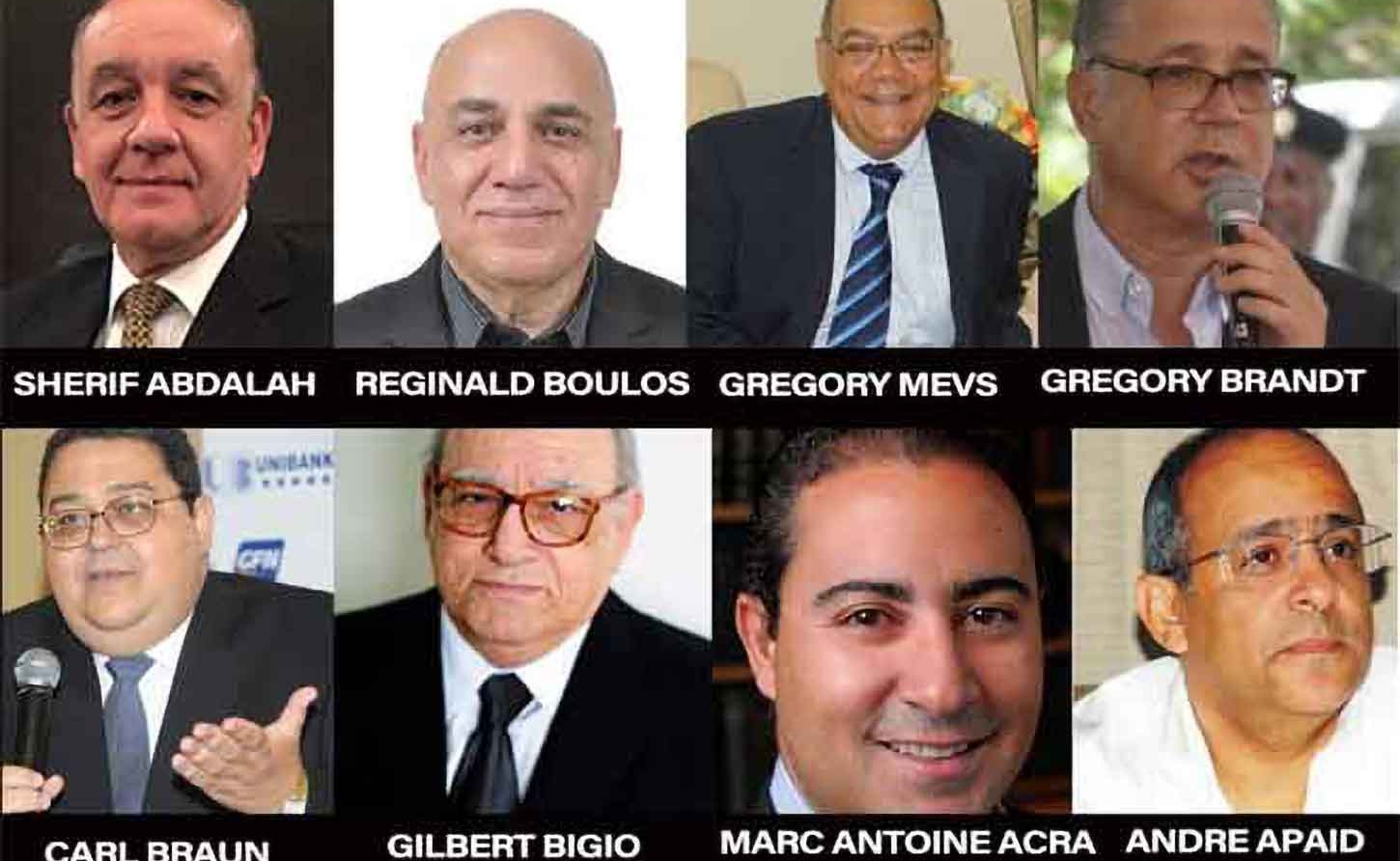
Haiti's Oligarchs who control 80% of the wealth of that impoverrished country and control all the gangs and ports.
These families, predominantly of Middle Eastern and European descent, arrived in Haiti in the late 1800s and early 1900s—refugees from Syria, Palestine, Lebanon, and later, European Jews fleeing the Holocaust. They are not descendants of the enslaved Africans who fought and died to create the world's first Black republic.
Yet they control an estimated 90 percent of Haiti's wealth while the vast majority of the Black population lives in grinding poverty. Some 66 percent of Haitians survive on less than $3.65 per day.
The oligarchs' business model is elegantly brutal. They maintain monopolies on key imports, avoid virtually all taxes through honorary diplomatic titles from their countries of origin, own private ports with minimal government oversight, and—according to mounting evidence—use armed gangs as private militias to eliminate competition and maintain political control.
When successful Black entrepreneurs attempt to challenge this system, they are systematically destroyed. Telecommunications executive Franck Ciné invested $85 million in Haiti's largest-ever private investment, only to be arrested on dubious charges and have his assets seized. The message was clear: the system tolerates no threats.
"The moment you have warfare, these people can go out and buy any gang they want," observed Fulton Armstrong, the CIA's Haiti branch chief in the mid-1990s, now a lecturer at American University.
Armstrong recalls watching Port-au-Prince endure blackouts while the oligarchs' hillside mansions in Pétion-Ville blazed with private generator power—"brilliantly lit chalets" dancing above a darkened city.
From Shadows to Centre Stage
What makes Saturday's transition historically significant is not merely that an unelected businessman now holds sole executive power. It is that the oligarch class has finally dispensed with the pretense of ruling through proxies.
For over a century, the BAM BAM selected "Black faces" to front governments that served their interests. When those puppets outlived their usefulness—or developed inconvenient ambitions of reform—they were discarded, sometimes violently.
President Jovenel Moïse learned this lesson fatally. Before his assassination in July 2021, Moïse had launched reforms aimed at fighting corruption and limiting oligarch privileges. The Globe and Mail reported that Haiti's elites "are not afraid to use violence to retain their grip on power." Moïse's modernisation projects ended with Colombian mercenaries and bullets in his bedroom.
The evidence of oligarch-gang collaboration has become impossible to ignore. Canada has imposed stiff sanctions on Gilbert Bigio, often described as Haiti's richest man, for using economic power "to protect and enable the illegal activities of armed criminal gangs."
Gang leader Jimmy "Barbecue" Cherizier has directly named oligarch Reginald Boulos as having supplied guns and money to armed neighbourhood groups through a proxy dealer.
Cherizier claims Boulos even asked him to burn down a rival Toyota dealership—a request he refused, triggering a public rift that signalled the growing independence of armed groups from their former bourgeois patrons.
In July 2025, the Trump administration arrested Boulos at his $1.4 million Boca Raton mansion, accusing him of "a campaign of violence and gang support that contributed to Haiti's destabilization."
He remains in detention, the most high-profile Haitian arrested under Trump's immigration crackdown. Whether this represents genuine accountability or a sacrificial lamb offered to deflect criticism remains unclear.
The Gunboats That Shaped "Democracy"
The council's dissolution cannot be understood without acknowledging what preceded it. In late January, several members announced they had voted to remove Fils-Aimé—a sovereign decision by Haiti's transitional governing body.
Washington's response was swift: visa revocations for four council members and a cabinet minister, followed by the deployment of a US warship and two Coast Guard vessels to waters near Port-au-Prince.
"The naval presence appears to provide the latest proof of Washington's willingness to use the threat of force to shape politics in the Western Hemisphere," observed Diego Da Rin of the International Crisis Group. Secretary of State Marco Rubio stressed "the importance" of Fils-Aimé's continued tenure to "combat terrorist gangs and stabilise the island."
The council's ouster vote quietly evaporated. By Saturday, those who had challenged the prime minister sat in ceremonial attendance as he assumed unchecked power. This is what democracy looks like when aircraft carriers serve as voting booths.
The Impossible Inheritance
Fils-Aimé now faces a mandate that would humble any leader. Gangs control 90 percent of Port-au-Prince. Some 1.4 million Haitians languish in displacement camps. The UN reports at least 4,384 people killed between January and September 2025, with 1,270 cases of sexual violence and 13 massacres.
Tentative elections are promised for August and December—the first in a decade—but credible observers dismiss these timelines as fantasy.
Outside the government offices where Saturday's ceremony unfolded, street vendor André Joseph offered the verdict of Haiti's forgotten majority. Living in a makeshift shelter after gang violence consumed his neighbourhood, the 42-year-old watched with weary eyes: "Their time is up. They were there nearly two years and didn't do anything for the country."
Whether Fils-Aimé represents something new—or merely the oligarchs finally claiming openly what they have always controlled from the shadows—remains Haiti's unanswered question. The prime minister spoke briefly Saturday, promising to address the nation later.
The brevity was perhaps appropriate. In a country where the BAM BAM have written the rules for over a century, and American gunboats enforce the outcomes, grand speeches have never been what determines Haiti's fate.
February 7th once symbolized liberation from dictatorship. This year, it marked the moment Haiti's hidden rulers stopped hiding—and the world that claims to care about democracy looked the other way.
-30-
