
CARIBBEAN | Reparations, Not a Cheque: It Is Time We Named Our Terms, Set The Agenda
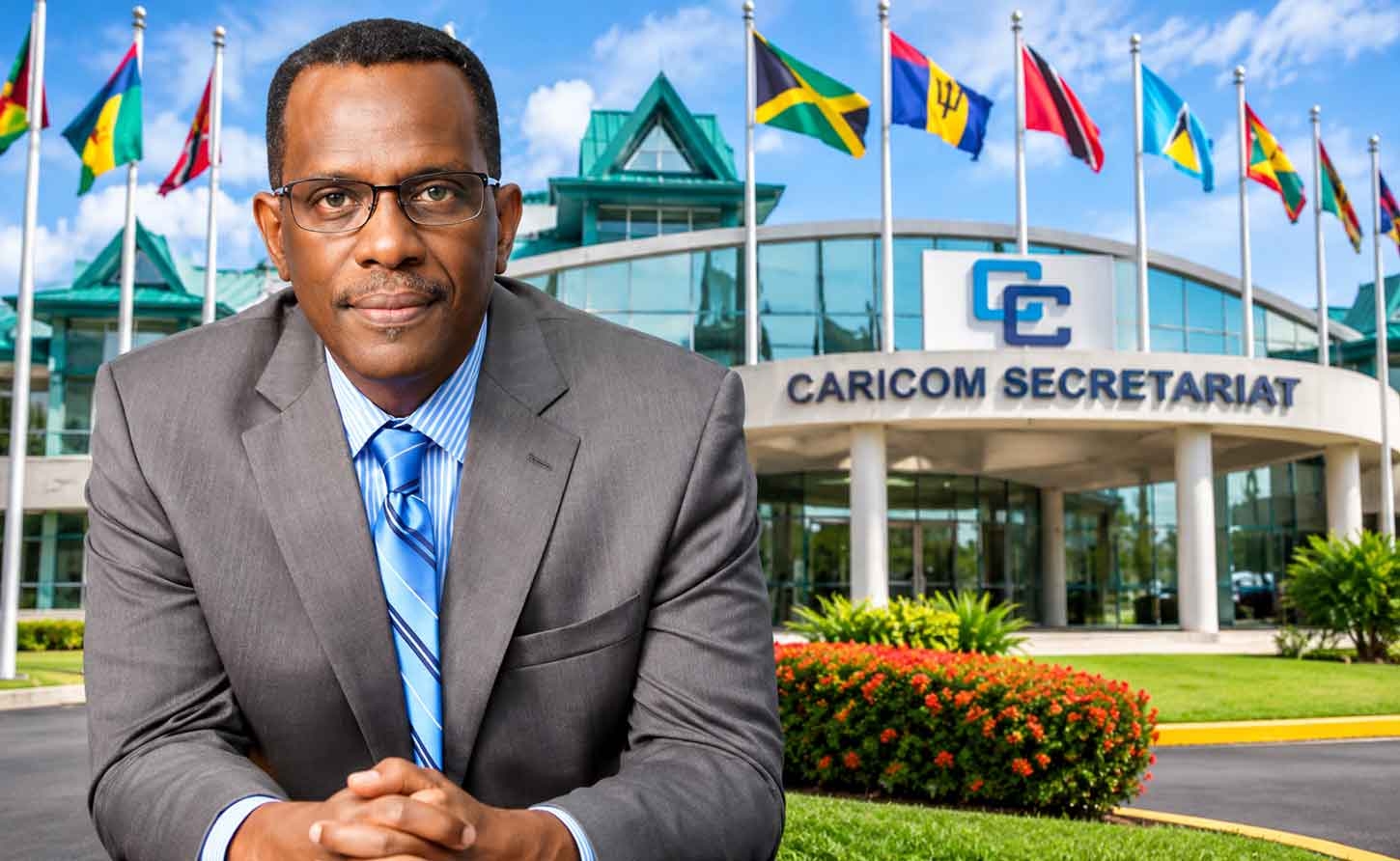
CARICOM Chairman St. Lucia's Prtime Minister Philip J. Pierre
Britain has offered the Caribbean a dialogue with the money removed. Before we sit down, the descendants of the enslaved must decide for ourselves what repair looks like.
MONTEGO BAY, Jamaica, November 13, 2026 | CALVIN G. BROWN | — The Commonwealth summit in Antigua ended on November 4 with what London would like us to receive as a breakthrough. According to reports of the final communiqué, leaders welcomed Britain’s willingness to join a “structured, time-bound, inclusive and good-faith dialogue on reparatory justice”.
Prime Minister Andy Burnham says he is open to a formal apology. He has pledged £40 million over three years for Caribbean infrastructure, green energy included. And he has ruled out, in advance, any direct financial reparations.
So we are invited to a negotiation in which one side has already announced the result. St Lucia’s Prime Minister Philip J. Pierre, speaking as chairman of CARICOM, gave the fitting answer: “A dialogue that begins by placing reparations outside the room cannot be a complete dialogue.”
He is right, but the Caribbean should go a step further. The question is not only what Britain has taken off the table. It is who gave Britain the authority to set the table at all.
The accused does not pass sentence
In no courtroom on earth does the party responsible for a wrong pronounce the verdict and then choose its own penalty. Yet that is the arrangement on offer. Britain concedes the history, weighs the wording of an apology, and decides on its own that whatever follows shall not cost it money.
We have seen this before. When Britain abolished slavery in 1833 it did pay compensation: £20 million, to the slave owners, for the loss of their “property”. The people who had been owned received nothing but a further term of forced “apprenticeship”. The borrowing that funded that payout was not finally retired until February 1, 2015. British taxpayers of our own lifetime, the children of the Windrush among them, helped to settle the enslavers’ account.
Britain has already accepted that slavery created a financial obligation. It simply paid the wrong party.
The debt, honestly counted
Let us be exact about the scale, because exaggeration only arms our opponents. The Slave Voyages database, the standard scholarly reference, estimates that 12.5 million Africans were forced on to ships and about 10.7 million survived the crossing to the Americas. British ships carried more than three million of them.
Count the generations born into bondage and the figure grows: the Brattle Group study presented in 2023 by the Jamaican jurist Patrick Robinson, then a judge of the International Court of Justice, put the number of people enslaved across the Americas at 19 million over four centuries.
For more than 200 years their unpaid labour cleared the land, cut the cane and helped to finance the banks, insurers, ports and factories of Britain. The same is true, in varying measure, of Spain, France, Portugal, the Netherlands and Denmark, and of the slaveholding states that succeeded them, the United States and Brazil. Human beings were entered in plantation ledgers alongside the horses and the cattle.
Brattle priced Britain’s share at about US$24 trillion, owed to 14 countries, some US$9.5 trillion of it to Jamaica. Nobody seriously expects a cheque for that amount. But the number is the measure of the wrong, and it is the yardstick against which every offer must be judged. Set against US$24 trillion, £40 million of infrastructure aid is not atonement. It is a rounding error.
Why not cash in the pocket
Here I part company with those who imagine reparation as a payout to every household. A lump sum would be spent in a season, much of it on imports, and the structural damage would remain exactly where it lies. Nor is it in our interest to exhaust the debtor. A Britain that cannot pay cannot repair.
What we are owed is the capacity that was taken from us: the science, the industry and the institutions that two centuries of extraction built over there and prevented over here. The CARICOM Reparations Commission said as much in 2014. Technology transfer is item nine of its Ten Point Plan, and the renewed plan presented this year carries the same demands for health, education and debt cancellation. But headings are not terms. It is time to fill them in.
What repair could look like
- Technology for our classrooms and campuses. British universities, several of which have acknowledged their own links to slave wealth, should be bound to share laboratories, research licences and teaching capacity with the University of the West Indies, our technical universities, teachers’ colleges and high schools.
- Knowledge for our hospitals. Mr Pierre has pointed to chronic disease as one of slavery’s visible legacies. Repair means diagnostic equipment, specialist training and the licences to produce essential medicines in the region.
- Factories on our soil. Manufacturing plants established in our countries on terms that require local management, apprenticeships and the transfer of the underlying know-how, so that we gain skilled, decently paid work, not assembly lines that leave when the tax holiday ends.
- Relief from debt. Mr Burnham has floated a debt restructuring initiative. Mr Pierre has warned that income classifications routinely lock vulnerable Caribbean states out of concessional relief. That door must be opened.
Each item should be costed, time-bound and written into a binding agreement, not left to the goodwill of whoever happens to hold Downing Street.
The Crown was in the trade
Nor should King Charles be let off the hook. In Antigua he spoke of his profound personal sorrow and stopped short of an apology. He found room to remind the Caribbean that the Royal Navy played “a leading role” in ending the slave trade. He did not remind us of the role his predecessors on the throne played in building it.
When John Hawkins sailed for the West African coast in the 1560s, Elizabeth I invested in his voyages and lent him a royal ship, the Jesus of Lübeck, for the purpose. A century later, Charles II granted a royal charter to what became the Royal African Company. It was headed by his brother James, Duke of York, the future James II, and historians count it as having shipped more enslaved Africans across the Atlantic than any other single institution in the trade’s history.
When a King named Charles speaks of the actions of “those who came before us”, the Caribbean knows precisely who came before him.
The hard questions
The critics deserve an answer. In Britain the Conservative leader, Kemi Badenoch, has urged Mr Burnham not to apologise at all, on the ground that an apology would invite claims. That at least is candid: it concedes that the claim has substance.
At home, the Gleaner columnist Elizabeth Morgan argued in July that the revised Ten Point Plan is impractical, asked who would enforce it, and warned that it risks excusing our own post-independence leadership. She has a point on each count. Reparation does not absolve Caribbean governments of sixty years of their own choices, and a list of demands with no enforcement is only a wish. That is precisely the case for specific, measurable, legally binding projects over rhetoric.
Name the terms
King Charles came to Antigua and offered “sincere sorrow”. Sorrow is not repair. A dialogue is coming whether we are ready or not; Mr Pierre says CARICOM’s team is prepared to agree the terms and the timetable. The danger is that we arrive with a moral case, Britain arrives with a programme, and their programme becomes the settlement.
So the conversation must begin now, among ourselves: in our parliaments and universities, our churches and trade unions, our chambers of commerce, and the diaspora from Birmingham to Brooklyn. Which technologies? Which industries? Which hospitals? Over what period, and enforced by whom?
We, the descendants of those who were wronged, must write that list. The victim, not the offender, names the terms of repair.
— 30 —
